The Future of SEO: How AI Search Will Change Everything in 2026

Riten Debnath
04 Dec, 2025
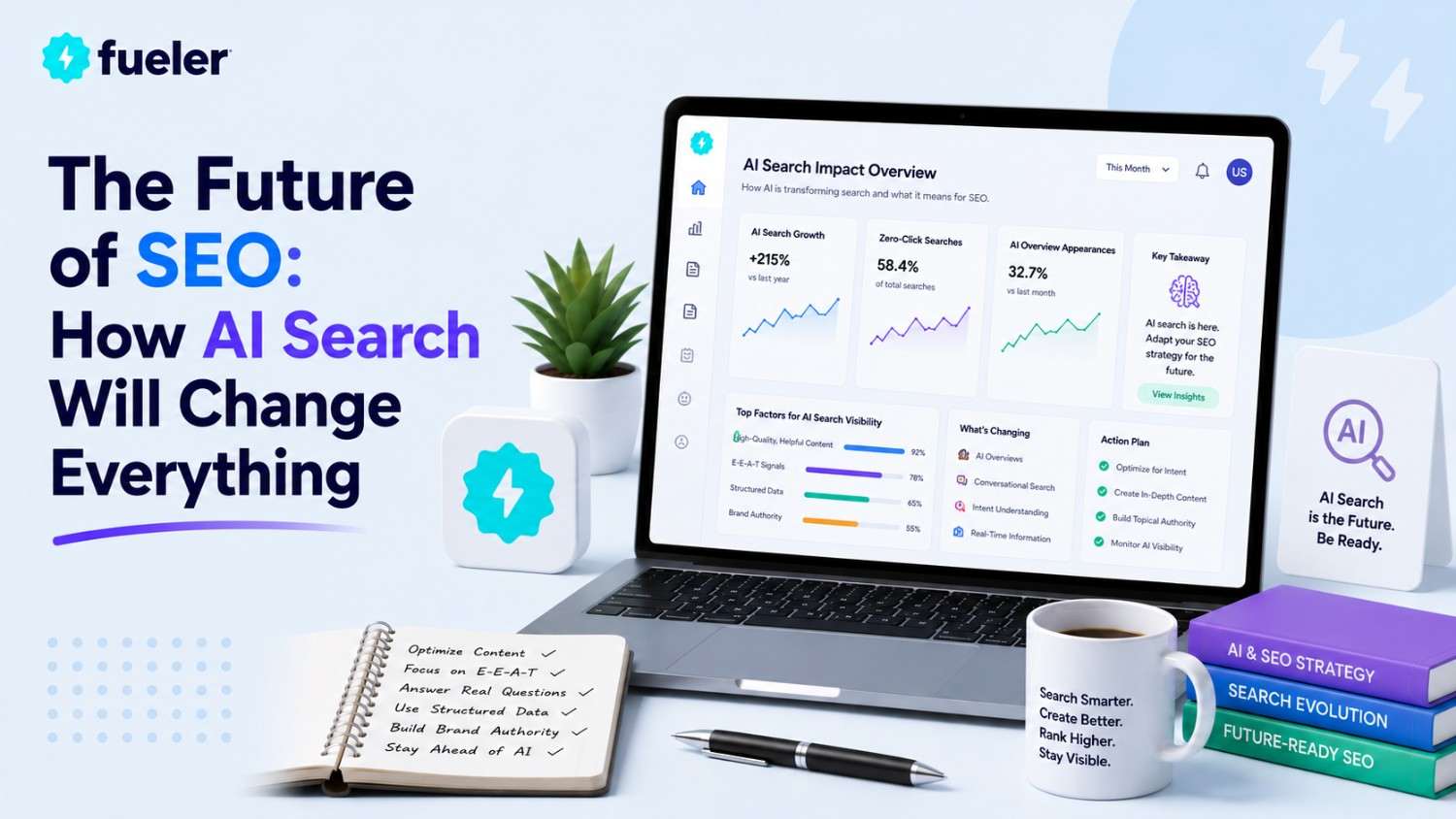
Search engines are evolving faster than ever. Are you prepared for the AI-powered revolution in SEO?
SEO is no longer about just sprinkling keywords and building backlinks. In 2026, AI is transforming every part of search from how queries are understood to how results are ranked and presented. If you want to not just survive but thrive, understanding AI’s role in SEO is your top priority.
I’m Riten, founder of Fueler - a skills-first portfolio platform that connects talented individuals with companies through assignments, portfolios, and projects, not just resumes/CVs. Think Dribbble/Behance for work samples + AngelList for hiring infrastructure
1. From Keywords to User Intent: AI Understands What Readers Really Want
Traditional SEO focused on matching exact keywords, but today’s AI-powered search understands natural language and deeper meanings behind queries. It’s less about words and more about what users intend to find.
- AI analyzes an entire search phrase or question, including tone and purpose, to match with results that answer the underlying need, not just contain the same words.
- This means your content needs to be written in a natural, conversational style that addresses user questions fully and thoughtfully rather than mechanically stuffing keywords.
- AI also considers context such as location, device, and recent user behavior to personalize results more precisely than ever before.
- For example, a user searching “best marketing tool” in the morning might get different results than a user with a similar query late at night or from a different region, driven by AI’s understanding of intent variations.
- This shift encourages content creators to focus on creating comprehensive, relevant content that speaks directly to users’ actual needs and problems.
Why it matters:
Meeting user intent with honest, clear content builds trust and relevance, earning better placement in AI-driven search algorithms focused on user satisfaction.
2. Content Quality and User Experience Rule Ranking Signals
Google’s AI now evaluates the entire content experience, including how easily users can access, understand, and interact with your pages. Strong user engagement boosts your SEO.
- Pages that are slow to load, hard to navigate, or cluttered reduce engagement and raise bounce rates, which AI interprets as lower quality.
- Using headings, bullet points, visuals, and multimedia helps break down information and improves readability, keeping readers longer and encouraging shares.
- AI assesses how often visitors return or share your content on social media signals that indicate value and authority in your niche.
- High-quality, original content is rewarded over recycled or shallow material, so uniqueness and depth are key.
- Engaging content that anticipates follow-up questions or offers additional resources increases dwell time, another positive ranking factor.
Why it matters:
Creating pleasant, helpful user experiences keeps visitors on your site and signals to AI that your content meets high standards, which improves search visibility.
3. Generative AI and Conversational Search Change How Answers Appear
Search results are no longer just links on a page. Due to generative AI, search engines now provide direct, summarized answers, chat-based results, and personalized suggestions within search itself.
- AI can pull information from multiple sources to generate concise responses, making it essential that your content is clear, factual, and structured for easy extraction.
- Employing schema markup, FAQs, and structured data helps AI understand and highlight your content in featured snippets or voice assistant answers.
- Rich media like infographics and videos boost your chances of appearing in AI-generated visual or interactive search results.
- Conversational searches using voice or longer queries are increasing, so writing in a natural, question-answer format positions your site better.
- As AI search becomes more interactive, websites will compete not only to rank but to be the trusted “source” for dynamic, AI-driven responses.
Why it matters:
Aligning your SEO with generative AI search features maximizes visibility in new search experiences, driving more qualified visitors and voice searches to your site.
4. Experience-E-A-T: The New Standard for Trustworthiness
Google’s E-A-T (Expertise, Authoritativeness, Trustworthiness) now includes Experience as a critical factor, using AI to confirm if content creators have real, proven knowledge.
- Showcasing detailed biographies, portfolios, case studies, and clear credentials verifies that the author or company has hands-on experience.
- User reviews, testimonials, and real examples strengthen trust signals that AI values for ranking quality.
- Transparency in sources, methodology, and data increases credibility and reduces risk of misinformation.
- Sites demonstrating both theoretical and practical expertise outrank generic content farms or unverified providers.
- This approach encourages businesses and creators to build authentic connections by sharing their true stories and achievements.
Why it matters:
AI rewards content backed by real experience and verifiable knowledge, making authenticity your most powerful SEO asset today.
5. Technical SEO Meets AI-Enabled Automation for Smarter Optimization
Behind the scenes, AI visibility tools automate audits, fixes, and optimizations, making technical SEO more accessible and effective.
- AI scans identify and resolve issues like broken links, slow loading resources, and duplicate content faster than manual checks.
- Meta titles, descriptions, and alt texts are optimized with AI suggestions to better align with search queries and improve click rates.
- AI helps dynamically generate XML sitemaps and supports efficient crawling, ensuring new content is indexed quickly.
- Behavioral analytics powered by machine learning reveal navigation bottlenecks, prompting design improvements that enhance SEO.
- Continuous monitoring tools provide real-time alerts and AI-generated insights so you can stay ahead of ranking drops or penalties.
Why it matters:
Smarter, automated tools free up your time and ensure your website stays in top health, maintaining smooth discoverability and improving overall SEO outcomes.
6. Visual and Local Search Grow with AI Enhancements
Searchers increasingly find what they need using images, maps, and voice assistants, areas where AI plays a major role.
- AI improves image recognition, making properly tagged photos and videos vital for ranking in visual search results.
- Local search rankings use AI to interpret factors like user location, business hours, and community reviews, increasing the importance of accurate citations and engagement.
- Augmented Reality (AR) integrations help users experience products virtually, tying into search results through AI-powered overlays and local directories.
- Voice search powered by AI natural language processing encourages conversational and FAQ-style content optimized for speech queries.
- Businesses that optimize for local and visual search with AI-ready assets can unlock new customer segments and outperform competitors relying on traditional SEO alone.
Why it matters:
Local and visual AI search opens huge new pathways for discovery, making it a vital part of 2026 SEO strategies to capture diverse traffic sources.
Final Thoughts
The rise of AI in search changes everything from how queries are understood to what gets shown and ranked. Success in SEO no longer depends on keywords or backlinks alone, but on delivering quality, trust, and real experience matched with technical excellence. Embracing AI-driven SEO practices and platforms like Fueler, where real work and skills shine, sets you up to lead in the coming years. Start now to stay visible, trusted, and relevant in 2026’s evolving digital landscape.
FAQs
1. How is AI changing SEO fundamentally?
AI focuses on understanding user intent, content quality, and trustworthiness over traditional keyword matches, driving smarter rankings.
2. What types of content perform best with AI search?
Natural, clear, comprehensive, and engaging content that directly answers real questions and provides practical value ranks higher.
3. How can I prove experience to AI search engines?
Showcase real work through portfolios, case studies, author bios, and transparent sources to establish authenticity and expertise.
4. Is technical SEO still important with AI?
Yes, but automated AI tools now assist in maintaining and improving tech SEO, making it easier and continuous.
5. What new search types should I optimize for?
Visual search, voice search, local search, and AI-generated answer snippets are rising and require specific optimization strategies.
What is Fueler Portfolio?
Fueler is a career portfolio platform that helps companies find the best talent for their organization based on their proof of work. You can create your portfolio on Fueler, thousands of freelancers around the world use Fueler to create their professional-looking portfolios and become financially independent. Discover inspiration for your portfolio
Sign up for free on Fueler or get in touch to learn more.

What should you do next?
You've read the article. Now turn your skills into proof of work and unlock more opportunities.
Build your proof of work portfolio
Create a clean portfolio with projects, assignments, resumes, and AI stack details that companies actually want to see.
Create your Fueler portfolio →Apply through assignments, not resumes
Stand out by solving real tasks from companies hiring on Fueler.
Explore assignments →Get discovered by companies
Make your work public and let recruiters discover your skills through actual projects instead of keywords.
Get discovered →
