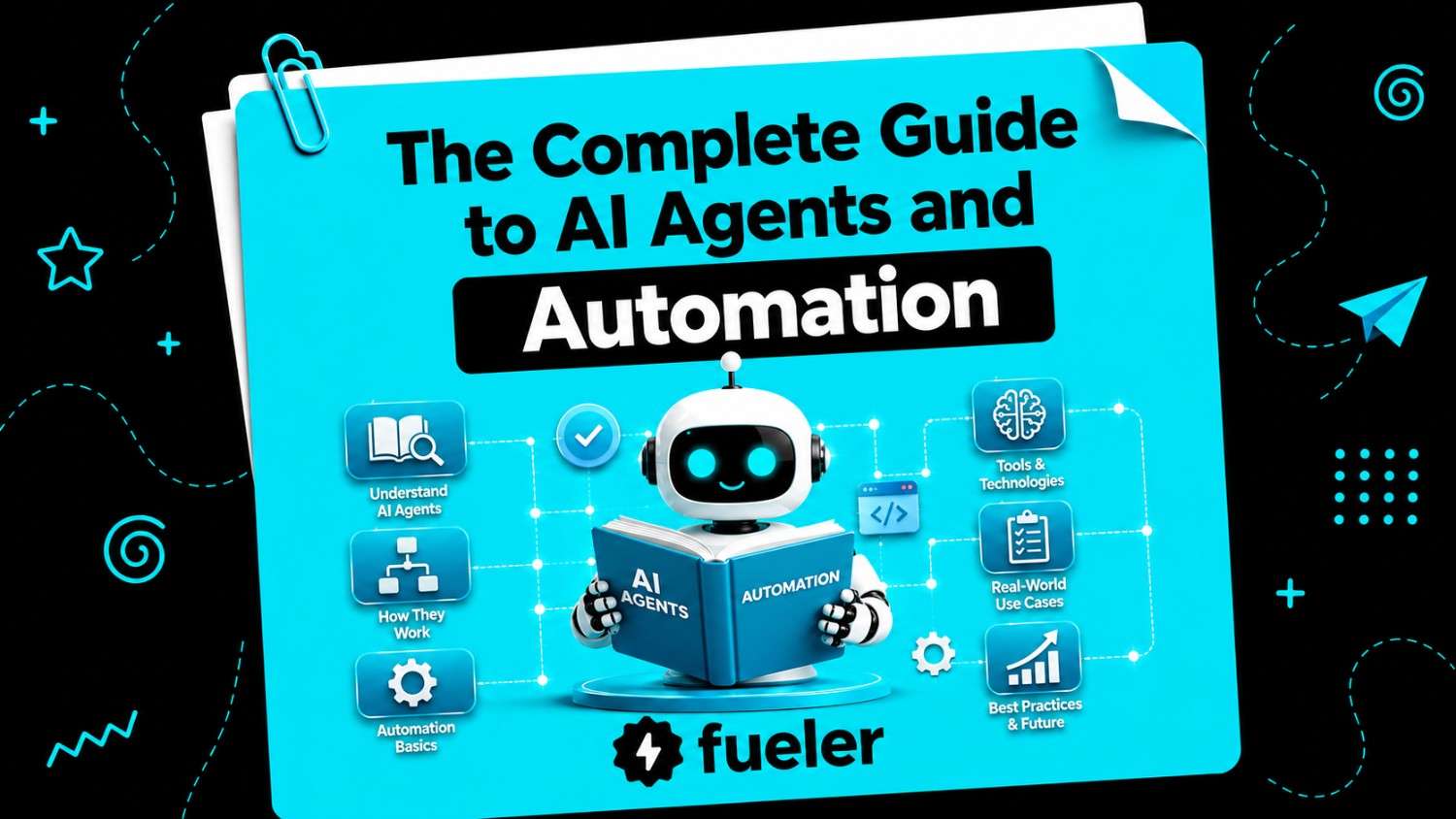
The Complete Guide to AI Agents and Automation

Riten Debnath
09 May, 2026
Last updated: May 2026
The world of work is changing faster than we ever imagined, and it is no longer just about working harder, but about working smarter with the right systems. We are moving away from simple software that waits for a command to intelligent agents that can actually plan and execute complex workflows for us. If you have ever felt overwhelmed by repetitive tasks that drain your creativity, this guide is your roadmap to understanding how automation can give you your time back.
I’m Riten, founder of Fueler, a skills-first portfolio platform that connects talented individuals with companies through assignments, portfolios, and projects, not just resumes/CVs. Think Dribbble/Behance for work samples + AngelList for hiring infrastructure.
Defining AI Agents in Simple Language
When we talk about agents, we are talking about digital assistants that don't just answer questions but actually complete multi-step goals without you holding their hand through every single click. While a normal app might just store your data, an agent can look at that data, decide what needs to happen next, and use other software to get the job done.
- Autonomous Operation and Management: These systems are designed to function independently, which means once you set a clear objective, the agent handles the logic and the execution path without requiring constant manual prompts or hand-holding from the user.
- Goal-Oriented Decision Logic: Unlike standard programs that follow a rigid and linear path, agents focus entirely on the final outcome and can dynamically change their behavior based on the specific obstacles they encounter during the process.
- Complex Task Decomposition Capabilities: An agent can take a massive or vague request and break it down into tiny, manageable pieces, handling each step one by one until the entire project is finally completed to your satisfaction.
- Direct Environmental Interaction: These digital entities are capable of interacting with various online environments, such as browsing websites or accessing databases, to gather the information they need to fulfill the specific requirements of your request.
- Continuous Self-Correction Feedback Loops: As the agent works, it constantly checks its own progress against the goal, allowing it to fix errors or try new strategies if the first attempt does not yield the results it was looking for.
Why it matters
Understanding the definition of agents is the foundation of this guide because it helps you distinguish between basic tools and truly transformative technology. Recognizing this shift allows you to move from being a manual operator to a high-level strategist in your own professional life.
How Autonomous Systems Think and Reason
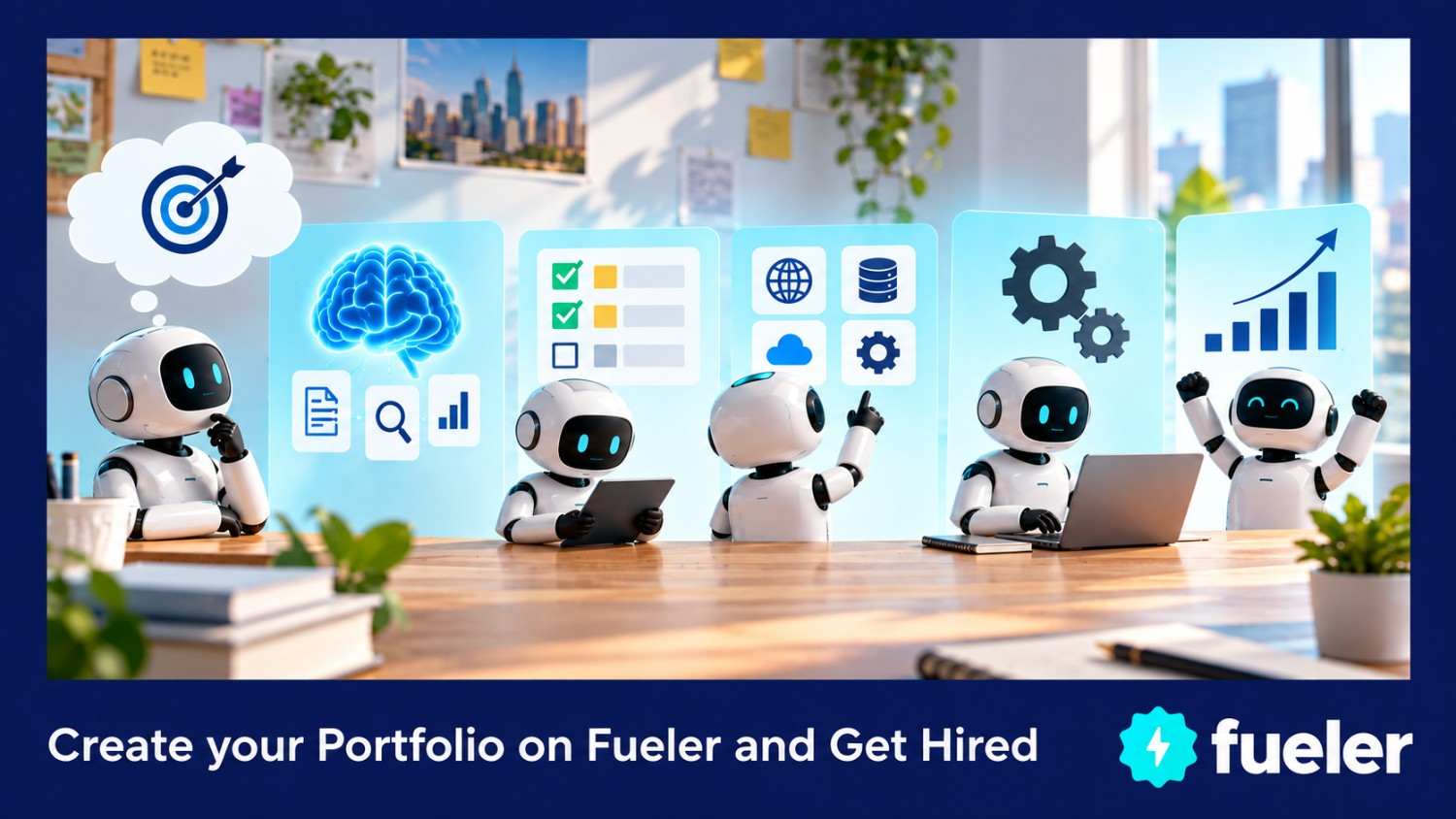
The logic behind these systems is often compared to a human brain because they use a process of observation and reflection to make decisions in real-time. Instead of just following a script, they analyze the situation they are in, look at the available resources, and choose the most efficient path forward to reach their target.
- Advanced Reasoning Frameworks: Most modern agents use logical frameworks to think through problems, which helps them understand the deep context of a situation rather than just processing keywords in a cold vacuum of data.
- Sequential Decision-Making Processes: The system makes a choice for the first step, evaluates the result of that choice, and then uses that new information to decide what the very next logical action should be to move forward.
- Contextual Awareness and Memory: By maintaining a memory of previous interactions, these systems can stay on track during long projects, ensuring that they do not repeat mistakes or lose sight of the original goal you set at the start.
- Dynamic Problem Solving Strategies: When an agent encounters a broken link or a missing piece of data, it can brainstorm an alternative way to find that information rather than simply giving up and stopping the entire workflow.
- Human Intent Alignment: The core of the reasoning process is ensuring that every small action taken by the software aligns perfectly with what the human user originally intended to achieve when they started the process.
Why it matters
Understanding the reasoning process is vital because it builds trust between the human and the machine. When you know how the system thinks, you can provide better instructions and anticipate how it will handle complex or unpredictable tasks in your daily workflow.
The Evolution from Chatbots to Action-Oriented Agents
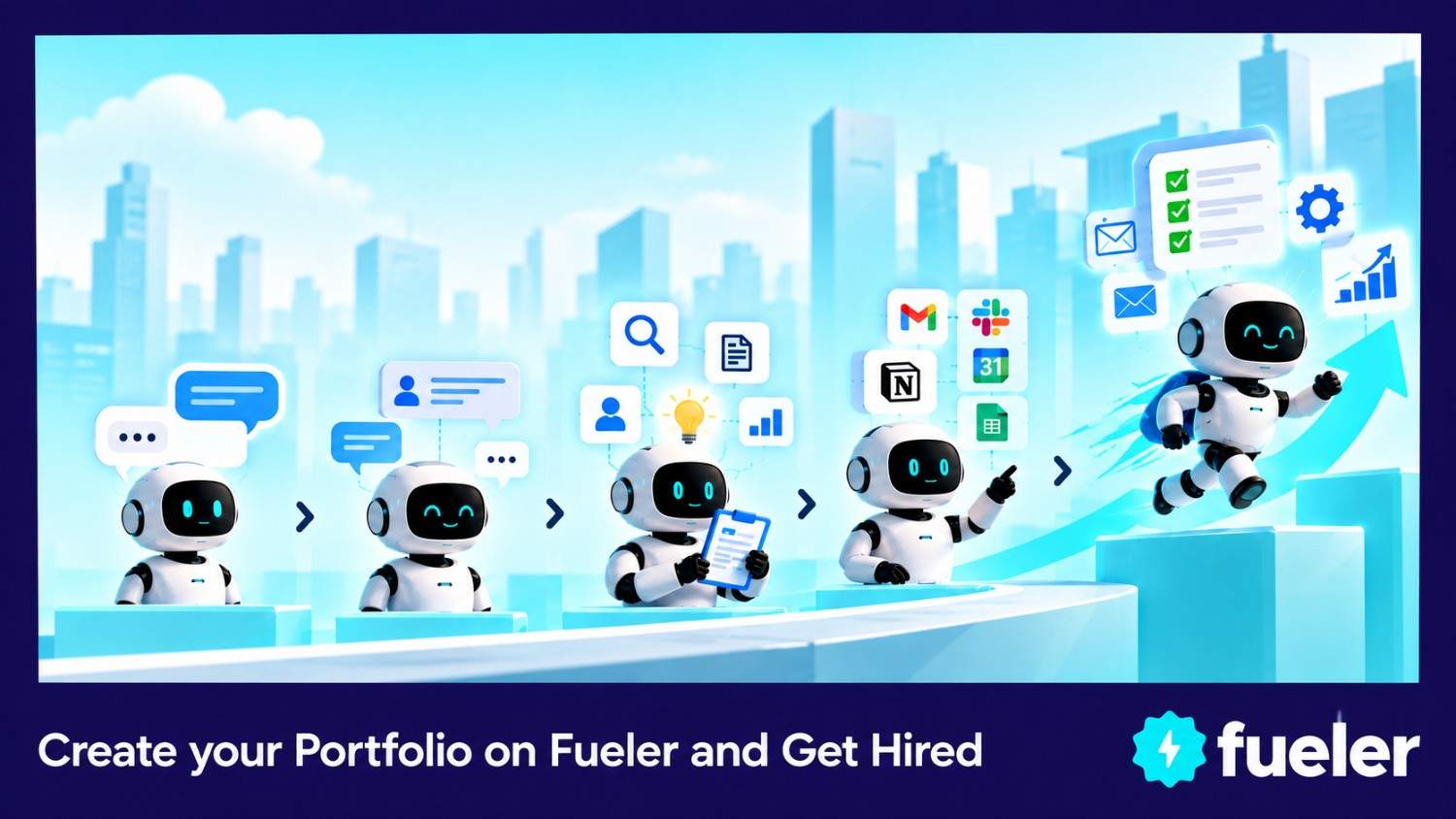
We have spent the last few years getting used to typing questions into a box and getting text back, but that was just the beginning of the journey. The real power lies in the transition toward systems that can actually "do" things, like managing a calendar or filing expenses, rather than just talking about them.
- Moving from Passive to Active: Traditional chatbots only respond when spoken to, but agents can be proactive, monitoring situations and taking action the moment certain conditions are met in the digital environment without being asked again.
- Prioritizing Execution over Explanation: While a chatbot might explain how to write a social media post, an agent will actually write the post, find a relevant image, and schedule it for the best time on your calendar.
- Integration with External Software: The evolution focuses on giving these systems "hands" by allowing them to log into other platforms and perform tasks that previously required a human to manually click buttons and move files.
- Sophisticated Complexity Management: As technology evolves, agents are becoming much better at handling tasks that involve multiple different software platforms at once, acting as a smart bridge that connects various disconnected digital tools effortlessly.
- Massive Reduction in Human Friction: The goal of this evolution is to remove the need for humans to perform boring, repetitive clicks, allowing us to focus on the creative decisions that actually move the needle in business.
Why it matters
This shift is the core theme of our guide because it represents a massive opportunity for professionals to scale their output. Knowing that we are moving toward action-oriented systems helps you prepare for a world where your value is based on your ideas.
Understanding the Role of Planning in Automation
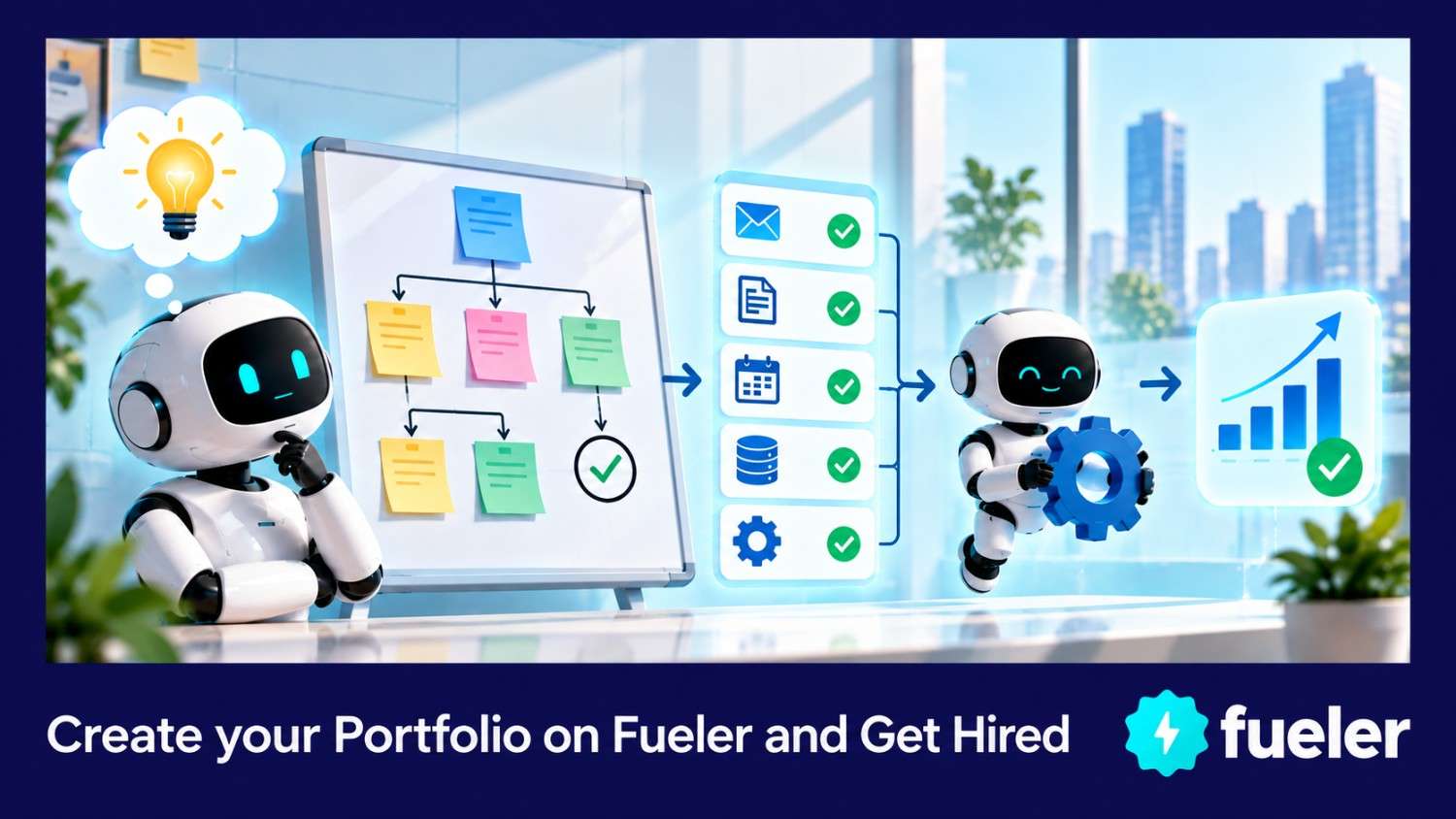
One of the most impressive features of these new systems is their ability to create a plan before they start working. This is very similar to how a project manager looks at a goal and maps out the milestones, ensuring that every resource is used correctly and no time is wasted on unnecessary steps.
- Initial Step-by-Step Mapping: Before taking the first action, the agent outlines the entire sequence of events it believes are necessary to reach the goal, giving you a clear look at how it intends to work.
- Resource Allocation and Management: The planning phase involves identifying which tools or data sources will be needed for each part of the task, ensuring the agent doesn't get stuck halfway through due to missing information.
- Contingency Planning for Errors: A smart agent creates backup plans during the initial stage, so if a primary source of information is unavailable, it already knows where to look next without needing further human intervention.
- Time and Efficiency Optimization: The planning process is designed to find the shortest path to a result, avoiding redundant steps and ensuring that the automation runs as quickly and smoothly as possible for the user.
- Milestone Tracking and Reporting: By breaking a task into a plan, the system can report back on exactly how far it has progressed, giving you peace of mind that the project is moving in the right direction.
Why it matters
Planning is what makes automation reliable and predictable. When you understand how an agent maps out its work, you can design better workflows that leverage its strengths, ensuring that your automated systems are always working at peak efficiency.
The Importance of Data Privacy in Autonomous Workflows

As we give more responsibility to digital agents, the conversation around data security becomes more important than ever. It is essential to understand how your information is being handled, where it is stored, and who has access to the sensitive details that these agents might encounter while working.
- Encrypted Communication Channels: High-quality automation systems ensure that all data passed between the agent and external tools is fully encrypted, preventing unauthorized parties from intercepting or reading your private information during transit.
- Localized Data Processing Options: Some advanced systems allow you to run the "brain" of the agent locally on your own hardware, meaning your sensitive files never have to leave your computer or your secure company network.
- Granular Access Control Settings: Users can often decide exactly which folders or applications an agent is allowed to see, ensuring that the automation only has access to the specific data it needs to function.
- Transparent Logging and Auditing: A secure system keeps a detailed log of every action the agent takes, allowing you to review exactly what happened and verify that no data was mishandled or sent to the wrong place.
- Compliance with Global Standards: Professional automation frameworks are built to follow strict privacy laws like GDPR, ensuring that your personal and professional data is treated with the highest level of legal and ethical care.
Why it matters
Data privacy is not just a technical detail; it is a requirement for professional trust. In this guide, we emphasize security because you cannot truly scale your work with automation if you are constantly worried about the safety of your intellectual property.
How Agents Collaborate with Humans in a Loop

The future is not about AI replacing humans, but about humans and AI working together in what we call a "Human-in-the-Loop" system. This means the agent handles the heavy lifting, but the human remains the final judge, providing feedback and making the high-level decisions that require emotional intelligence.
- Collaborative Decision Making: The agent can present several different options or drafts to the human user, allowing the person to choose the best direction based on their unique taste, experience, and specific professional goals.
- Feedback Driven Improvement: When a human corrects an agent's work, the system learns from those edits, becoming more aligned with the user's specific style and preferences over time for even better future results.
- Handling Edge Case Exceptions: There will always be complex situations that require a human touch, and a good collaborative system knows exactly when to stop and ask for guidance rather than making a mistake.
- Supervisory Oversight Roles: The human acts as a director or an editor, spending less time on the actual labor and more time on the strategic vision, ensuring the output meets the necessary quality standards.
- Shared Knowledge Bases: Both the human and the agent can contribute to a shared library of information, making it easier for the system to understand the specific nuances of a company or a creative project.
Why it matters
This collaborative model is the most sustainable way to use technology. It ensures that you stay in control of your career while using automation to remove the drudgery, ultimately leading to a more fulfilling and creative work life.
The Impact of Low-Code and No-Code Automation

You no longer need to be a software engineer to build powerful automated workflows. The rise of visual interfaces allows anyone with a clear idea to connect different tools together, making the power of AI agents accessible to marketers, designers, writers, and small business owners everywhere.
- Visual Workflow Building: Instead of writing complex lines of code, users can drag and drop different actions into a sequence, making it easy to see exactly how the automation will function from start to finish.
- Pre-Built Template Integration: Many platforms offer templates for common tasks like social media management or lead generation, allowing beginners to get started with professional-grade automation in just a matter of minutes.
- Democratization of Technology: By lowering the barrier to entry, low-code tools allow individuals from all backgrounds to build their own custom agents, leveling the playing field for solo entrepreneurs and small creative teams.
- Rapid Prototyping Capabilities: You can test a new idea for an automated process almost instantly, allowing you to see if a workflow is effective before committing significant time or resources to a larger project.
- Simplified Maintenance and Edits: When a business process changes, a no-code interface makes it incredibly simple to update your automation without needing to hire an expensive developer to rewrite the underlying software code.
- If you want to move beyond simply using these tools and actually learn how to build automated workflows, an AI automation course.
Why it matters
This headline is crucial because it removes the fear of technical difficulty. This guide is for everyone, and the fact that you don't need a computer science degree to master these tools means that the only limit is your own imagination.
Scaling Business Processes with Agentic Workflows

For companies, the goal of automation is often to scale operations without dramatically increasing costs. Agentic workflows allow businesses to handle thousands of customer inquiries, manage inventory, or conduct market research at a speed and volume that would be impossible for a human team alone.
- Increased Operational Throughput: Automation allows a business to process a much higher volume of tasks in a single day, ensuring that growth is not slowed down by manual bottlenecks or human fatigue.
- Consistent Quality and Output: Unlike humans, who might have a bad day or lose focus, an automated agent will perform the same task with the exact same level of precision every single time it is run.
- Cost-Effective Resource Management: By automating the most repetitive parts of a job, companies can keep their teams small and focused on high-value tasks, significantly reducing the overhead costs associated with manual labor.
- 24/7 Service Availability: Automated agents don't need to sleep, meaning your business can continue to provide value, answer questions, and process data for customers in every time zone around the world.
- Data Driven Insights at Scale: Agents can analyze massive amounts of business data in real-time, providing leadership with the insights they need to make better decisions faster than their competitors, who rely on manual reports.
Why it matters
Scaling is the ultimate goal for many who read this guide. Understanding how to move from a single automated task to a full business workflow is the key to creating a company that is both efficient and highly profitable.
Future Trends: Where is Automation Heading Next?

We are just at the beginning of this journey, and the next few years will bring even more integration between our physical and digital lives. We are moving toward a world where agents are "multimodal," meaning they can see the world through cameras and hear us through microphones to provide even better help.
- Multimodal Input Processing: Future agents will be able to understand video, audio, and images just as well as they understand text, allowing for much more natural and intuitive ways for humans to interact.
- Physical World Interaction: We will likely see a closer connection between software agents and robotics, allowing automation to move from our computer screens into our homes and workplaces to handle physical tasks.
- Hyper Personalized Experiences: As agents spend more time working with us, they will become deeply familiar with our unique habits and preferences, providing support that is perfectly tailored to our individual needs.
- Inter Agent Communication: In the future, your personal agent might talk directly to a company's agent to negotiate a price or book an appointment, handling the entire transaction on your behalf.
- Ethical and Regulatory Evolution: As the technology becomes more powerful, we will see new laws and ethical guidelines emerge to ensure that automation is used fairly and transparently for the benefit of everyone.
Why it matters
Staying ahead of trends is what keeps you relevant in your career. By understanding where the technology is going, you can start building the skills today that will be in high demand tomorrow, ensuring you are never left behind.
Overcoming the Challenges of Implementing AI Agents

While the potential is huge, implementing automation is not without its hurdles. It requires a change in mindset, a bit of patience, and a willingness to learn from mistakes as you figure out how to best integrate these new tools into your existing daily routines.
- Managing Initial Learning Curves: There is always a period of adjustment when learning a new way of working, but the long-term time savings far outweigh the initial hours spent figuring out how the system works.
- Ensuring Output Accuracy: You must always verify the work of an automated agent, especially in the beginning, to ensure that it hasn't made any logical errors or "hallucinated" any incorrect pieces of information.
- Bridging Legacy System Gaps: Sometimes older software doesn't play well with new automation tools, requiring you to find creative workarounds or "middleware" to connect your different digital platforms together successfully.
- Cultivating an Automation Mindset: The biggest challenge is often just remembering to use the tools you have, training yourself to stop doing manual work and start delegating those tasks to your digital agents.
- Maintaining Human Creativity: It is important to ensure that you don't become so reliant on automation that you stop thinking for yourself, using the extra time you gain to push your own creative boundaries.
Why it matters
By acknowledging the challenges, this guide becomes a realistic tool for success. We don't want to just sell you on a dream; we want to give you the practical knowledge you need to navigate the real-world difficulties of modern technology.
How does this connect to building a strong career or portfolio?

In today’s competitive job market, simply saying you know how to use a tool isn't enough; you have to show what you can actually do with it. Mastering AI agents and automation is a massive "proof of work" opportunity. When you build an automated workflow that solves a real business problem, you aren't just a user; you are a solution provider.
By documenting these projects in a portfolio, you demonstrate to employers that you have the strategic thinking required to improve their bottom line. It shows that you understand efficiency, logic, and the future of digital work. Whether you are a developer, a marketer, or a project manager, having a section of your portfolio dedicated to the automation systems you've built will set you apart from every other candidate who is still relying on a static CV.
At Fueler, we see this every day. The people getting hired the fastest are the ones who show off their projects and assignments rather than just listing their skills. Using Fueler to showcase your automation work samples allows companies to see your thought process and the actual results you've delivered, making it the perfect home for your skills-first career.
Final Thoughts
The era of manual, repetitive digital labor is coming to an end, and the era of the agent is officially here. By embracing these tools now, you aren't just making your current job easier; you are future-proofing your entire career. Start small, experiment with a single task, and gradually build the "automation muscle" that will allow you to scale your impact in ways you never thought possible.
FAQs
What are the best free AI tools for automation in 2026?
There are many platforms that offer generous free tiers for personal use, allowing you to connect various apps and automate simple tasks like email sorting or social media updates without any upfront costs.
How can I use AI agents for exam prep or learning?
Agents can help by scouring the web for the best study materials, creating custom quizzes based on your notes, and even scheduling your study sessions based on the topics you find most difficult.
Do I need to know how to code to use AI agents?
No, the current trend is toward no-code and low-code platforms that use visual interfaces, meaning anyone with a clear understanding of a process can build a powerful automated agent today.
Can AI agents replace my job in the future?
Rather than replacing you, these tools are designed to handle the boring parts of your job, acting as an assistant that allows you to focus on the high-level strategy and creativity that machines cannot replicate.
Is it safe to give AI agents access to my email?
Security is a top priority for reputable automation platforms, which use high-level encryption and strict permission settings to ensure that your private data is only used for the tasks you specifically authorize.
What is Fueler Portfolio?
Fueler is a career portfolio platform that helps companies find the best talent for their organization based on their proof of work. You can create your portfolio on Fueler. Thousands of freelancers around the world use Fueler to create their professional-looking portfolios and become financially independent. Discover inspiration for your portfolio
Sign up for free on Fueler or get in touch to learn more.

What should you do next?
You've read the article. Now turn your skills into proof of work and unlock more opportunities.
Build your proof of work portfolio
Create a clean portfolio with projects, assignments, resumes, and AI stack details that companies actually want to see.
Create your Fueler portfolio →Apply through assignments, not resumes
Stand out by solving real tasks from companies hiring on Fueler.
Explore assignments →Get discovered by companies
Make your work public and let recruiters discover your skills through actual projects instead of keywords.
Get discovered →
