SaaS Churn Reduction Strategies That Actually Work in 2026

Riten Debnath
04 Dec, 2025
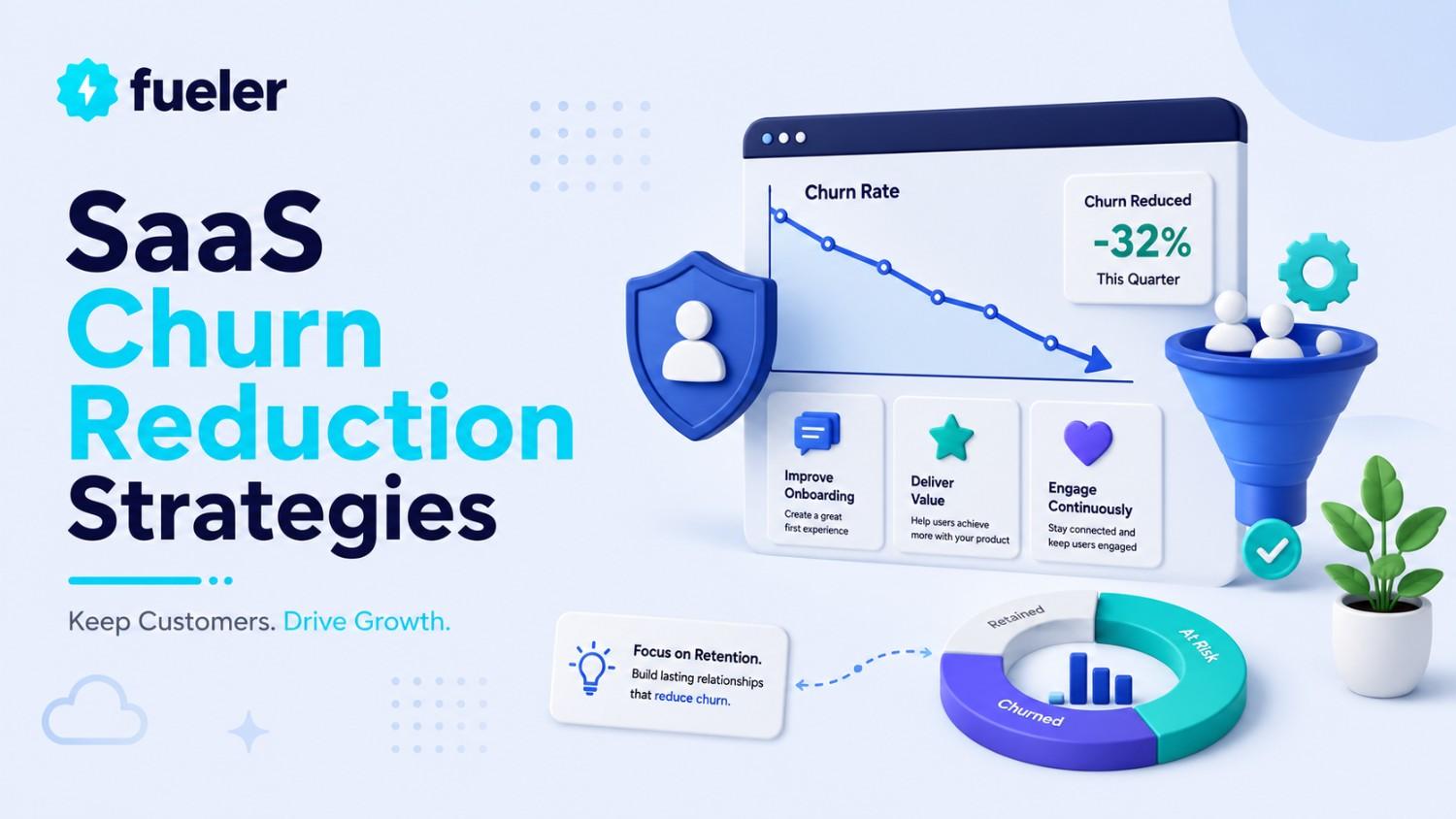
Keep Your Customers Coming Back, The Game-Changing Strategies to Beat SaaS Churn
Losing customers silently cripples your SaaS growth and revenue. But what if you could spot churn risks early, engage users personally, and nurture product loyalty from day one? The right churn reduction strategies in 2026 don’t just prevent loss, they fuel your SaaS’s unstoppable momentum. Keep reading to discover how.
I’m Riten, founder of Fueler - a skills-first portfolio platform that connects talented individuals with companies through assignments, portfolios, and projects, not just resumes/CVs. Think Dribbble/Behance for work samples + AngelList for hiring infrastructure
1. Contextual Nudges Tailored to User Behavior
Generic onboarding overlays frustrate more than they help because they ignore when users actually need guidance. Contextual nudges shift onboarding from static instructions to dynamic, behavior-driven support that responds in real time to user actions.
- Platforms like Appcues and Pendo harness AI-driven behavior analysis to detect when users hesitate, misclick, or spend too long on tasks, instantly triggering helpful nudges tailored exactly to those moments. This eliminates user guesswork and reduces frustration.
- Nudges aren’t just about explaining interface elements, they are goal-oriented prompts that respond to what users are attempting, providing targeted assistance to smoothly advance their progress.
- By dynamically adapting to different user segments, these nudges create a personalized, frictionless onboarding experience, avoiding overwhelming users with irrelevant information.
- Predictive behavior modeling helps flag users at high risk of churn early, allowing preemptive intervention through nudges before frustration escalates into abandonment.
- This precision guidance maintains user confidence and encourages consistent product use from the outset.
Why it matters
Contextual nudges play a pivotal role in retaining users by making onboarding feel personalized and supportive, effectively lowering early churn a top priority in the competitive SaaS space.
2. Empower Engagement with Actionable Empty States
Landing on empty dashboards or blank project pages leaves new users confused and directionless, increasing early churn risk. Transforming empty states into active engagement points encourages users to take meaningful first steps.
- Instead of empty screens, show demo content, starter templates, or pre-filled examples that vividly illustrate how the product can benefit them, removing uncertainty about next steps.
- Clear, action-driven CTAs like “Create your first project” or “Connect your tools here” provide specific, achievable tasks, reducing cognitive load and motivating continued interaction.
- Visual progress indicators or outcome previews help users envision success, driving motivation to explore and unlock the product’s full value.
- This strategy is especially critical in freemium and product-led growth models where clear value demonstration drives customer retention.
- Overcoming the intimidation of a blank canvas catalyzes quicker user activation and commitment to the platform.
Why it matters
Optimizing empty states converts potential drop-off points into powerful conversion moments, speeding new user activation and feeding directly into churn reduction strategies.
3. Gamify Feature Unlocks to Drive Deeper Adoption
Presenting all features at once can overwhelm and confuse users, causing early abandonment before value is fully realized. Gamifying feature exposure through progressive unlocks can enhance engagement and retention.
- Limit access to complex or advanced features initially, gradually unlocking them as users hit meaningful milestones like completing their first task, inviting collaborators, or setting up workflows.
- Use progress bars, badges, and other gamified elements to reward users for unlocking features, keeping motivation and curiosity high.
- This phased reveal reduces cognitive overload, allowing users to master basic functions before tackling complex capabilities.
- Behavioral incentives and milestone celebrations build positive reinforcement loops that boost product exploration and long-term retention.
- It aligns with scalable SaaS roadmaps, supporting continuous user growth and feature awareness over time.
Why it matters
By guiding users through a thoughtfully tiered product experience, gamification helps SaaS companies increase meaningful engagement and reduce churn driven by user confusion or overwhelm.
4. Continuous Onboarding as a Lifecycle Strategy
Onboarding must evolve beyond the first login to remain relevant as users’ roles and needs change. Continuous onboarding ensures users never feel lost or unsupported during their entire product journey.
- Develop distinct onboarding flows for new users, returning users, and those who have been inactive, each tailored to unique user states, goals, or new feature introductions.
- Personalize experiences by role or user segment marketers get different insights than developers or admins, keeping onboarding meaningful and contextually appropriate.
- Re-introduce core features dynamically as users need them, rather than expecting all onboarding to happen at once.
- Regular onboarding touchpoints via in-app messages or email nurture deeper product understanding and ongoing commitment.
- Treat onboarding as an evolving process, continuously reinforcing value and encouraging new feature adoption throughout the customer lifecycle.
Why it matters
Continuous onboarding deepens the user relationship with your SaaS product over time, significantly reducing mid-to-late stage churn which often goes unnoticed but heavily impacts long-term revenue.
5. Data-Driven UX Audits to Identify Churn Causes
Quantitative usage metrics alone don’t explain why users leave. Conducting regular UX audits combining analytics with user interviews uncovers hidden friction points that drive churn.
- Quarterly UX audits analyze navigation patterns, feature discovery issues, and emotional pain points experienced by real users that reflect churn triggers.
- Mapping UX friction informs product roadmaps, prioritizing fixes and improvements that directly reduce churn rather than just adding features.
- Regular audits ensure consistency across design systems, content clarity, and interaction predictability, enhancing overall satisfaction and reducing user confusion.
- Incorporate cross-functional feedback from customer success, sales, and support teams for holistic insights into user behavior.
- Iterative design improvements based on audit findings increase user retention by removing known obstacles and delivering a seamless experience.
Why it matters
UX audit-driven roadmaps enable SaaS teams to make smart, empathy-driven design decisions that actively prevent churn, ensuring future feature development aligns with user needs.
6. Anticipatory Design that Predicts User Needs
SaaS products that foresee and proactively suggest next steps create intuitive, engaging user journeys that prevent frustration and churn.
- Implement event-driven UI that triggers contextual next-step prompts for example, suggesting “Invite team members” immediately after workspace creation.
- Microflows within the product dynamically adjust based on user actions to streamline goal achievement without rigid linear paths.
- Machine learning models anticipating user intent enhance responsiveness and reduce hesitation or dead-end scenarios.
- Smart defaults and auto-complete features help users accomplish tasks faster, maintaining momentum and reducing errors.
- This "smart" design approach makes the product feel alive and aligned with user goals, increasing loyalty and decreasing churn risk.
Why it matters
Anticipatory design transforms SaaS user experiences into proactive partnerships, guiding users effortlessly and significantly lowering drop-off rates.
7. Billing Transparency and Flexible Subscription Options
Unexpected or complicated billing issues cause significant involuntary churn. Transparent, flexible subscription management reassures customers and improves retention.
- Display clear, upfront pricing on dashboards alongside upcoming payment dates and amounts to reduce billing surprises.
- Offer a range of payment methods and currencies for global user convenience.
- Implement automated retry mechanisms for failed payments to prevent unnecessary cancellations.
- Allow customers to pause, downgrade, or upgrade subscriptions easily without friction or support delays.
- Communicate billing changes or policy updates well in advance with friendly reminders and accessible FAQs.
Why it matters
Transparent billing and adaptable subscription management build trust and reduce avoidance-driven churn, critical for maintaining steady SaaS growth.
Boost Your SaaS Portfolio with Fueler
Showcasing your SaaS skills and projects with real, verifiable work samples accelerates trust with employers and clients. Fueler empowers professionals to build portfolios that highlight accomplished assignments and project outcomes beyond traditional resumes, enhancing credibility in a competitive market.
Final Thoughts
Reducing SaaS churn requires a holistic approach combining innovative UX, personalized engagement, continuous education, and transparent business practices. These strategies serve not just to keep users longer but to build passionate advocates for your product. As SaaS competition intensifies in 2026, mastering churn reduction will be the difference between survival and explosive growth.
FAQs
1. What are the key ways to reduce SaaS churn in 2026?
Focus on personalized onboarding, data-driven engagement, continuous education, and transparent billing. Using AI to identify and support users at risk of leaving helps prevent churn early, while gamification and clear action prompts keep users engaged longer.
2. How does personalized onboarding help reduce churn?
Personalized onboarding adapts to individual user goals and behavior, making the learning curve easier and boosting initial engagement. It reduces early frustration, helping users see value faster and stay committed.
3. Why is billing transparency important in SaaS retention?
Clear, upfront pricing and billing notifications build user trust and prevent surprise charges, which cause many cancellations. Flexible options like pausing or adjusting subscriptions empower customers to stay instead of quitting.
4. Can gamification really improve SaaS user retention?
Yes, gamification motivates users by rewarding progress and unlocking features gradually. This decreases overwhelm, encourages exploration, and makes the experience enjoyable, lowering churn risk.
5. What role does user feedback play in lowering churn?
Regular feedback collection helps identify pain points and missing features early. Acting on this feedback improves product satisfaction and shows customers their opinions matter, boosting loyalty and retention.
What is Fueler Portfolio?
Fueler is a career portfolio platform that helps companies find the best talent for their organization based on their proof of work. You can create your portfolio on Fueler, thousands of freelancers around the world use Fueler to create their professional-looking portfolios and become financially independent. Discover inspiration for your portfolio
Sign up for free on Fueler or get in touch to learn more.

What should you do next?
You've read the article. Now turn your skills into proof of work and unlock more opportunities.
Build your proof of work portfolio
Create a clean portfolio with projects, assignments, resumes, and AI stack details that companies actually want to see.
Create your Fueler portfolio →Apply through assignments, not resumes
Stand out by solving real tasks from companies hiring on Fueler.
Explore assignments →Get discovered by companies
Make your work public and let recruiters discover your skills through actual projects instead of keywords.
Get discovered →
