PayPal vs. Stripe: Which Is Better for US Freelancers?

Riten Debnath
05 Jul, 2025
Last updated: July 2026
Are you tired of waiting for payments, losing money to high fees, or feeling confused by complicated payment systems? In 2026, picking the right payment platform can help you get paid faster, keep more of your earnings, and impress your clients with your professionalism. Two names lead the way for US freelancers: PayPal and Stripe. But which one truly fits your freelance business?
I’m Riten, founder of Fueler, a skills-first portfolio platform building the career infrastructure for 100 million creative professionals. Fueler connects talented individuals with companies through assignments, portfolios, and projects, not just resumes or CVs. Think of it as Dribbble/Behance for work samples combined with AngelList for hiring infrastructure.
Why Your Payment Platform Choice Matters for US Freelancers
Your payment platform is more than just a tool; it’s your financial backbone. The right choice means faster payments, lower fees, and a smoother experience for you and your clients. The wrong one can cost you time, money, and even future work. Let’s explore what makes PayPal and Stripe stand out for US freelancers.
PayPal: The Trusted Standard for Freelancers
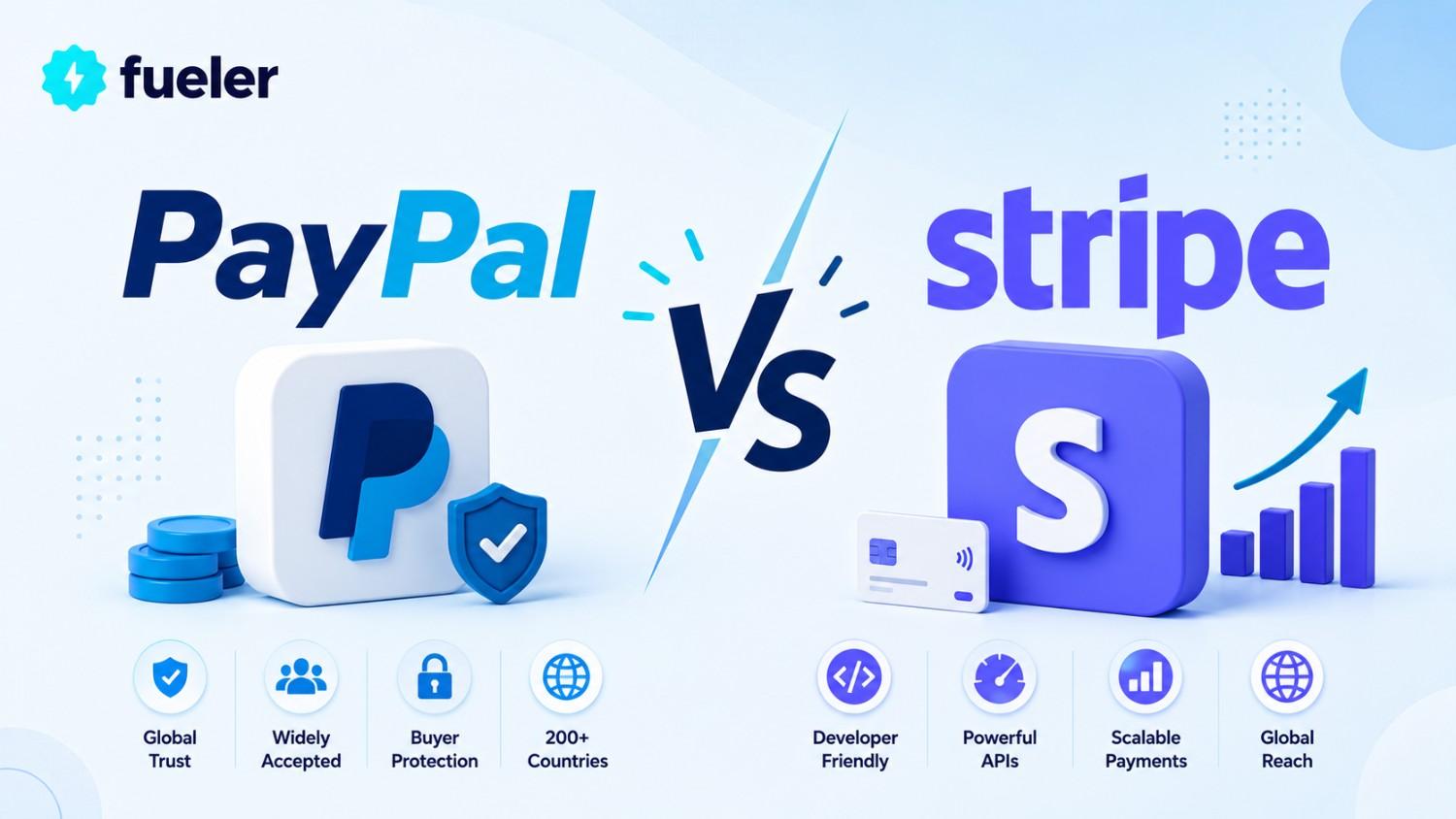
PayPal is known for its simplicity, global reach, and trust among clients. It’s been the go-to for freelancers for years, offering a solution that works for almost everyone.
Description: PayPal lets you accept payments from clients worldwide, supports multiple currencies, and is recognized by almost every business and individual. It is easy to set up and use, making it a favorite for beginners and experienced freelancers alike.
Key Features:
- Accepts credit cards, debit cards, PayPal balances, and even Venmo in the US
- Plug-and-play checkout buttons and invoicing tools
- Quick refunds and payouts to linked accounts
- User-friendly dashboard with minimal setup
Pricing:
- Domestic payments: 2.9% plus $0.30 per transaction, with some variations depending on the transaction type
- In-person payments: 2.29% plus $0.09 per transaction
- International payments: Higher fees and currency conversion charges
- Micropayments: Special rates for transactions under $10
Why PayPal Matters for US Freelancers:
PayPal’s ease of use, instant setup, and wide acceptance make it ideal for freelancers who want to get paid quickly and avoid technical hassles. Most clients already have PayPal, so it’s often the fastest way to receive your money and avoid payment delays.
Stripe: The Customizable Powerhouse
Stripe is the choice for freelancers who want more control, customization, and global payment options. It’s developer-friendly and built for those who want to automate or scale their freelance business.
Description: Stripe allows you to accept payments from anywhere in the world, supports over 135 currencies, and integrates deeply with websites and apps. It’s perfect for freelancers who want advanced features or recurring billing.
Key Features:
- Accepts credit cards, Apple Pay, Google Pay, ACH transfers, and more
- Customizable checkout and invoicing through powerful APIs
- Advanced fraud detection and reporting tools
- Supports recurring payments and subscriptions
Pricing:
- Online payments: 2.9% plus $0.30 per transaction
- ACH transfers: 0.8% per transaction, capped at $5
- Chargeback fee: $15 per disputed transaction
Why Stripe Matters for US Freelancers:
Stripe’s flexibility and advanced features make it perfect for freelancers with international clients or recurring billing needs. If you want to automate your payment process or integrate payments into your website, Stripe is the clear winner.
How to Decide: PayPal or Stripe for US Freelancers?
PayPal is best if: You want a simple, ready-to-use solution that clients already know and trust. It’s great for quick setups, one-time payments, and working with clients who prefer familiar platforms.
Stripe is best if: You want more control, need to handle international payments, or want to automate and scale your payment process. It’s ideal for tech-savvy freelancers or those with subscription-based services.
Many top freelancers use both PayPal and Stripe to cover all client preferences and maximize flexibility. This way, you never have to turn down a client because of payment issues.
How Fueler Can Help You Stand Out
Getting paid is crucial, but landing high-quality freelance gigs starts with a strong portfolio. Fueler helps you showcase your work through assignments, making it easier for companies to hire you based on your real skills. Pairing a professional payment process with a standout portfolio is the ultimate way to build trust and win more clients.
Final Thought
In 2026, both PayPal and Stripe offer powerful solutions for US freelancers. The right choice depends on your workflow, your clients, and your business goals. Focus on what makes your freelance life easier, and don’t be afraid to use both platforms to cover all your bases. Remember, a great payment process is only half the battle; show clients what you can do with a smart, assignment-driven portfolio on Fueler.
FAQs
1. Which is cheaper for US freelancers, PayPal or Stripe?
Stripe usually has lower fees for online transactions, but PayPal can be more affordable for in-person payments and offers special rates for small amounts.
2. Which platform is easier for clients to use: PayPal or Stripe?
PayPal is more familiar and trusted by most clients, especially for one-time payments. Stripe is great for businesses needing custom solutions.
3. Can I use both PayPal and Stripe as a freelancer?
Yes, many freelancers use both to offer clients more payment options and avoid losing business due to platform preferences.
4. Which platform is better for international payments?
Stripe supports more currencies and typically offers lower international fees, but PayPal is easier to set up for quick global payments.
5. How do PayPal and Stripe compare on security?
Both platforms offer strong security, but Stripe provides more advanced fraud detection tools, while PayPal is known for strong buyer and seller protection.
Why 100,000+ professionals use Fueler
Fueler helps professionals showcase proof of work through projects, assignments, case studies, and achievements.
- Thousands of professionals use Fueler to create their digital portfolio
- Thousands of projects are published on Fueler. Check here
- Startups and Companies hire through proof of work on Fueler
- Used by freelancers, creators, marketers, video editors, writers, designers, and product managers
Our mission is to help the next 100 million professionals build a verified professional identity through proof of work

What should you do next?
You've read the article. Now turn your skills into proof of work and unlock more opportunities.
Build your proof of work portfolio
Create a clean portfolio with projects, assignments, resumes, and AI stack details that companies actually want to see.
Create your Fueler portfolio →Apply through assignments, not resumes
Stand out by solving real tasks from companies hiring on Fueler.
Explore assignments →Get discovered by companies
Make your work public and let recruiters discover your skills through actual projects instead of keywords.
Get discovered →
