How to Price Your SaaS Product for the US Market in 2026

Riten Debnath
04 Dec, 2025
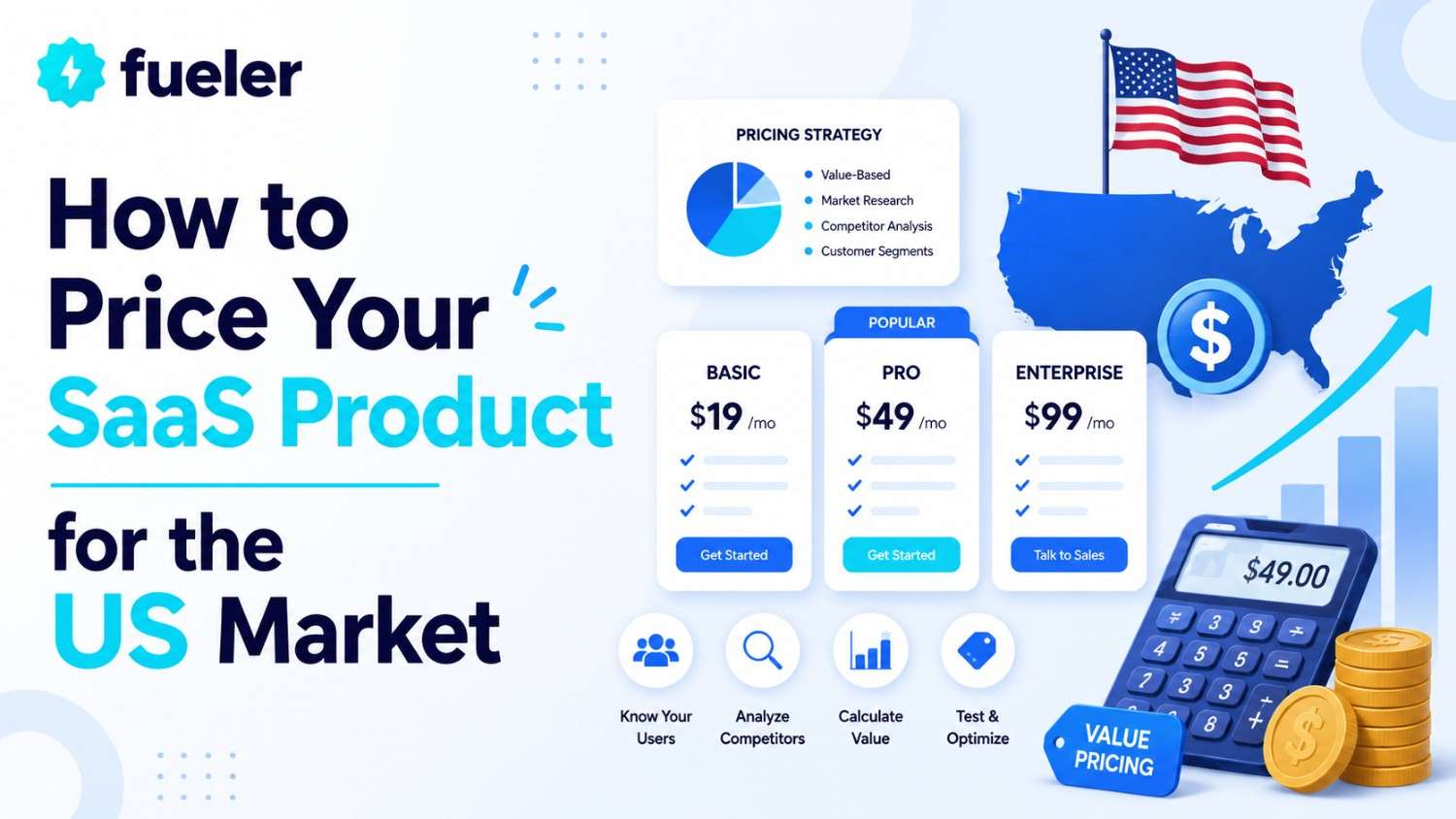
Choosing the right price is not just about numbers, it’s about unlocking growth, trust, and long-term success in the US SaaS market.
Pricing your SaaS product correctly in 2026 can feel like solving a complex puzzle. With fierce competition and diverse customer needs in the US market, your pricing strategy needs to reflect real value, stand out, and support scalable growth. Getting it right means striking a perfect balance between affordability and perceived worth to attract and keep customers.
I’m Riten, founder of Fueler - a skills-first portfolio platform that connects talented individuals with companies through assignments, portfolios, and projects, not just resumes/CVs. Think Dribbble/Behance for work samples + AngelList for hiring infrastructure
Let’s explore key pricing strategies and practical steps tailored for US SaaS startups to gain competitive advantages in 2026.
1. Understand Your Customer’s Value Drivers and Willingness to Pay
Pricing rooted in customer value outperforms cost-plus or competitor-based pricing because it focuses on what matters most to buyers.
- Conduct qualitative interviews and quantitative surveys to deeply understand the problems your SaaS solves, and how much financial impact or efficiency gains customers experience.
- Segment customers by industry, company size, use case, and budget to identify varying willingness-to-pay levels, enabling customized pricing tiers or packages that fit different segments.
- Assess competitor pricing but avoid simply matching or undercutting; instead, highlight differences supporting your premium or value positioning.
- Test pricing hypotheses with pilot programs or beta groups offering different price points to observe real buying behavior rather than relying on assumptions.
- Monitor how value perception varies with feature sets, onboarding experience, and customer support quality to refine your pricing model regularly.
Why it matters: Pricing that reflects customer value boosts perceived fairness and increases conversions and retention by aligning costs with benefits realized.
2. Select the Pricing Model That Matches Customer Preferences and Your Growth Goals
Choosing from subscription, usage-based, tiered, or freemium pricing models shapes customer acquisition, revenue predictability, and scalability.
- Subscription pricing offers fixed monthly or annual fees and is favored for stable, predictable revenue streams, simplifying budgeting for customers.
- Usage-based pricing charges according to actual usage (users, data, API calls) appealing to customers who want to pay exactly for the value they consume.
- Tiered pricing structures different packages with incremental features and usage limits, catering to diverse customer segments and encouraging upgrades.
- Freemium models attract large user bases by offering basic features free while monetizing advanced capabilities, accelerating market adoption.
- Consider hybrid approaches combining models or allowing easy switching to optimize revenue and customer satisfaction.
Why it matters: The right model matches how customers want to buy and use your SaaS, impacting acquisition volume, average revenue per user, and long-term growth.
3. Craft Transparent, Simple Pricing Tiers that Drive Purchase Decisions
Complex pricing drives confusion and indecision; simplicity builds trust and guides customers confidently toward the best fit.
- Design 3-4 clear tiers differentiated by usage limits, features, or levels of customer support, giving each tier a compelling value proposition tailored to specific customer profiles.
- Highlight a “best value” or “recommended” tier to steer buyers towards the option balancing affordability and features, optimizing revenue while meeting customer needs.
- Make it easy for customers to compare tiers by using clear, jargon-free language and visual aids such as comparison tables.
- Include a free trial or freemium option to lower entry barriers, encourage product testing, and nurture users toward conversion.
- Provide smooth upgrade and downgrade paths with no penalties to increase customer comfort and reduce churn from mismatched plans.
Why it matters: Clear, straightforward pricing helps reduce friction in the buying process, shortens sales cycles, and improves customer confidence and retention.
4. Use Discounts and Promotions Strategically for Growth and Retention
Well-planned discounts stimulate sign-ups and renewals, but overuse risks brand value erosion and margin pressure.
- Encourage annual subscriptions by offering meaningful discounts, incentivizing longer commitments, improving cash flow and customer lifetime value.
- Use promotional pricing sparingly during key moments such as launch, seasonal campaigns, or customer milestones to create urgency without cheapening the brand.
- Implement volume or enterprise discounts thoughtfully for customers with multiple users or high consumption, balancing customer satisfaction with profitability.
- Create customized quotes for premium customers or strategic partnerships that increase stickiness through personalized pricing and service.
- Avoid blanket deep discounting which can confuse customers and distort perceived value; focus on value-added bundles or limited-time offers instead.
Why it matters: Strategic discounting grows your customer base and fosters loyalty while protecting your brand’s premium positioning and healthy margins.
5. Test and Evolve Pricing Using Data and Customer Feedback
Pricing should be dynamic; ongoing optimization based on data and market feedback helps maintain competitiveness and customer satisfaction.
- Collect quantitative data on conversion rates, churn, feature adoption, and willingness to pay, analyzing trends over time and across segments.
- Conduct regular competitor benchmarking using public data, competitor customer feedback, and pricing intelligence tools to stay informed on market shifts.
- Use A/B testing or pricing experiments with subsets of customers to test changes in pricing, messaging, or packaging before wide rollout.
- Engage in continuous dialogue with your sales, support, and success teams to gather frontline insights on pricing objections or win factors.
- Adjust pricing tiers, models, or features based on real-world signals, being transparent with customers about changes and rationale.
Why it matters: A data-driven pricing strategy enables agility in a dynamic SaaS market, maximizing revenue opportunities while maintaining customer trust.
6. Align Pricing Communications with Customer Expectations and Outcomes
How you present your pricing matters just as much as the numbers themselves in supporting buying decisions.
- Use clear, benefit-focused language to describe not only price tags but business outcomes customers can expect from each tier, aligning price to value.
- Avoid hidden fees or confusing terms, providing total cost of ownership transparency to reduce sticker shock and build trust.
- Provide pricing FAQs addressing common customer concerns upfront, eliminating barriers related to budgeting or decision-making.
- Train sales and customer-facing teams to communicate pricing value consistently and confidently, handling objections effectively.
- Include testimonials or case studies alongside pricing pages to show real-world ROI and reassure skeptical buyers.
Why it matters: Effective pricing communication turns complex cost structures into easy decisions, improving conversions and fostering goodwill.
7. Factor in Competitive and Market Trends When Setting Prices
The US SaaS market is fast evolving; pricing strategies that don’t consider emerging trends risk losing relevance and customers.
- Monitor trends such as increasing demand for usage-based pricing, adoption of freemium programs, and preference for flexible contract terms.
- Adjust pricing structures to reflect shifts in customer behavior caused by economic conditions, new regulations, or technology disruptions.
- Benchmark against direct and indirect competitors to ensure your pricing remains attractive yet profitable, differentiating on trademark value-added features.
- Innovate pricing by experimenting with new models like outcome-based pricing, pay-as-you-grow, or hybrid subscriptions reflecting value delivered rather than product components.
- Stay tuned to macroeconomic developments such as inflation or currency shifts affecting purchasing power and customer budgeting.
Why it matters: Aligning your pricing approach with current market dynamics ensures competitive positioning and ongoing customer appeal.
8. Integrate Pricing Strategy with Your Overall Business Model and Growth Plan
Pricing doesn’t exist in isolation; it must support your SaaS startup’s vision, sales channels, customer success, and target markets.
- Match your pricing design with your go-to-market strategy, ensuring sales teams know how to position and sell tiers effectively across customer segments.
- Coordinate pricing with marketing campaigns to maintain consistency in value messaging and incentives.
- Plan pricing to support customer success processes, enabling smooth onboarding and upgrades aligned with product evolution.
- Consider geographic and vertical-specific pricing adaptations to capture value from different US customer clusters.
- Review pricing strategy regularly as your SaaS grows, adjusting to changing business goals, product maturity, and customer feedback.
Why it matters: Cohesive pricing integrated with business strategy maximizes customer acquisition, retention, and lifetime value.
Final Thoughts
Pricing your SaaS product for the US market in 2026 is a blend of art and science, requiring deep customer understanding, clear value communication, and ongoing refinement. By applying customer-centric value evaluation, choosing the right model, simplifying pricing tiers, and using data strategically, SaaS founders can unlock sustainable growth and loyal customer bases in a competitive landscape.
FAQs
1. What is the best pricing model for SaaS products in the US market?
There is no one-size-fits-all model, but popular approaches include subscription, tiered, usage-based, and freemium pricing. The best choice depends on your product features, customer segments, and revenue goals.
2. How do I determine the right price point for my SaaS product?
Start by understanding the value your product delivers, your customers’ willingness to pay, and competitor pricing. Use customer feedback and real-world testing to refine your price.
3. Should I offer discounts or promotions on SaaS pricing?
Yes, but use them strategically. Discounts for annual commitments or volume purchases encourage loyalty. Avoid frequent large discounts that may devalue your product.
4. How many pricing tiers are ideal?
Typically, 3-4 tiers give enough choice without overwhelming buyers. Each tier should clearly cater to different needs and budget levels.
5. What role does transparency play in SaaS pricing?
Clear, upfront pricing builds trust. Avoid hidden fees and complex billing so customers understand exactly what they pay for.
What is Fueler Portfolio?
Fueler is a career portfolio platform that helps companies find the best talent for their organization based on their proof of work. You can create your portfolio on Fueler, thousands of freelancers around the world use Fueler to create their professional-looking portfolios and become financially independent. Discover inspiration for your portfolio
Sign up for free on Fueler or get in touch to learn more.

What should you do next?
You've read the article. Now turn your skills into proof of work and unlock more opportunities.
Build your proof of work portfolio
Create a clean portfolio with projects, assignments, resumes, and AI stack details that companies actually want to see.
Create your Fueler portfolio →Apply through assignments, not resumes
Stand out by solving real tasks from companies hiring on Fueler.
Explore assignments →Get discovered by companies
Make your work public and let recruiters discover your skills through actual projects instead of keywords.
Get discovered →
