How to Map Out Client Projects for Better Results

Team Fueler
06 Jun, 2026
Miscommunications wreck project timelines faster than almost any other issue. When you take on a new client, everyone starts the relationship with high energy and big expectations. Without a clear map of where the project is heading, that initial enthusiasm can quickly turn into confusion.
Mapping out your client projects ahead of time keeps everyone aligned from day one. It removes the guesswork from early conversations and sets up your internal team for a smooth delivery. This proactive planning protects your profit margins and keeps your clients happy throughout the entire engagement.
Clear Visualizations Build Direct Alignment
Getting everyone on the same page requires clear, visual frameworks rather than text-heavy emails. Using intelligent diagramming software helps transform abstract project ideas into structured workflows that anyone can understand instantly. This approach establishes immediate transparency between your team and the client stakeholders.
Visual planning tools make it easy to spot potential bottlenecks before they impact your delivery timeline. Seeing the entire process laid out makes it simple to assign responsibilities and set realistic milestones. Your clients will appreciate seeing a concrete roadmap instead of a vague list of bullet points.
Defining Your Project Scope and Core Boundaries
Every project needs solid boundaries to prevent it from growing out of control over time. You need to establish exactly what is included in the current package and what requires an extra fee. Write down every deliverable, deadline, and revision limit clearly so the client knows exactly what to expect.
This upfront clarity protects your team from unpaid extra work and keeps the relationship positive. When a client requests an extra feature, you can easily point back to the original project map. This practice turns a potentially awkward negotiation into a simple conversation about budget adjustments.
Tracking Actual Time Against Initial Estimates
Estimating project hours accurately is a skill that takes practice and careful review. Many agencies find that actual design work is only part of the equation when calculating costs. You also have to track time spent on client communication, file organization, and minor status updates.
A recent study noted that actual projects often require 20% more time than initial estimates just to handle communication and file management. Adding a project management multiplier to your initial estimates can help cover these hidden hours. This simple adjustment ensures your contracts remain profitable even when administrative tasks pile up.
Breaking Down the Project Management Lifecycle
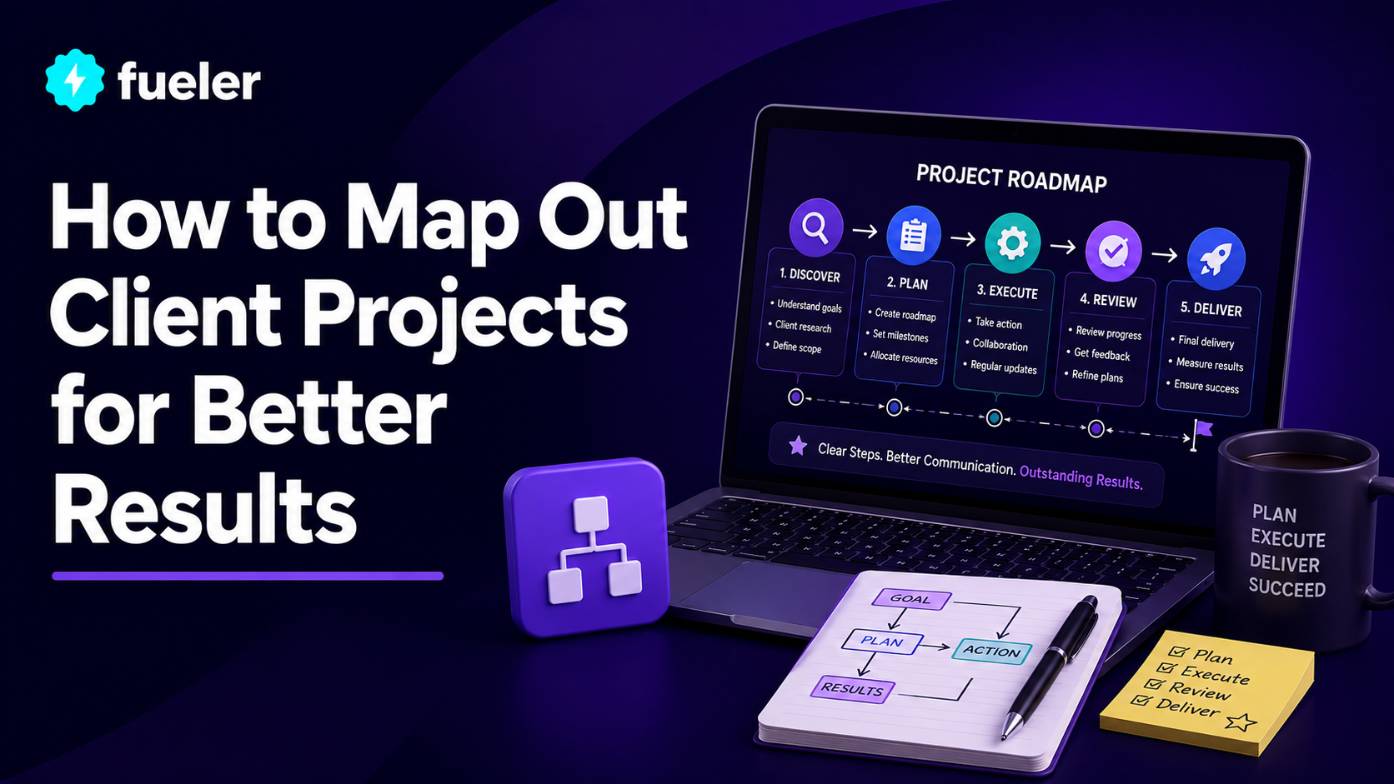
A successful project follows a structured lifecycle from the initial kickoff meeting to the final handoff. Project mapping outlines this entire lifecycle, detailing essential phases from initiation to closure. It provides a structured approach to defining goals, planning resources, executing tasks, and monitoring progress.
Following these distinct stages ensures your team never skips crucial quality assurance checks. It gives your workflow a predictable rhythm that team members can rely on. Clients also feel more secure when they see you follow a proven, repeatable framework.
Simplifying Workflows for Better Team Adoption
Complex software setups often backfire when team members find them too frustrating to use. An article on design workflows explained that when checking a task list requires navigating 3 levels of menus, designers simply stop checking. Instead, they ask questions in chat apps, which creates more manual work for everyone involved.
Keep your internal tracking workflows as simple as possible to ensure your team actually uses them. Eliminating unnecessary clicks keeps your developers focused on creative execution rather than software administration.
Here are 3 ways to simplify your internal tracking:
- Centralize all feedback in 1 shared document instead of multiple email threads.
- Limit task categories to 3 simple stages like To Do, In Progress, and Done.
- Standardize file naming conventions across the entire agency to save search time.
Managing Complex Projects in Modern Environments
Client expectations continue to rise as business landscapes grow more competitive. An industry report emphasized that managing client projects today requires more than just basic task lists and spreadsheets. As project complexity increases, businesses need specialized systems that combine relationship management with robust project capabilities.
Upgrading your internal systems helps you scale your operations without sacrificing client satisfaction. It allows your project managers to track client interactions and production milestones in one centralized place. This unified view keeps your business agile and ready for sudden market shifts.
Setting Up Clear Communication Milestones
Constant, unstructured messaging can derail a creative team's focus during the workweek. Establish specific days for progress updates so clients know exactly when they will hear from you. This boundary gives your builders uninterrupted blocks of time to focus on high-value tasks.
It trains clients to gather their feedback into organized collections instead of sending scattered emails. When clients know a formal update is coming on Friday, they are less likely to disrupt your team on Tuesday. This structure reduces stress for everyone and keeps production moving forward smoothly.
Managing Resources Wisely Across Multiple Accounts
Overallocating your staff leads to burnout, low morale, and missed deadlines. Take an honest look at your team's weekly capacity before onboarding a massive new client. If 1 person is swamped, shuffle minor tasks to other team members to balance the daily workload.
Keeping your team energized guarantees a much higher quality of work for your clients. Balanced workloads also reduce employee turnover, which protects your agency's institutional knowledge. Happy teams naturally produce better results and build stronger client relationships.
Effective resource management requires tracking a few key metrics:
- Total billable hours available per week across the entire production team.
- Average time spent on administrative tasks versus actual creative production.
- Individual team member skill specialties and current project commitments.
Creating a Formal Review and Handoff Process
The final phase of a client engagement deserves as much attention as the initial kickoff meeting. Create a standardized checklist for offboarding clients and delivering final assets securely. This step ensures that no loose ends are left untangled and all deliverables match the original agreement.
Ask your clients for direct feedback on what went well and where your team can improve. This final conversation often reveals opportunities for future retention or valuable referrals. Marking the end of a project with a formal sign-off builds long-term professional respect.
Mapping out client projects takes some extra effort upfront, but it saves hours of frustration down the road. When you build clear visual tracks, track your time accurately, and protect your team's boundaries, your projects finish on time and under budget.
Your clients will appreciate the professional structure, and your team will enjoy a stress-free environment. Start building your next project map today to experience the difference firsthand.
What is Fueler Portfolio?
Fueler is a career portfolio platform that helps companies find the best talent for their organization based on their proof of work. You can create your portfolio on Fueler. Thousands of freelancers around the world use Fueler to create their professional-looking portfolios and become financially independent. Discover inspiration for your portfolio
Sign up for free on Fueler or get in touch to learn more.

What should you do next?
You've read the article. Now turn your skills into proof of work and unlock more opportunities.
Build your proof of work portfolio
Create a clean portfolio with projects, assignments, resumes, and AI stack details that companies actually want to see.
Create your Fueler portfolio →Apply through assignments, not resumes
Stand out by solving real tasks from companies hiring on Fueler.
Explore assignments →Get discovered by companies
Make your work public and let recruiters discover your skills through actual projects instead of keywords.
Get discovered →
