How to Build a Freelance Career (2026 Guide)

Riten Debnath
15 May, 2026
Last updated: May 2026
The freelance market has shifted from "who you know" to "what you can prove." In 2026, the barrier to entry has never been lower, but the standard for quality has never been higher. If you are looking to escape the 9-to-5 grind, you need more than just a laptop and a dream; you need a system that allows you to compete with large agencies by being faster, sharper, and more reliable than the competition.
I’m Riten, founder of Fueler, a skills-first portfolio platform that connects talented individuals with companies through assignments, portfolios, and projects, not just resumes/CVs. Think Dribbble/Behance for work samples + AngelList for hiring infrastructure.
The world of work is changing rapidly, and traditional paths to employment are being replaced by digital proof of competence. This guide will walk you through the organic steps of building a sustainable freelance business from scratch, focusing on real-world value and human connection in a digital-first economy.
Master the Art of High-Intent Client Prospecting
Finding the right clients is the foundation of any freelance career that lasts longer than a month. Instead of shouting into the void on social media, you should focus on high-intent platforms where companies are actively looking for solutions to specific problems. This involves researching industry pain points and positioning yourself as the specialist who can fix them, rather than a generalist who does a bit of everything.
- Identifying profitable niches requires looking at market trends and seeing where companies are spending their marketing budgets this year. You want to find industries that have high profit margins but lack the internal bandwidth to handle specialized tasks, allowing you to charge premium rates for your unique expertise and focus.
- Cold outreach remains one of the most effective ways to land high-paying clients if you approach it with a personalized touch. Instead of sending generic templates, you should analyze a company's current digital presence and offer three specific, actionable improvements they can make today, which immediately builds trust and demonstrates your professional value.
- Building a personal brand on professional networks helps you attract inbound leads while you sleep. By consistently sharing your learnings, project breakdowns, and industry insights, you establish yourself as a thought leader, making it much easier for potential clients to choose you over a random freelancer with no public track record.
- Networking with other freelancers in complementary fields can lead to a consistent stream of high-quality referrals. If you are a writer, befriending web designers allows you to pass work back and forth, creating a win-win situation where you both provide more value to your clients while growing your respective businesses.
- Utilizing specialized job boards that cater to high-end remote work is often better than competing on low-cost bidding sites. Focus your energy on platforms that vet their clients, as this ensures you are working with professional organizations that respect your time, pay fair market rates, and understand the value of long-term partnerships.
Why it matters
Finding high-intent clients is the difference between constant financial stress and a stable, predictable income. When you master prospecting, you stop being a commodity and start being a partner. This connection to the blog title is vital because your freelance career only exists if you have a consistent flow of people willing to pay for your skills.
Developing a Signature Service That Scales
Many freelancers fail because they try to do too many things at once, which leads to burnout and mediocre results. To truly succeed, you need to develop a "Productized Service," which is a fixed-price offering with a clearly defined outcome. This allows you to streamline your workflow, improve your quality of work, and eventually increase your hourly rate by becoming incredibly efficient at one specific task.
- Creating a service menu helps set clear expectations and prevents the dreaded "scope creep" that ruins many freelance projects. When a client knows exactly what they are getting and what it costs, the sales process becomes much smoother, and you can focus on delivering excellent results rather than negotiating every tiny detail.
- Standardizing your onboarding process ensures that every project starts on the right foot without you having to reinvent the wheel every time. By having a set of questions and documents ready to go, you appear more professional to the client and save yourself hours of administrative headaches during the first week.
- Focusing on results-oriented communication shifts the conversation from how many hours you work to how much value you provide. Clients in 2026 do not care about your process as much as they care about the growth, revenue, or efficiency you bring to their business, so always frame your services around their goals.
- Building a library of reusable assets and templates allows you to complete high-quality work in a fraction of the time. Whether it is a specific coding framework, a copywriting structure, or a design system, having a foundation to build upon ensures consistency across all your client projects while maximizing your profit.
- Setting up a recurring revenue model through retainers or monthly maintenance packages provides the financial security that most freelancers lack. By offering ongoing support or continuous improvements, you turn one-time projects into long-term partnerships, reducing the pressure to constantly find new clients every single month.
Why it matters
Scaling your service is the only way to grow your income without working 80 hours a week. By productizing what you do, you create a repeatable system that delivers high value every single time. This is the "2026 Guide" way of freelancing, where efficiency and specialized expertise are the ultimate competitive advantages in a crowded global market.
Proven Strategies for Pricing and Negotiation
Pricing is often the most uncomfortable part of freelancing, but it is also the most important. In 2026, you should move away from hourly billing and toward value-based pricing. This means charging based on the impact your work has on the client's business. If your work helps a company make $50,000, charging $5,000 is a bargain, regardless of how many hours it took you to complete the task.
- Value-based pricing requires a deep understanding of your client's business objectives and financial goals. During discovery calls, ask questions that reveal the monetary value of the problem they are facing, which allows you to justify a higher price point by showing the potential return on their investment.
- Tiered pricing packages give clients a sense of control and often lead to higher average project values. By offering a "Basic," "Standard," and "Premium" option, you move the conversation from "Should we hire this person?" to "Which version of their service best fits our current budget and long-term needs?"
- Confidently handling objections is a skill that separates amateur freelancers from seasoned professionals. When a client says you are too expensive, instead of lowering your price, try to understand the risk they are perceiving and address it through social proof, guarantees, or a smaller initial project scope.
- Regularly increasing your rates as you gain more experience and social proof is necessary to keep up with inflation and market demand. Every time you finish a successful project or gain a new testimonial, you have a valid reason to raise your prices for the next client, ensuring your income grows over time.
- Implementing a strict payment schedule with an upfront deposit protects your cash flow and ensures the client is committed to the project. Professional freelancers never start work without a signed contract and an initial payment, as this sets a standard of mutual respect and financial responsibility from day one.
Why it matters
Mastering your pricing ensures that your freelance career is actually profitable and not just a glorified hobby. When you negotiate effectively, you earn the respect of your clients and the freedom to choose projects that genuinely interest you. This connects to our guide by providing the financial blueprint needed to sustain a long-term career.
Creating a Workflow for Maximum Productivity
Productivity in freelancing is not about working 12 hours a day, it is about making sure the 4 or 5 hours you do work are incredibly impactful. You need to build a system that manages your energy, minimizes distractions, and allows you to enter a state of "deep work" where your best creative ideas come to life. In 2026, the freelancers who thrive are those who can produce high-quality work faster than anyone else.
- Batching similar tasks together reduces the mental energy lost during context switching, which is one of the biggest productivity killers for solo professionals. By dedicating specific days to client work, marketing, and administrative tasks, you allow your brain to stay focused on one mode of operation, resulting in much higher output and better quality.
- Using a simplified project management system helps you keep track of deadlines and deliverables without becoming overwhelmed by complex software. You should have a clear visual representation of every project’s status, ensuring that nothing falls through the cracks and that you can provide proactive updates to your clients before they even ask.
- Setting strict boundaries for your working hours prevents burnout and keeps your creative energy high for the long haul. It is tempting to answer emails at midnight, but successful freelancers know that protecting their personal time is essential for maintaining the mental clarity needed to solve complex problems for their clients during the day.
- Automating repetitive administrative tasks like invoicing, meeting scheduling, and basic follow-ups frees up your time for actual revenue-generating work. Every hour you spend on paperwork is an hour you are not getting paid for, so investing time in setting up simple automation systems pays massive dividends over the course of a year.
- Conducting weekly reviews of your progress and challenges allows you to pivot quickly when something is not working. By looking at what tasks took longer than expected and where you felt most productive, you can continuously refine your workflow to be leaner, faster, and more enjoyable as your freelance business grows.
Why it matters
A solid workflow is the engine that keeps your freelance career moving forward without causing mental exhaustion. If you do not control your time, your clients or your inbox will control it for you. Mastering productivity ensures you have the freedom that freelancing is supposed to provide, which is a core theme of this 2026 guide.
Establishing Authority Through Thought Leadership
In a world where everyone claims to be an expert, true authority is built through consistent, valuable contributions to your industry. Though leadership is not about showing off, it is about being helpful at scale. By sharing your expertise publicly, you build a "trust bridge" with potential clients who can see your knowledge in action before they ever hop on a discovery call with you.
- Publishing detailed case studies that explain how you solved a specific problem provides undeniable proof of your expertise. Instead of just listing your services, show the data, the strategy, and the final outcome of your past projects, which makes it much easier for a prospect to envision you doing the same for them.
- Engaging in meaningful conversations on industry-specific platforms helps you stay top-of-mind for potential clients and collaborators. By providing thoughtful answers to people's questions and sharing your unique perspective on current trends, you establish a reputation as a helpful professional who truly understands the market.
- Creating original content like blog posts, newsletters, or videos allows you to own your audience rather than relying on social media algorithms. When you have a platform where people come to hear your specific insights, you create a loyal community that is much more likely to hire you or refer you to others.
- Speaking at webinars or local industry events can rapidly accelerate your authority and lead to high-level networking opportunities. Even if you are an introvert, participating in panel discussions or giving short presentations positions you as an expert in the eyes of the audience, which often leads to immediate project inquiries.
- Collaborating with other experts on joint projects or content pieces expands your reach and adds a layer of social proof to your brand. When you are seen working alongside other respected professionals, their authority rubs off on you, making it easier to land bigger contracts and work with more prestigious organizations.
Why it matters
Authority is the currency of the freelance world in 2026. Without it, you are constantly fighting for scraps on low-end platforms. With it, you attract high-quality clients who are willing to pay a premium for your specific brain. Building authority is the long-game strategy that turns a side hustle into a sustainable, high-income career.
Navigating the Legal and Financial Basics
You cannot have a successful career if you do not treat your freelancing like a real business. This means getting your legal and financial ducks in a row from day one. While it might not be as exciting as creative work, having a solid foundation in contracts, taxes, and business structure is what allows you to sleep peacefully at night and protects you from unforeseen professional risks.
- Drafting a standard contract that clearly defines payment terms, ownership of work, and termination clauses is non-negotiable for every project. A good contract protects both you and the client, ensuring there is a mutual understanding of the relationship and a clear path forward if disagreements or changes in project scope occur.
- Separating your business and personal finances by opening a dedicated bank account makes tracking your income and expenses much simpler. This level of organization is essential for accurate bookkeeping and ensures that you always know exactly how much profit your freelance business is actually making after all expenses are paid.
- Setting aside a percentage of every paycheck for taxes ensures you are never surprised by a large bill at the end of the year. Professional freelancers treat tax obligations as a standard business expense and stay disciplined about saving, which prevents the financial stress that often ruins many independent careers.
- Choosing the right legal structure for your business provides different levels of liability protection and tax benefits depending on your location. Whether you remain a sole proprietor or form a limited liability company, understanding the implications of your choice is a vital step in professionalizing your freelance operation.
- Investing in basic business insurance can protect you from potential lawsuits or equipment damage that could otherwise derail your career. For many freelancers, a simple professional liability policy provides an extra layer of security that demonstrates to larger clients that you are a serious, well-prepared business partner.
Why it matters
Legal and financial stability is the safety net that allows you to take creative risks in your freelance career. By handling these basics professionally, you minimize stress and maximize your long-term sustainability. This is a foundational part of the "2026 Guide" because a career is only as strong as the business structure supporting it.
Mastering Client Retention for Long-Term Growth
It is much cheaper and easier to keep an existing client than it is to find a brand new one. Success in freelancing is built on the back of long-term relationships where you become an indispensable part of your client's team. When you focus on retention, you spend less time marketing and more time doing the work you love for people who already trust and value your professional contribution.
- Delivering work ahead of schedule is one of the simplest ways to impress a client and build lasting trust. When you consistently beat deadlines, you prove that you are reliable and organized, which are two of the most important traits clients look for when deciding who to hire for their next major project.
- Proactively suggesting improvements or new ideas shows that you are invested in the client's long-term success, not just finishing the current task. By acting as a strategic partner rather than a task-taker, you move yourself up the value chain and make it much harder for the client to consider replacing you.
- Maintaining clear and consistent communication throughout a project prevents misunderstandings and makes the client feel supported. Even if there are no major updates, a quick weekly check-in can go a long way in showing that you are on top of things and that their project is a priority for you.
- Implementing a formal feedback loop allows you to understand what you are doing well and where you can improve for the next project. By asking for honest reviews, you show a commitment to professional growth and give the client an opportunity to share any small concerns before they become big problems.
- Offering exclusive loyalty discounts or "early bird" access to new services for your long-term clients rewards them for their continued business. These small gestures show your appreciation and make the client feel like a valued partner, which naturally leads to higher retention rates and more frequent referrals to their own networks.
Why it matters
Retention is the secret to a "low-stress" freelance career. When you have a roster of steady clients, you don't have to worry about where your next paycheck is coming from. This stability allows you to focus on quality and innovation, which are the hallmarks of a professional career in 2026.
Staying Relevant in an Evolving Market
The only constant in the freelance world is change. What worked last year might not work next year, so you must commit to being a lifelong learner. Staying relevant means keeping an eye on industry trends, learning new skills, and being willing to pivot your service offerings when the market demands something different. This flexibility is what allows you to thrive while others struggle to keep up.
- Dedicating a few hours each week to learning new skills keeps your professional toolkit sharp and competitive. Whether it is mastering a new design software, understanding a new marketing platform, or learning a new coding language, continuous education ensures you never become obsolete in a fast-moving digital economy.
- Following industry leaders and subscribing to relevant newsletters helps you anticipate market shifts before they happen. By staying informed about where your industry is heading, you can position yourself as an early adopter of new technologies and strategies, giving you a massive advantage over the competition.
- Attending virtual or in-person conferences allows you to network with peers and learn from the best in your field. These events are often where the most cutting-edge ideas are shared, providing you with fresh inspiration and new perspectives that you can immediately apply to your own freelance business.
- Experimenting with new tools and workflows in your personal projects allows you to test what works without risking a client's project. This "innovation lab" approach ensures that when you introduce a new service or method to a client, you are doing so with confidence and proven results.
- Regularly auditing your current service offerings ensures they are still in line with what the market actually needs and is willing to pay for. If you notice a decline in interest for a certain task, do not be afraid to phase it out and replace it with a more high-demand, high-value service that reflects current trends.
Why it matters
Relevance is your protection against market fluctuations. If you stop learning, you start falling behind. Staying curious and adaptable is a core requirement for anyone following this 2026 guide to building a freelance career that lasts for decades rather than just a few years.
Building a Support System of Fellow Freelancers
Freelancing can be lonely, but it does not have to be. Building a community of like-minded professionals provides emotional support, technical advice, and a sense of belonging that is often missing when you work for yourself. A strong network is your "safety net," offering everything from help with a difficult client to celebrating your biggest professional wins.
- Joining online communities or local co-working spaces helps you connect with other freelancers who understand the unique challenges of independent work. Having a group of people you can talk to about pricing, productivity, or burnout makes the journey much more enjoyable and less isolating than trying to figure it all out on your own.
- Forming "Mastermind Groups" with a few trusted peers allows for deep-dive discussions into each other's businesses. These regular meetings provide accountability and diverse perspectives that can help you solve complex problems and reach your professional goals much faster than you would by working in a vacuum.
- Partnering with freelancers in complementary niches allows you to take on larger, more complex projects that you could not handle alone. By acting as a "micro-agency," you can provide more value to your clients while learning from the expertise of your partners, creating a win-win situation for everyone involved.
- Sharing your resources, templates, and lessons learned with others builds a reputation as a generous and collaborative professional. The more you help others in your network, the more likely they are to think of you when a high-paying referral opportunity comes their way, creating a cycle of mutual success and growth.
- Finding a mentor who has already achieved what you are aiming for can provide invaluable guidance and save you years of trial and error. A mentor can help you navigate the "invisible" parts of freelancing, like high-level negotiation or long-term brand strategy, providing the clarity you need to level up your career.
Why it matters
A support system is your mental health insurance. Freelancing is a marathon, and having a "team" behind you even if they don't work in your company, is essential for staying motivated and inspired. This connection to others is a vital piece of the puzzle for a sustainable 2026 career.
How Does This Connect to Building a Strong Career or Portfolio?
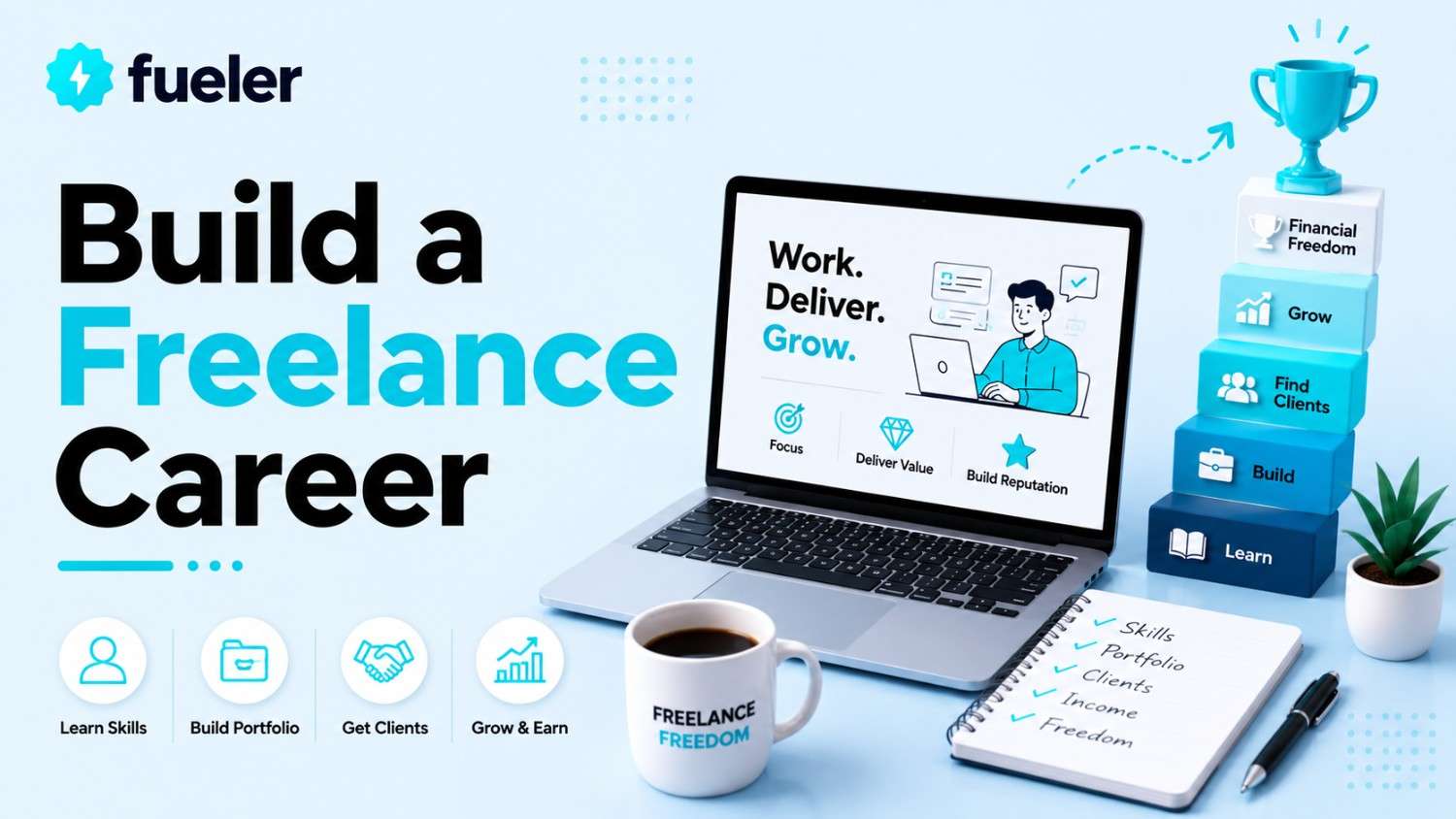
A successful freelance career is essentially a living, breathing portfolio. Every client you land, every project you complete, and every problem you solve becomes a brick in the wall of your professional reputation. In 2026, companies are less interested in where you went to school and more interested in what you have actually built. By documenting your freelance journey, you are creating a "Proof of Work" trail that acts as a magnet for future opportunities.
Your portfolio should not just be a gallery of pretty pictures; it should be a collection of case studies that explain the "why" behind your work. When you show the challenge you faced, the strategy you used, and the final results you achieved, you provide undeniable evidence of your talent. This makes the hiring decision easy for clients because they can see exactly how you will solve their specific problems based on your past successes.
Showing Your Proof of Work with Fueler
This is where a platform like Fueler becomes your secret weapon. While social media is great for attention, Fueler is built for intent. It allows you to organize your freelance projects, assignments, and work samples into a professional, high-conversion portfolio that speaks the language of recruiters and clients. Instead of just telling someone you are an expert, you can send them a single link that showcases your entire history of high-quality work, making you the obvious choice for their next big project.
Final Thoughts
Building a freelance career in 2026 is about blending human creativity with a strategic, business-first mindset. It requires the discipline to hunt for the right clients, the skill to deliver exceptional value, and the foresight to document your progress. Success does not happen overnight, but by following these organic steps and focusing on building a "Proof of Work" ecosystem, you can create a career that offers both financial freedom and professional fulfillment.
FAQs
What are the most in-demand freelance skills in 2026?
The most sought-after skills involve high-level strategy, complex problem-solving, and specialized creative work that requires a deep human touch. This includes things like brand storytelling, technical system architecture, and strategic growth consulting, where a personal perspective and deep industry knowledge are irreplaceable by automated systems.
How do I start freelancing with no prior experience?
The best way to start is by creating "Proof of Work" through personal projects or volunteer assignments. By completing real tasks and documenting the process, you build a mini-portfolio that proves you have the skills, which allows you to land your first small paying clients and gradually scale up to larger projects.
Is it better to charge hourly or per project in 2026?
Project-based or value-based pricing is almost always better for freelancers. It allows you to earn more as you become more efficient, whereas hourly billing essentially punishes you for being fast. Project-based fees also provide price certainty for the client, which makes them more comfortable signing a contract.
How can I find international freelance clients?
You can find international clients by leveraging global professional networks, specialized remote job boards, and optimizing your digital portfolio for search engines. Focus on niches that are not location-dependent and ensure your communication skills are top-notch to bridge the gap across different time zones and cultures.
How do I protect myself from non-paying freelance clients?
The best protection is a combination of a solid contract and a mandatory upfront deposit. Always use a written agreement that outlines the scope of work, payment milestones, and deadlines. Never hand over final, high-resolution files until the final payment has been received and cleared in your account.
What is Fueler Portfolio?
Fueler is a career portfolio platform that helps companies find the best talent for their organization based on their proof of work. You can create your portfolio on Fueler. Thousands of freelancers around the world use Fueler to create their professional-looking portfolios and become financially independent. Discover inspiration for your portfolio
Sign up for free on Fueler or get in touch to learn more.

What should you do next?
You've read the article. Now turn your skills into proof of work and unlock more opportunities.
Build your proof of work portfolio
Create a clean portfolio with projects, assignments, resumes, and AI stack details that companies actually want to see.
Create your Fueler portfolio →Apply through assignments, not resumes
Stand out by solving real tasks from companies hiring on Fueler.
Explore assignments →Get discovered by companies
Make your work public and let recruiters discover your skills through actual projects instead of keywords.
Get discovered →
