How European Leaders Can Build AI-First Organizations

Riten Debnath
29 Nov, 2025
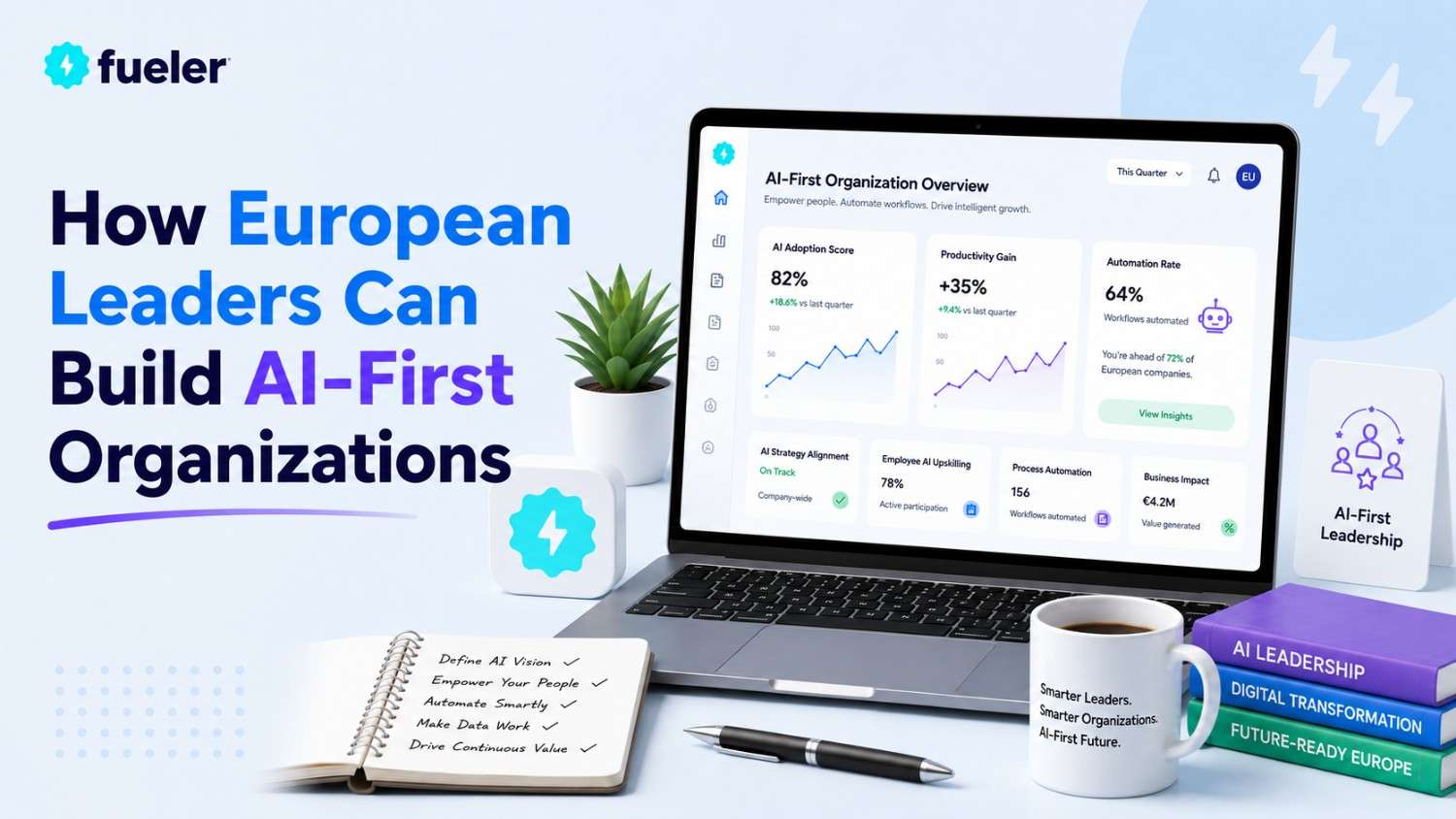
In today’s fast-evolving world, European leaders face immense pressure to innovate and remain competitive globally. Building AI-first organizations is no longer a luxury but a strategic necessity for success in 2026 and beyond. AI technologies empower leaders to drive smarter decisions, optimize operations, and create more agile, forward-thinking companies ready for the future.
I’m Riten, founder of Fueler - a skills-first portfolio platform that connects talented individuals with companies through assignments, portfolios, and projects not just resumes/CVs. Think Dribbble/Behance for work samples + AngelList for hiring infrastructure
1. Cultivate an AI-Driven Culture
Creating a culture that embraces AI starts with leadership commitment and a clear vision. Leaders must foster openness to AI innovation and continuous learning throughout the organization. Encouraging collaboration between data scientists, IT, and business units ignites creativity and accelerates AI adoption.
- Leadership programs focused on AI literacy ensure managers at all levels understand AI’s potential and limitations, helping them champion AI initiatives effectively.
- Frequent internal workshops, hackathons, and brainstorming sessions inspire employees to explore AI solutions, share successes, and contribute ideas that support innovation.
- Cross-functional AI teams combine diverse expertise technical, operational, and strategic to accelerate the development and deployment of AI projects.
- Incentive structures reward employees implementing AI-driven improvements, motivating teams to experiment and integrate AI into workflows.
- Open communication channels encourage everyone to discuss challenges and opportunities related to AI, fostering transparency and buy-in across the company.
Why it matters: Cultivating a strong AI-driven culture lays the foundation for lasting innovation, helping European leaders implement AI solutions swiftly and with broad organizational support.
2. Foster Continuous Innovation with AI
AI-first organizations cultivate an environment where innovation never stops, leveraging AI to experiment and iterate rapidly.
- Setting up “AI innovation labs” or incubators encourages rapid prototyping and testing of AI-driven solutions in low-risk settings.
- Using agile methodologies ensures quick feedback loops and continuous refinement based on real user and market data.
- Encouraging cross-industry collaboration and partnerships brings fresh perspectives and accelerates AI maturity.
- Allocating budgets specifically for AI research and development maintains momentum and supports breakthrough innovations.
- Celebrating wins and learning openly from failures builds resilience and a growth mindset around AI adoption.
Why it matters: Continuous innovation enables European leaders to stay ahead in fast-changing markets and fully realize AI-first organization benefits.
3. Develop AI Talent and Skills
AI thrives when supported by skilled people. Leaders must focus on hiring specialists, upskilling their teams, and fostering continuous learning to maintain AI expertise internally.
- Partnering with universities, coding bootcamps, and AI training providers secures fresh talent versed in machine learning, data science, and AI ethics.
- Offering ongoing training programs ensures existing staff gain new skills in AI tools and methodologies, creating a versatile workforce.
- Establishing internal AI centers of excellence promotes knowledge sharing, accelerates problem-solving, and standardizes best practices across departments.
- Encouraging collaboration between AI experts and business teams embeds AI understanding into core operations, improving adoption and impact.
- Investing in AI leadership development trains managers to strategize AI use responsibly while guiding ethical deployment and governance.
Why it matters: Building AI talent and skills is critical to reduce reliance on external vendors and enables European organizations to innovate independently and sustainably.
4. Leverage AI for Data-Driven Decision Making
Integrating AI into decision processes drives accuracy and responsiveness. Leaders should ensure AI insights are embedded in daily workflows.
- AI-powered dashboards and visualizations provide real-time insights, making complex data accessible for actionable decisions at all levels.
- Automating routine decisions with AI reduces human error and increases operational efficiency, freeing leaders to focus on strategic challenges.
- Integrating AI with enterprise ERP and CRM systems ensures holistic data usage for better planning, sales forecasting, and customer management.
- Employing natural language processing and sentiment analysis uncovers customer trends and feedback, enabling faster, informed responses to market changes.
- Maintaining rigorous data governance guarantees that decisions based on AI are reliable and aligned with organizational standards.
Why it matters: Utilizing AI for data-driven decisions equips European leaders with the agility to navigate dynamic markets and drive competitive advantage.
5. Prioritize Ethical and Transparent AI Use
Ethical AI adoption builds trust with employees, customers, and regulators. Leaders must establish policies guiding fair, transparent, and responsible AI use.
- Defining clear principles for AI use ensures fairness, privacy protection, and compliance, reflecting European values and regulations.
- Engaging multidisciplinary teams, including ethicists and legal experts, in AI governance prevents harmful biases and unintended consequences.
- Providing transparency about AI decision-making processes fosters acceptance and allows auditability both internally and externally.
- Regularly monitoring AI systems for biases or errors safeguards against discrimination and maintains system integrity.
- Encouraging employee awareness about AI rights and data usage promotes workplace trust and openness.
Why it matters: Ethical AI use is essential for European organizations to sustain long-term credibility and navigate complex regulatory environments.
6. Invest in Scalable AI Infrastructure
Building a robust and scalable AI infrastructure is essential for managing data and deploying AI effectively. Investing in cloud platforms, data warehouses, and AI development tools prepares organizations to handle increasing AI workloads securely.
- Adopting cloud-first strategies using providers like AWS, Microsoft Azure, or Google Cloud ensures flexibility and scalability, allowing easy adjustment of resources as AI demands fluctuate.
- Consolidating data across silos into centralized lakes or warehouses enables comprehensive analytics and powering AI models with high-quality, unified data.
- Implementing tools for automated data labeling, model training, and monitoring shortens AI development cycles and improves accuracy.
- Prioritizing cybersecurity protects sensitive data and supports compliance with regulations such as GDPR, which remain critical for European organizations.
- Continuous infrastructure monitoring and optimization guarantee consistent AI performance while minimizing downtime and resource waste.
Why it matters: Scalable AI infrastructure empowers companies to innovate rapidly and securely, helping European leaders build AI-first organizations capable of evolving with emerging technologies.
7. Align AI Strategy with Business Goals
Successful AI-first transformation requires AI initiatives to directly support organizational priorities and value creation.
- Clearly defining AI objectives linked to revenue growth, customer experience, or operational efficiency drives focused efforts and measurable results.
- Cross-departmental alignment ensures AI projects complement overall strategy rather than creating silos.
- Establishing KPIs and success metrics for AI deployments facilitates performance tracking and accountability.
- Regular leadership reviews of AI initiatives keep projects aligned and adapt to changing business needs.
- Communicating AI strategy company-wide builds awareness and motivates teams to contribute toward shared goals.
Why it matters: Aligning AI strategy with business goals guarantees European leaders achieve meaningful impact from AI investments rather than technology for technology’s sake.
Final Thoughts
AI-first leadership is about blending human strengths with AI capabilities to create smarter, more adaptable organizations. European leaders who focus on continuous learning, ethical AI use, and aligning AI with business goals will build resilient companies ready for the future. With thoughtful strategy and human-centered leadership, AI becomes a powerful tool to drive innovation and growth in 2026 and beyond.
FAQs
How can leaders foster an AI-driven culture effectively?
Leaders should invest in AI literacy programs and promote cross-team collaboration to encourage innovation. Fostering openness and rewarding AI initiatives helps build a strong culture supportive of AI adoption.
What infrastructure investments are critical for AI success?
Scalable cloud platforms, centralized data warehouses, and strong cybersecurity measures form the backbone of AI infrastructure. These allow seamless AI deployment, data management, and regulatory compliance.
How important is AI talent development for European businesses?
Building internal AI skills through hiring and training is vital for sustainable AI adoption. Skilled employees drive innovation and reduce dependency on external consultants.
Why is ethical AI use essential for AI-first organizations?
Ethical AI builds trust by ensuring fairness, transparency, and compliance with data regulations. Regular audits and clear policies prevent bias and protect privacy.
How does aligning AI strategy with business goals drive results?
Linking AI projects to clear business objectives ensures meaningful impact and resource optimization. Continuous strategy reviews help adapt AI initiatives to evolving priorities.
What is Fueler Portfolio?
Fueler is a career portfolio platform that helps companies find the best talent for their organization based on their proof of work. You can create your portfolio on Fueler, thousands of freelancers around the world use Fueler to create their professional-looking portfolios and become financially independent. Discover inspiration for your portfolio
Sign up for free on Fueler or get in touch to learn more.

What should you do next?
You've read the article. Now turn your skills into proof of work and unlock more opportunities.
Build your proof of work portfolio
Create a clean portfolio with projects, assignments, resumes, and AI stack details that companies actually want to see.
Create your Fueler portfolio →Apply through assignments, not resumes
Stand out by solving real tasks from companies hiring on Fueler.
Explore assignments →Get discovered by companies
Make your work public and let recruiters discover your skills through actual projects instead of keywords.
Get discovered →
