How European Freelancers Can Charge Premium Rates

Riten Debnath
30 Nov, 2025
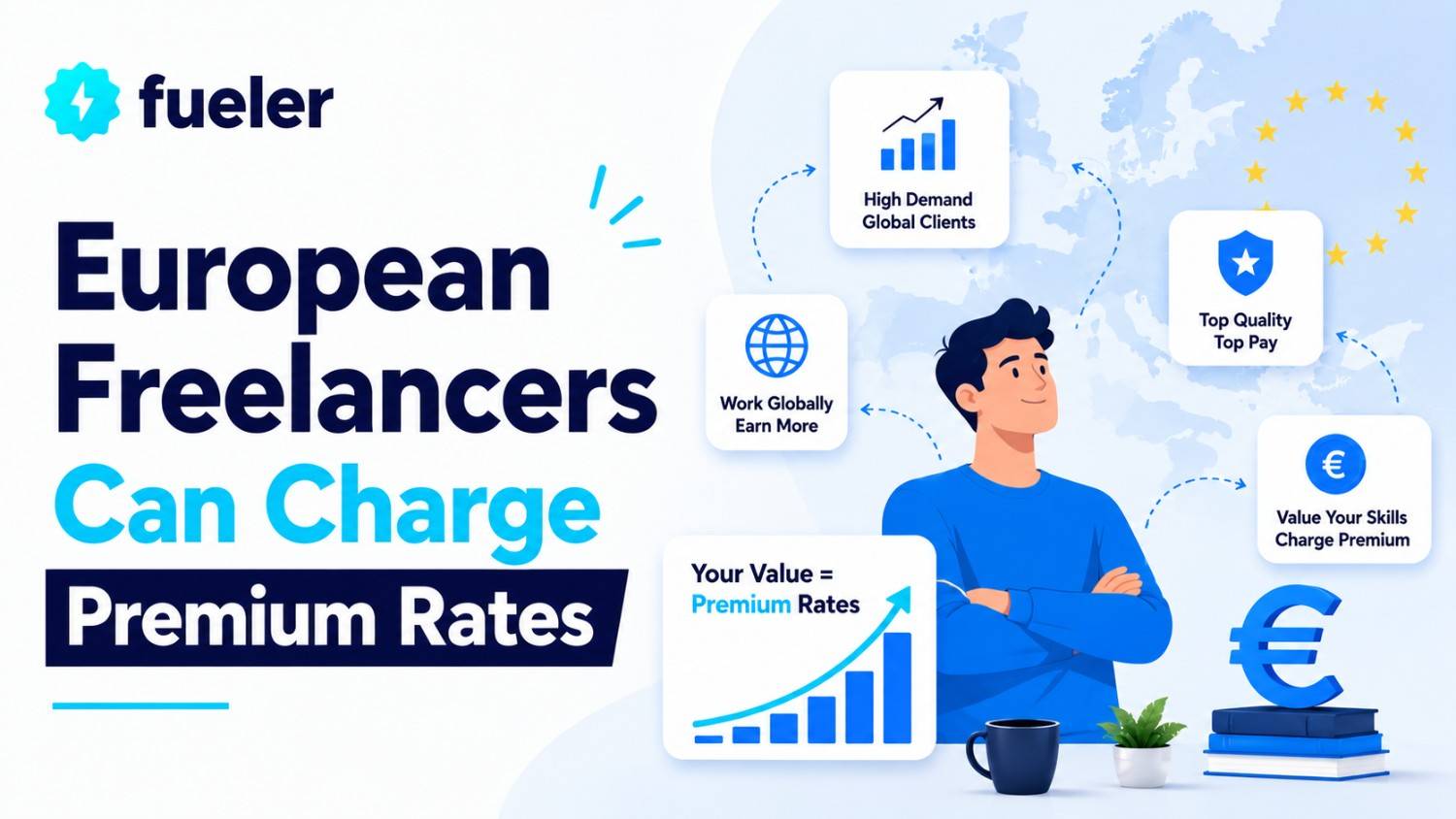
Charging premium rates as a freelancer in Europe in 2026 goes beyond just raising your hourly price. It requires a strategic blend of market understanding, portfolio presentation, client psychology, and continuous skill upgrading. The freelance market here is growing rapidly, but to stand out from the crowd and get paid what you’re worth, you need to position yourself as a trusted expert, not just a service provider.
I’m Riten, founder of Fueler - a skills-first portfolio platform that connects talented individuals with companies through assignments, portfolios, and projects, not just resumes/CVs. Think Dribbble/Behance for work samples + AngelList for hiring infrastructure
Understand Market Rates and Economic Realities
Knowing the current benchmarks in your country and niche is the foundation of charging more confidently. Across Europe, freelancers have begun adjusting rates to reflect inflation, cost of doing business, and increased demand for specialized skills. Resources like rate guides and industry reports show that experienced professionals in countries such as Germany, the Netherlands, and the UK often earn significantly more than newcomers, reflecting market maturity.
- Many freelancers track inflation and annual expenses carefully, adjusting rates anywhere from 4% to 10% yearly to keep earnings stable despite rising costs of taxes, insurance, and equipment.
- Market transparency has improved due to online communities and platforms that publish anonymized rate data, helping freelancers identify their relative position and avoid undercharging.
- In sectors like software development, consultancy, and digital marketing, average hourly rates will range widely, with expert freelancers commanding over €100/hour, while entry-level professionals start around €40-€60/hour.
- Psychological pricing matters; a rate too low can cause clients to doubt your expertise, whereas confident premium pricing signals professionalism and value.
- Advanced freelancers often use project-based or retainer pricing to offer clarity and justify higher costs while protecting income stability.
Why it matters:
Understanding regional economics and transparent market rates lets freelancers strategically price themselves, attracting clients willing to pay for verified quality while maintaining sustainable business margins.
Build a Solid and Results-Driven Portfolio
European clients increasingly demand visible proof of results before agreeing to premium rates. This means freelancers must showcase not only skills but the actual impact of their work such as metrics, case studies, or project outcomes. A portfolio filled with verified assignments or quantified success distinguishes professionals from price-sensitive competitors.
- Portfolios should include detailed explanations of project goals, your role, tools used, and measurable results achieved in a process that invites trust and builds authority.
- Use platforms like Fueler that allow you to upload skill-based assignments and real deliverables, offering evidence of your expertise beyond traditional resumes or vague references.
- Incorporate video testimonials or client reviews to reinforce authenticity, especially when quoting higher rates.
- Case studies focusing on ROI, conversion rates, or time saved make convincing arguments for your premium positioning.
- Regularly update your portfolio to reflect new skills, certifications, and technologies to stay relevant in fast-evolving industries.
Why it matters:
A portfolio showing tangible outcomes helps European freelancers justify higher charges by concrete proof rather than promises, which clients increasingly demand in competitive markets.
Invest in Continuous Skill Development and Certification
Charging premium rates requires ongoing skill upgrades aligned with market demand. The European freelance market favors professionals who invest in certifications, advanced training, and emerging technologies. Certifications from well-known providers offer third-party validation that strengthens your negotiation position.
- Participate in relevant online courses, bootcamps, and workshops offered by reputable organizations that constantly update content in tech, design, and business skills.
- Obtain certifications in trending fields such as AI, cloud computing, cybersecurity, or digital marketing analytics, which typically command higher fees.
- Showcase certificates and badges prominently in your portfolio and proposals to increase perceived value.
- Engage in peer groups and communities to stay updated with industry standards and client expectations.
- Continuous learning also improves efficiency and quality, which clients reward via repeat business or referrals.
Why it matters:
Investing in training and certifications signals commitment and expertise—two critical factors European clients consider when agreeing to pay premium freelance rates.
Master Client Communication and Negotiation Techniques
Premium freelancers understand that the way they communicate pricing and value influences client willingness to pay. Value-based conversations that focus on results over hours billed, transparent negotiation, and managing expectations are essential in commanding top rates.
- Clearly outline what your rate includes, such as project scope, revisions, support, and deadlines, to avoid misunderstandings.
- Use proposal templates that highlight benefits, tailored solutions, and unique expertise rather than just price tags.
- Be prepared to explain how your premium rates bring better outcomes, less risk, or faster delivery than lower-cost alternatives.
- Practice confident negotiation phrases and know when to say no if the budget undervalues your work.
- Follow up proactively after proposals to answer questions and keep the conversation moving toward agreement.
Why it matters:
Effective communication around your rates builds client trust and reduces price objections, laying the groundwork for European freelancers to charge what their skills truly deserve.
Leverage Niche Specialization and Unique Selling Points
Freelancers charging premium fees often operate in specialized niches where competition is lower and demand is higher. By focusing on a specific industry, technology stack, or business challenge, you develop expertise that lets you command more than generalists.
- Identify niches within your skillset that experience strong demand but have less supply, such as blockchain consulting, UX for fintech, or multilingual copywriting.
- Create content such as blogs, webinars, or case studies focused on your niche to build authority and attract ideal clients.
- Tailor proposals to address industry-specific issues and language that resonate with decision-makers.
- Network within niche communities and events to create valuable client leads and collaborations.
- Highlight your unique selling points in profiles and proposals, such as bilingual skills or experience with regulatory compliance.
Why it matters:
Specialization differentiates European freelancers from generic talent pools and will justify higher rates due to scarcity and tailored expertise.
Use Project-Based and Retainer Pricing Models
Moving away from hourly billing to project-based or retainer pricing models helps freelancers justify premium fees by aligning cost with client outcomes and ongoing value. Many European clients prefer predictable costs and long-term partnerships, creating stable income streams for freelancers.
- Package your services into fixed-price projects detailing deliverables, timelines, and milestones to reduce client hesitation and scope creep.
- Offer monthly retainer options for continuous support, consulting, or content creation, providing clients with predictable budgets and freelancers with steady income.
- Use value metrics like “per lead generated” or “per campaign managed” instead of time to further demonstrate ROI.
- Communicate the advantages of these models, such as focus on results and avoiding wasted billable hours during meetings or revisions.
- Track scope and deliverables rigorously to maintain profitability and client satisfaction.
Why it matters:
Project and retainer pricing align freelancer earnings with client success, making premium rates easier to justify and sustain in the European freelance market.
Build Long-Term Professional Relationships
Successful freelancers choose long-term client relationships over one-off projects. Providing exceptional service, adapting to client needs, and staying in touch after project completion fosters loyalty, referrals, and willingness to pay higher rates.
- Deliver work ahead of deadlines with quality above expectations to build trust and confidence.
- Maintain communication during and after projects to solve issues proactively and propose new ideas that add value.
- Use CRMs or portfolio platforms like Fueler that help manage client histories, follow-ups, and referrals efficiently.
- Offer loyalty programs such as discounted rates for returning clients or bundled services.
- Request testimonials and referrals, which help justify your premium positioning to new clients.
Why it matters:
Long-term relationships create repeat business and goodwill, making European freelancers more likely to command and sustain premium fees.
Promote Yourself with a Skills-First Portfolio Platform
Your ability to charge premium rates improves greatly if your skills and past work are visible and easy to verify. Fueler helps freelancers showcase project-based work and assignments, building credibility with prospective clients.
Fueler’s portfolio-building tools allow you to present real work outcomes ahead of client interviews, focusing on results rather than just resumes. This transparency cuts down client doubt, speeding up hiring decisions and supporting your premium rate claims.
Final Thoughts
Charging premium freelance rates in Europe today is about much more than just increasing numbers. It blends deep market knowledge, ongoing skill investments, clear communication, and professional positioning through portfolios. By adopting these approaches thoughtfully, European freelancers can not only grow their income but secure rewarding long-term client partnerships with confidence.
FAQs
1. How can European freelancers increase their hourly rates in 2026?
By tracking market inflation, investing in certifications, and building portfolios that show concrete results, freelancers can justify raising rates confidently.
2. What pricing models work best for charging premium freelance fees?
Project-based and retainer pricing models offer predictable costs and align freelancer income with client value, helping secure higher fees.
3. How important is niche specialization to premium freelance pricing?
Niche expertise reduces competition and adds client confidence, a key factor in charging and maintaining premium rates.
4. Which skills are driving higher freelance rates in Europe now?
AI, cloud computing, cybersecurity, UX design, and digital marketing analytics are among the most valued and highest-paid skill areas.
5. How can freelancers handle price negotiations with European clients?
Clear communication, emphasizing ROI, transparent proposals, and confident negotiation tactics improve acceptance of premium pricing.
What is Fueler Portfolio?
Fueler is a career portfolio platform that helps companies find the best talent for their organization based on their proof of work. You can create your portfolio on Fueler, thousands of freelancers around the world use Fueler to create their professional-looking portfolios and become financially independent. Discover inspiration for your portfolio
Sign up for free on Fueler or get in touch to learn more.

What should you do next?
You've read the article. Now turn your skills into proof of work and unlock more opportunities.
Build your proof of work portfolio
Create a clean portfolio with projects, assignments, resumes, and AI stack details that companies actually want to see.
Create your Fueler portfolio →Apply through assignments, not resumes
Stand out by solving real tasks from companies hiring on Fueler.
Explore assignments →Get discovered by companies
Make your work public and let recruiters discover your skills through actual projects instead of keywords.
Get discovered →
