How European Businesses Can Adopt Continuous Feedback Systems

Riten Debnath
28 Nov, 2025
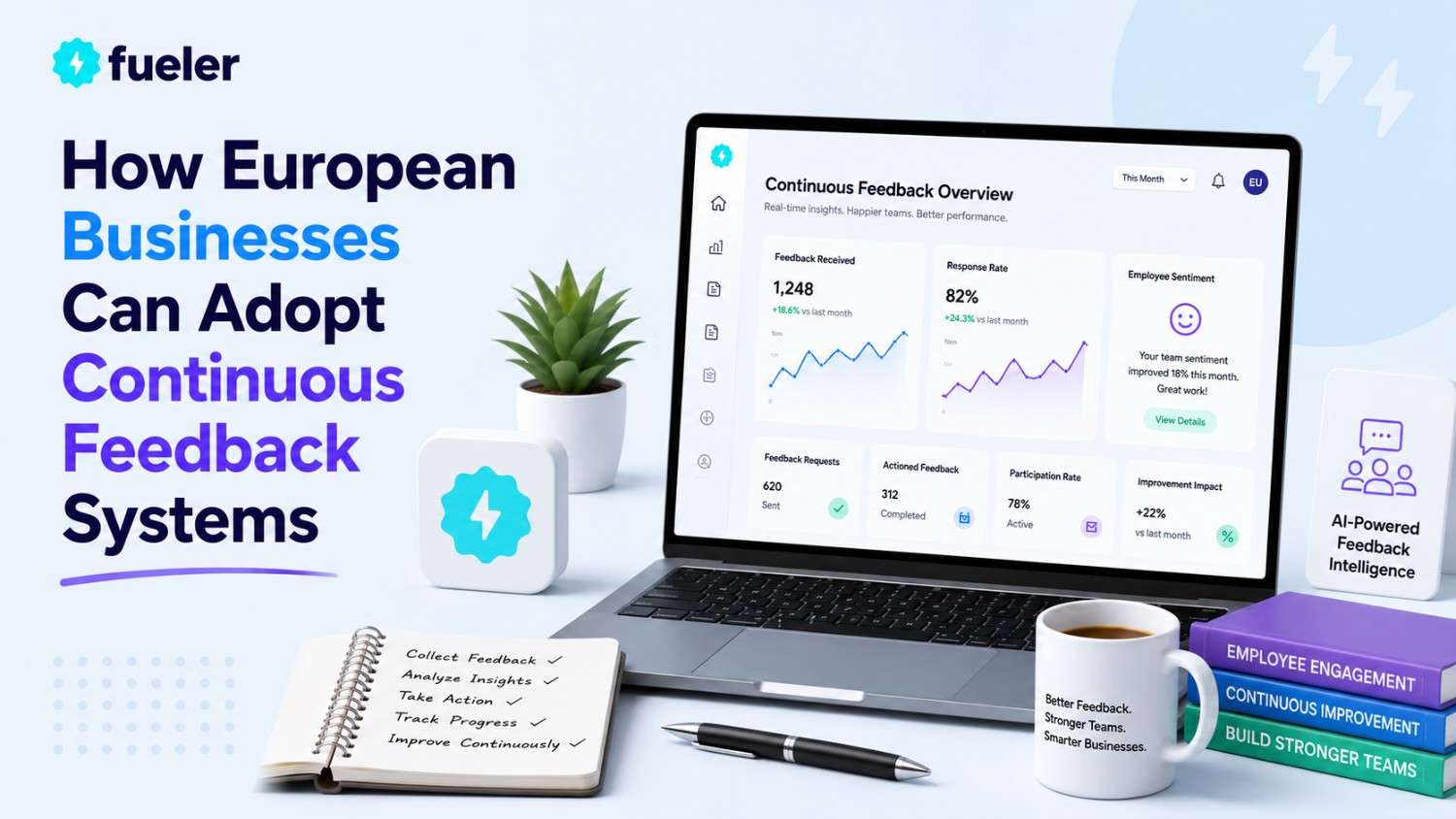
Why Continuous Feedback is a Game-Changer for European Businesses
Traditional annual performance reviews are no longer enough in today’s fast-paced, hybrid, and employee-driven workplaces. Continuous feedback systems, which provide ongoing, real-time insights between managers, peers, and employees, are transforming how European businesses engage their workforce. These systems help teams adjust quickly, maintain alignment with company goals, and foster a culture of growth and transparency. Adopting continuous feedback is essential for improving employee satisfaction, productivity, and retention in a dynamic business environment.
I’m Riten, founder of Fueler - a skills-first portfolio platform that connects talented individuals with companies through assignments, portfolios, and projects not just resumes/CVs. Think Dribbble/Behance for work samples + AngelList for hiring infrastructure
Understanding Continuous Feedback: Key Components and Benefits
Continuous feedback is the ongoing exchange of specific, timely, and actionable information designed to help individuals improve their performance and reach goals effectively.
- Replaces infrequent, formal reviews with ongoing dialogue that includes weekly one-on-ones, real-time project feedback, and peer recognition.
- Encourages transparency by offering structured mechanisms for upward, downward, and lateral feedback flows, increasing trust and openness.
- Integrates feedback channels into daily workflows through collaboration and project management tools, ensuring insights are timely and relevant.
- Reduces workplace anxiety caused by waiting months for formal reviews, fostering continuous growth and employee confidence.
- Improves team dynamics by regularly aligning expectations and recognizing achievements, boosting morale and productivity company-wide.
Why it matters: Continuous feedback builds a dynamic culture where employees feel supported and empowered, essential for thriving European workplaces.
Best Practices for Building a Continuous Feedback Culture
Implementing continuous feedback successfully requires cultural reinforcement, leadership buy-in, and thoughtful process design that fits the organization.
- Train managers and employees on giving and receiving constructive, specific feedback regularly to promote comfort and skill with the process.
- Align feedback conversations with clear performance goals, ensuring input contributes directly to measurable employee and business outcomes.
- Use technology to automate reminders, capture feedback, and provide easy access to previous input, making feedback a seamless part of daily work.
- Foster peer-to-peer recognition to complement manager feedback, encouraging inclusive acknowledgment and collaboration.
- Maintain confidentiality and psychological safety by allowing anonymous or private feedback options where needed to facilitate honesty.
Why it matters: These practices create trust and increase participation in feedback systems, making continuous improvement an embedded habit.
Tools and Technologies Transforming Continuous Feedback in Europe
Modern feedback platforms combine automation, AI-driven analytics, and integration with HR systems to simplify continuous feedback management and insights.
- Platforms like Asanify and Leapsome provide real-time feedback modules that integrate with communication tools, enabling instant check-ins and recognition without interrupting workflows.
- AI-powered pulse surveys adjust questions based on responses, maximizing engagement and quality of feedback while reducing survey fatigue.
- Employee feedback dashboards visually track sentiment trends, engagement scores, and performance indicators at individual, team, and organizational levels.
- Integration with talent management platforms allows businesses to tie feedback directly to goals, learning plans, and career development frameworks.
- Mobile-first designs ensure that feedback can easily be shared and received anytime, supporting increasingly mobile and remote European workforces.
Why it matters: Technology amplifies the reach and effectiveness of continuous feedback, empowering European companies to make data-driven talent decisions.
Overcoming Common Challenges in Adopting Continuous Feedback
Despite its benefits, implementing continuous feedback systems is not without obstacles. Understanding and addressing these challenges is key to success.
- Manager resistance due to lack of training or comfort providing frequent, constructive feedback can be mitigated with education and leadership modeling.
- Employee feedback overload can cause disengagement; balance frequency and relevance with targeted, concise communications.
- Cultural barriers, especially in hierarchical European organizations, may inhibit openness; deliberate change management and anonymous channels help build safety.
- Integration difficulties arise when feedback tools do not connect with existing HR and communication platforms choose solutions with broad compatibility.
- Ensuring feedback leads to action requires clear accountability mechanisms and visible follow-through from managers and leaders.
Why it matters: Proactively resolving these issues ensures smooth adoption and maximizes the impact of continuous feedback on workplace culture.
Real World Impact: Success Stories and Measurable Benefits
Companies in Europe adopting continuous feedback see tangible improvements in employee engagement, retention, and performance.
- Continuous feedback reduces turnover by providing employees with the support and clarity needed to grow, cutting attrition by significant margins.
- Increased performance alignment drives productivity gains, as employees receive timely coaching and course corrections.
- Enhanced communication channels foster greater collaboration and innovation across distributed teams.
- Data from continuous feedback platforms uncovers hidden problems and strengths, enabling proactive HR interventions.
- Businesses report stronger employer branding and talent attraction due to their reputation for supportive, growth-focused cultures.
Why it matters: These success stories underline how continuous feedback systems are essential tools for competitive advantage in Europe’s evolving labor market.
Fueler: Enhancing Feedback with Real Skills Validation
Before final thoughts, Fueler stands out for its complementary role in the continuous feedback ecosystem. Fueler enables professionals to document verified work samples and projects, providing concrete evidence of skills and progress. When combined with continuous feedback, it empowers employees and managers with both qualitative insights and proof of delivered impact. This integration supports more transparent, trustful, and growth-oriented talent management within European companies.
Final Thoughts
Continuous feedback systems are transforming how European businesses engage, develop, and retain talent. By shifting from annual reviews to ongoing, data-powered conversations, companies unlock higher employee motivation and alignment with organizational goals. Successful adoption depends on building a culture of trust, leveraging modern feedback technologies, and ensuring feedback is actionable and meaningful. Combining these systems with tools like Fueler that validate real skills creates a powerful framework for future-proofing the workforce driving sustained success and innovation in an increasingly complex business landscape.
FAQs
1. What is continuous feedback and why is it important in 2025?
Continuous feedback is ongoing, real-time communication between employees and managers that drives growth and engagement, replacing outdated annual reviews.
2. How do modern feedback tools improve employee engagement?
By integrating AI-powered surveys, real-time feedback requests, and dashboards into daily workflows, they promote timely and relevant input that employees trust and act on.
3. What are common challenges companies face adopting continuous feedback?
Manager resistance, feedback overload, cultural barriers, integration issues, and lack of action on feedback are frequent challenges requiring thoughtful solutions.
4. How can Fueler support continuous feedback systems?
Fueler provides transparent, verifiable work samples that complement feedback by proving real skills and results, enhancing trust and development.
5. What best practices ensure successful continuous feedback implementation?
Training managers, aligning feedback with goals, encouraging peer recognition, maintaining confidentiality, and integrating feedback tools with HR systems are essential.
What is Fueler Portfolio?
Fueler is a career portfolio platform that helps companies find the best talent for their organization based on their proof of work. You can create your portfolio on Fueler, thousands of freelancers around the world use Fueler to create their professional-looking portfolios and become financially independent. Discover inspiration for your portfolio
Sign up for free on Fueler or get in touch to learn more.

What should you do next?
You've read the article. Now turn your skills into proof of work and unlock more opportunities.
Build your proof of work portfolio
Create a clean portfolio with projects, assignments, resumes, and AI stack details that companies actually want to see.
Create your Fueler portfolio →Apply through assignments, not resumes
Stand out by solving real tasks from companies hiring on Fueler.
Explore assignments →Get discovered by companies
Make your work public and let recruiters discover your skills through actual projects instead of keywords.
Get discovered →
