Growth Hacking Strategies for Early-Stage SaaS Startups

Riten Debnath
03 Dec, 2025
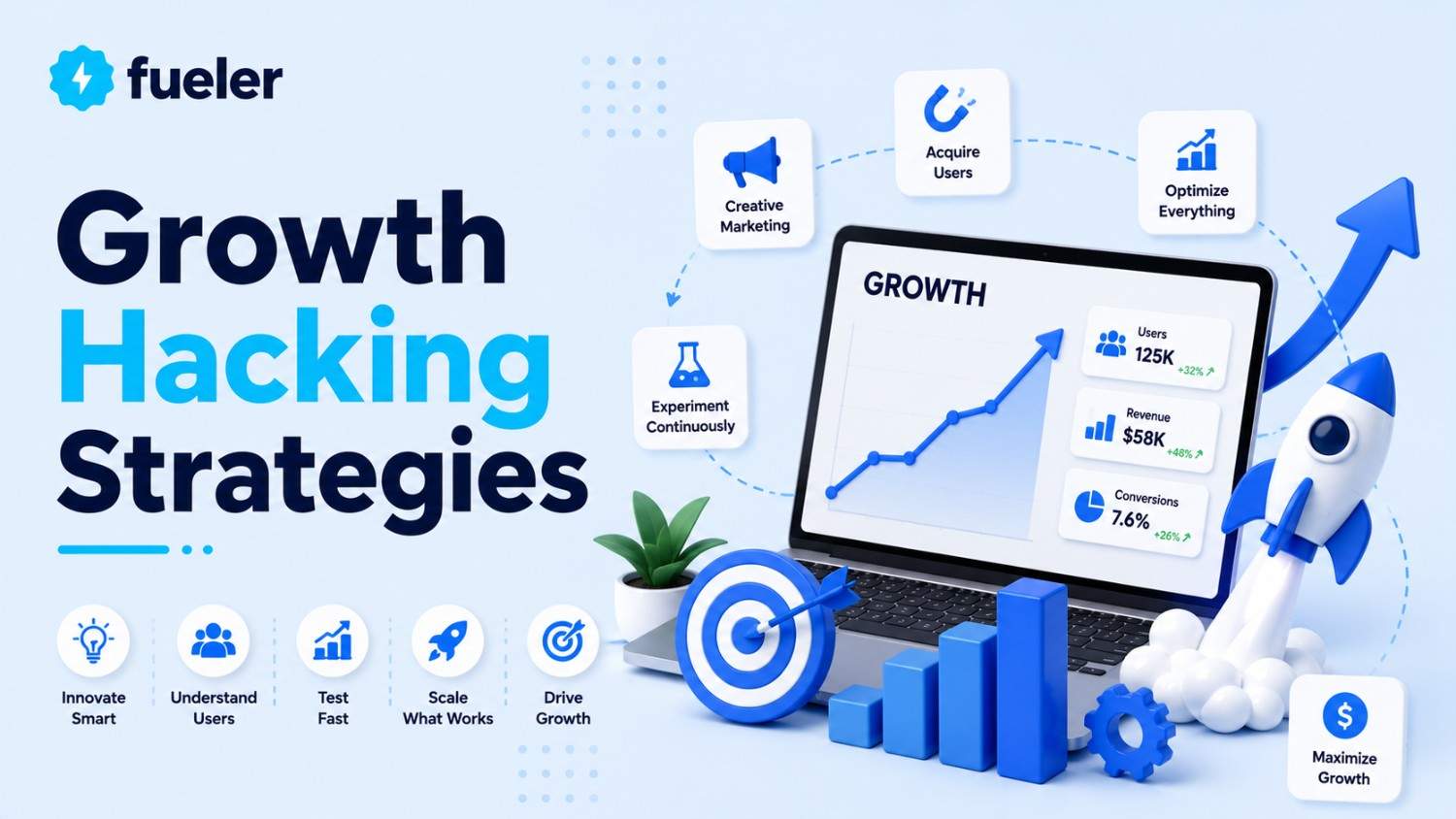
Every early-stage SaaS startup dreams of hockey-stick growth, but the path rarely starts with big budgets or a massive team. It starts with smart, repeatable, data-backed experiments that tap into user psychology and product value. Growth hacking isn’t just a buzzword; it’s the art of scaling with limited resources, creativity, and relentless iteration.
I’m Riten, founder of Fueler - a skills-first portfolio platform that connects talented individuals with companies through assignments, portfolios, and projects, not just resumes/CVs. Think Dribbble/Behance for work samples + AngelList for hiring infrastructure
1. Turn Customers Into Evangelists With Referral Loops
A well-crafted referral loop makes satisfied users your biggest marketing asset. People trust recommendations from friends far more than ads, so creating an effortless way for users to spread the word multiplies your reach organically. Dropbox, PayPal, and Notion used this to grow exponentially in their early years.
- Design a system where both the referrer and the new user win something of value, like bonus credits, feature unlocks, or subscription extensions that feel genuinely rewarding.
- Add visually delightful micro-prompts within your app encouraging users to share after completing key actions, like uploading their first document or setting up an integration.
- Offer personalized referral messages that sound friendly and human, not robotic, so users actually enjoy sharing your product.
- Give your most loyal customers exclusive badges or higher referral limits to make them feel special and valued.
- Track referral data consistently and notice patterns like which day or action most often triggers shares so you can make your loop stronger with every iteration.
Why it matters: By building a seamless referral loop, SaaS founders create a self-sustaining growth engine where loyal users continuously bring in new ones, lowering acquisition costs while building brand trust.
2. Fix Retention With A Thoughtful Onboarding Experience
First impressions define whether a user sticks around or leaves. An effortless onboarding experience transforms curiosity into commitment, helping users quickly realize your product’s main value. Think of onboarding not as a tutorial, but as your product’s first conversation with its new user.
- Create an interactive flow that doesn’t just explain features but teaches users how to extract real benefits, turning passive signups into active participants.
- Use progress bars, tooltips, and success celebrations like confetti animations or badges to spark dopamine moments that guide users naturally forward.
- Collect small inputs during setup (like team size or role) to personalize dashboard layouts, ensuring they instantly feel the tool was built for them.
- Build smart triggers that follow up if a user gets stuck like gentle nudges via email or chatbot tips that appear before frustration sets in.
- Test your onboarding across different user personas regularly; what excites a marketer might confuse a developer, so tailoring matters.
Why it matters: Getting onboarding right reduces churn dramatically and boosts retention rates, ensuring your product doesn’t just attract users but keeps them coming back to explore its full potential.
3. Let Your Product Lead The Growth (PLG Model)
The best SaaS products grow because they sell themselves. Product-led growth focuses on allowing users to experience your core value quickly, converting curiosity into buying intent through genuine product delight.
- Offer a freemium version or limited free trial that solves real problems instead of offering half-baked features no one cares about.
- Showcase your biggest value moments early like automated reports, collaboration tools, or instant results so users immediately see why your solution stands out.
- Encourage upgrades naturally by adding premium-only features that extend user success stories rather than block essential functions.
- Use behavioral analytics to spot product “aha” moments, then optimize flow to guide all users toward experiencing them sooner.
- Highlight real user stories and screenshots inside your free version to subtly demonstrate what premium access unlocks.
Why it matters: When your product drives its own growth, you spend less on marketing and more on improving user experience, creating an authentic self-reinforcing cycle of awareness and adoption.
4. Master Data-Driven Marketing Experiments
Growth hacking is built on testing ideas quickly and tracking real results. By approaching marketing like a scientist, early-stage startups can find what converts faster and stop wasting resources on assumptions.
- Pick one metric that truly defines growth for your product like activation rate or MRR and center your experiments around improving it.
- Use small, rapid A/B tests for website headlines, emails, or pricing pages, learning what resonates with audiences before scaling big campaigns.
- Track every interaction in analytics dashboards, building a clear picture of where users come from, how they behave, and where they drop off.
- Share learnings across teams so marketers, engineers, and product managers can act on data together instead of working in silos.
- Review results weekly and be ruthless about killing strategies that don’t scale, even if they seemed promising at first.
Why it matters: Data-backed decision-making helps SaaS startups grow predictably, eliminating guesswork and ensuring every marketing move contributes directly to measurable business results.
5. Use Content As Your Growth Engine
Content is fuel for sustainable SaaS growth. Educational and helpful content positions your startup as a trusted authority, driving organic traffic while building a community that trusts your product.
- Create deep-dive content that answers user pain points clearly, not just surface-level posts stuffed with keywords.
- Focus on formats your audience enjoys video walkthroughs, how-to guides, case studies, or industry reports that offer genuine takeaways.
- Build content funnels where free education naturally leads readers to explore your product’s use cases.
- Collaborate with early power users for co-authored tutorials or stories to give your content credibility from real experiences.
- Refresh older content quarterly with updated data and visuals so your site remains fresh and ranked high on search engines.
Why it matters: Thoughtful content establishes trust and authority while attracting qualified users, creating steady inbound growth without constantly running paid campaigns.
6. Simplify Payments And Pricing Pages
A confusing payment flow kills conversions instantly. Simplifying payment experiences and subscription logic ensures users feel confident investing in your SaaS product without unnecessary friction.
- Offer transparent pricing tiers with clear feature breakdowns, avoiding vague “contact us” sections that confuse new users.
- Integrate multiple payment providers like Stripe and PayPal to cater to global user preferences and avoid checkout drop-offs.
- Highlight customer testimonials near pricing tables to reassure hesitant buyers.
- Experiment with psychological pricing, like anchoring high-value plans against lower ones, to guide decision-making.
- Add in-tool upgrade options that don’t require leaving the app or re-entering details.
Why it matters: A streamlined pricing and checkout experience increases conversions and reduces user frustration, helping your SaaS earn revenue faster.
7. Show Social Proof Everywhere
Users trust other users far more than marketing claims. Social proof works like digital word-of-mouth, assuring potential customers that your SaaS delivers what it promises.
- Include real customer names, companies, and results in your testimonials, replacing generic praise with measurable outcomes.
- Highlight recognizable logos and partner brands to build credibility instantly.
- Encourage happy users to post on social media or review platforms by simplifying feedback requests.
- Display live stats like number of users onboarded or minutes saved per week through your product to add authenticity.
- Continuously update testimonials so your proof looks recent, not outdated.
Why it matters: Honest social proof accelerates trust and reduces hesitation, giving users the confidence to choose your SaaS product over competitors.
Before you scale these growth experiments, make sure you showcase your own work effectively. On Fueler, professionals demonstrate real projects and assignments in one place, helping clients and companies see skills in action. Just like users trust real product experiences, employers trust real work samples; it changes the hiring conversation completely.
Final Thoughts
Every SaaS startup’s journey starts with small experiments and a lot of learning. Growth hacking isn’t about one big viral moment but about consistent improvements that compound over time. Test fast, learn faster, and let your happiest users and strongest product features drive your flywheel.
FAQs
1. How do you start growth hacking for a SaaS startup in 2025?
Begin by identifying your key metrics, creating quick experiments, and prioritizing tactics with measurable impact like referral loops and onboarding optimization.
2. What tools help early-stage SaaS teams track growth?
Tools like Mixpanel, Amplitude, and HubSpot help track activation, retention, and product usage data accurately.
3. How fast should startups test growth ideas?
Fast iterations every one or two weeks work best, allowing immediate feedback and quicker pivoting.
4. Can freemium models hurt SaaS revenue?
Only if structured poorly. A smart freemium model offers real value upfront but keeps premium features genuinely worth paying for.
5. How does content help SaaS growth hacking?
Helpful content boosts authority, attracts organic traffic, and nurtures leads along the journey from awareness to activation.
What is Fueler Portfolio?
Fueler is a career portfolio platform that helps companies find the best talent for their organization based on their proof of work. You can create your portfolio on Fueler, thousands of freelancers around the world use Fueler to create their professional-looking portfolios and become financially independent. Discover inspiration for your portfolio
Sign up for free on Fueler or get in touch to learn more.

What should you do next?
You've read the article. Now turn your skills into proof of work and unlock more opportunities.
Build your proof of work portfolio
Create a clean portfolio with projects, assignments, resumes, and AI stack details that companies actually want to see.
Create your Fueler portfolio →Apply through assignments, not resumes
Stand out by solving real tasks from companies hiring on Fueler.
Explore assignments →Get discovered by companies
Make your work public and let recruiters discover your skills through actual projects instead of keywords.
Get discovered →
