From Tripura to the World: How North East India's Startup Ecosystem Is Finally Getting the Support It Deserves

Riten Debnath
26 Jun, 2026
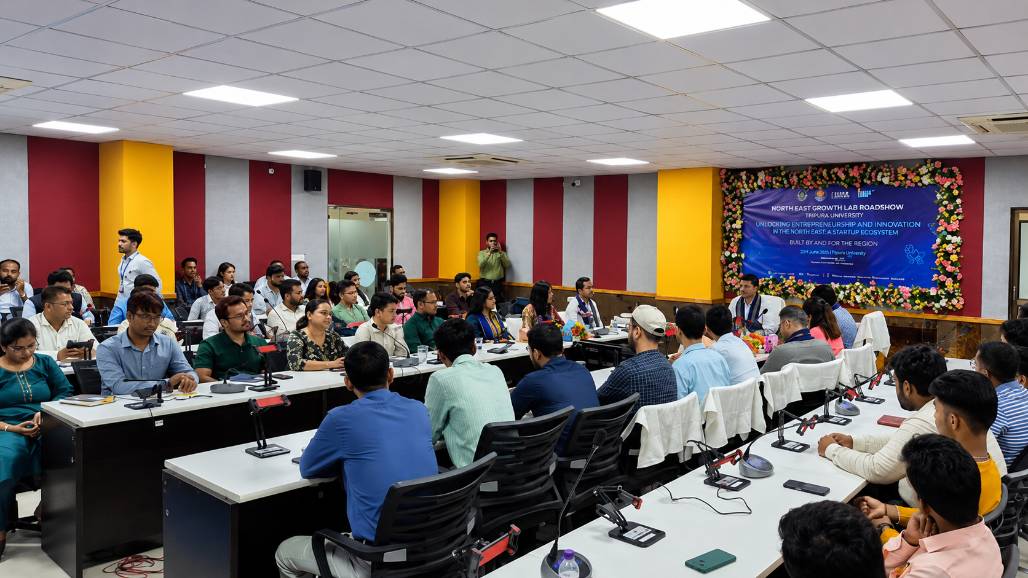
I want to tell you about a room. It was June 24, 2026. IT Bhavan, Agartala, Tripura. About 2:30 in the afternoon.
Founders had come in early. Some had traveled from outside Agartala. A few were visibly nervous, notebooks open, pens ready. Others were on their phones checking something, probably their pitch notes or their business model one last time.
Nobody was there because they were forced to be. Nobody was there for a free lunch or a certificate to hang on a wall. They were there because they are building something and they needed to know how to take it further.
I am Riten, founder of Fueler. I have been to startup events in Bangalore. In Mumbai. In Delhi. And I will tell you honestly, the hunger in that room in Agartala was different. It was quieter. More focused. Like people who have been waiting a long time for something to show up and are not going to waste the moment now that it finally has.
That something was the North East Growth Lab Roadshow. And that room in Agartala is where I want to start this story.
The Northeast Has Always Had Entrepreneurs. What It Lacked Was Infrastructure.
Here is a thing I believe deeply: talent is not the problem in Northeast India.
It has never been the problem.
The North East has people who understand their land, their resources, their communities, and their markets better than any outsider ever could. Farmers who have been innovating with bamboo and rubber for generations. Weavers who carry design knowledge that is genuinely irreplaceable. Tourism operators who know how to show the world a corner of India that most people have never seen. Health workers who understand what rural communities need in ways that no textbook captures.
These are real strengths. Real assets. Real foundations for real businesses.
What was missing was not talent or ideas. What was missing was the layer of support that turns a good idea into a funded, growing, sustainable company. The mentorship. The structured capital. The connections to markets outside the region. The networks that help a founder in Agartala get in front of the same investors and buyers that a founder in Koramangala can access with a single WhatsApp message.
That layer, the infrastructure around entrepreneurship, is what has been slowly, finally, genuinely being built in the Northeast. And 2026 feels like the year where it all starts connecting.
What Changed and Why It Matters Now
Let me give you a real picture of what is different in 2026 compared to even three years ago.
Physical infrastructure across the Northeast has improved in ways that directly affect business. Roads, rail, broadband connectivity, power supply in tier two and tier three towns. These are not flashy things. But they are the things that make it possible to run a business, receive inventory, ship products, and communicate with customers outside the region.
The Rising Northeast Investors Summit attracted over Rs. 6,000 crore in MoUs. That is not a symbolic number. That is a signal that capital is looking at this region with serious intent.
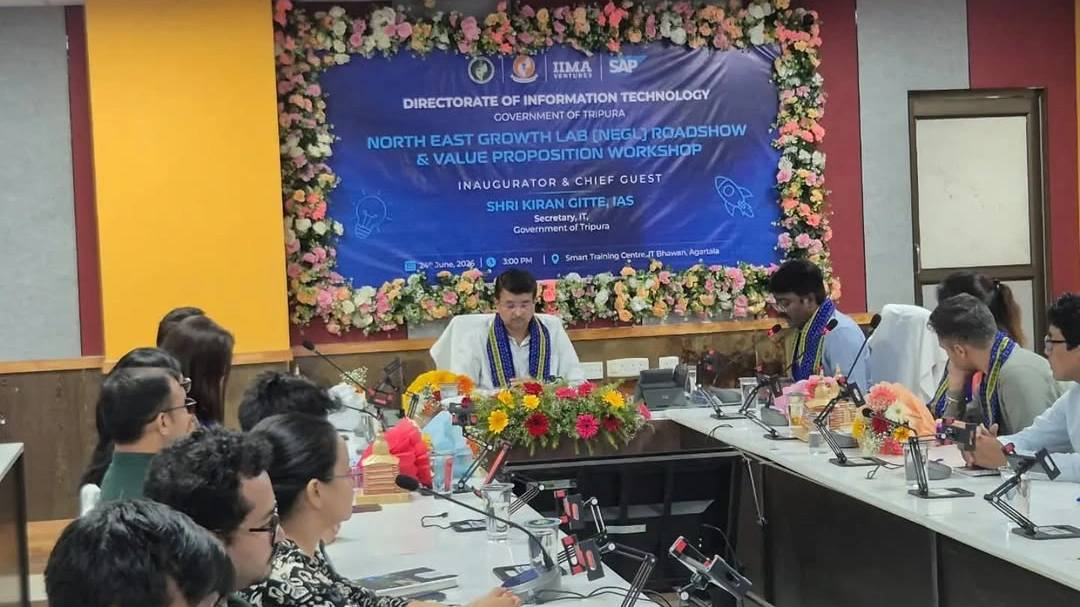
The state governments, including Tripura's, have been setting up digital infrastructure and startup-focused policies with real momentum. The Directorate of IT in Tripura organized the Northeast Growth Lab Roadshow not as a PR exercise but as a working session. The Secretary of IT showed up and talked about biochar and electronic-grade rubber, not about vision statements and mission slides.
And then there is the Northeast Growth Lab itself. Run by IIMA Ventures, one of India's most respected startup institutions, in collaboration with SAP. A program purpose-built for this region, with funding structures, mentorship models, and market connections specifically designed for what northeastern founders actually need at the stage most of them are actually at.
All of these things are happening at the same time. That is not a coincidence. It is a signal.
Tripura Specifically: What the State Has That Nobody Is Talking About Enough
I want to stay in Tripura for a moment because I think the opportunity here is underestimated even by people who live here.
Tripura is one of India's largest producers of natural rubber. Let that sit for a second. Not one of the largest in the Northeast. One of the largest in the country.
Tripura also has significant bamboo forest cover. It grows some of the finest pineapples in South Asia. Its handloom tradition, particularly the risa, riha, and rignai textiles woven by indigenous communities, carries design heritage that has no equivalent anywhere else.
These are not quaint local facts. These are genuine supply-side advantages in markets that are growing.
Global demand for sustainable materials is rising fast. Biochar, a material made from organic waste including bamboo, is used in agriculture, construction, and carbon sequestration markets globally. Medical-grade rubber and electronic-quality rubber compounds are high-value manufacturing categories where supply chain security matters enormously to buyers. GI-tagged agricultural products, things grown in a specific geography with a specific heritage, command premium pricing in both domestic and international markets.
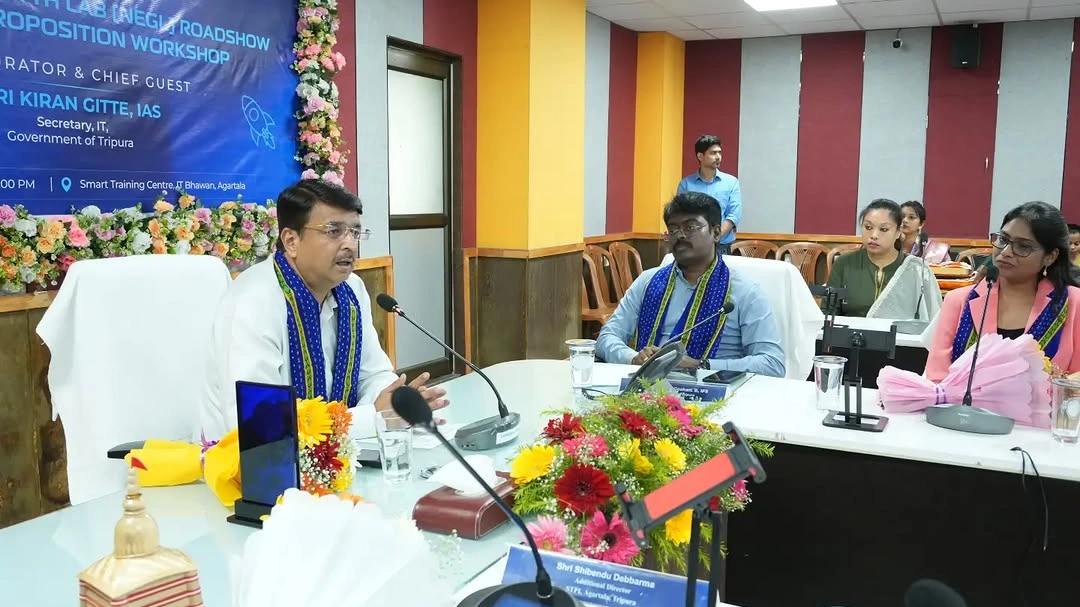
Kiran Gitte, IAS, Secretary of IT, Tripura, stood up at the Agartala roadshow and said exactly this to a room full of founders. He did not say "go build apps." He said look at what is already here. Bamboo. Rubber. The supply advantage is real. Now build the manufacturing and quality systems that turn that raw material into something the world will pay for.
That is a very specific, very buildable opportunity. And most of it is still wide open.
The North East Growth Lab: The Program That Is Actually Doing Something About This
I have written about the Northeast Growth Lab in more detail elsewhere. But let me give you the core of it here because it is central to this story.
IIMA Ventures, the startup arm of IIM Ahmedabad, built the Northeast Growth Lab specifically for early-stage founders from all eight northeastern states: Assam, Arunachal Pradesh, Manipur, Meghalaya, Mizoram, Nagaland, Tripura, and Sikkim.
The program grew from something smaller that worked. The Assam Agribusiness Growth Lab, backed by the World Bank, backed founders in Assam's agribusiness sector with grants, mentorship, and structured support. It produced real results. So IIMA Ventures, together with SAP, expanded it into the full Northeast Growth Lab.
What does the program give you?
Grants and optionally convertible debt, not just equity investment. Structured business training on value propositions, B2B sales, financial management, and AI applications. One-on-one mentoring tailored to your sector and stage. Direct connections to NABARD, NEDFi, NEHHDC, NERAMAC, and mDoNER. Twelve months of monthly office hours after the core program ends. Demo days and investor access. National bootcamps that bring you into the broader Indian startup network.
The program aims to support 90 startups and social enterprises over three years. It expects to impact more than 3,000 livelihoods. The application deadline for the current cohort is July 12, 2026.
Ten to fifteen companies will be selected from across all eight states. If you are building something real in the Northeast, that is your window.
The Founders I Met in That Room
Let me tell you about some of what I saw at the Agartala roadshow.
Fueler was in the room. So were founders I spoke to briefly in the corridor who were working on things I had not expected to find in a tier two city in Tripura. Agricultural tech tools. Handloom platforms. Local tourism products built for the international traveler who wants something genuinely different from a generic heritage tour.
These are not people waiting for someone to come and save their ecosystem. These are people actively building, looking for the right support to take what they have started to the next level.
There was a session at the roadshow by a successful entrepreneur from Tripura. She talked about her own journey. The setbacks. The moments where she almost quit. The pivots that changed everything. I watched how the room listened to her. It was different from how they listened to everyone else. Because she was not describing opportunity in the abstract. She was describing survival and success in the same conditions everyone in that room is navigating.
That session, more than any slide deck or workshop, told me that the startup story of the Northeast is going to be written by people from the Northeast. Not imported. Not franchised. Built here, from here, by people who know this place in a way that no accelerator from outside ever fully will.
What Is Still Missing and How to Think About It
I want to be honest here because I think it is more useful than being only celebratory.
The infrastructure is improving. The programs are arriving. The government intent is real. But some gaps still exist and founders should go in clear-eyed about them.
Access to Series A and Series B capital for northeastern startups is still much harder than it is in metro cities. Most of the institutional support that exists right now is oriented toward early-stage, which is the right place to start but means that founders who scale through programs like the NEGL will still face a harder road when they try to raise their next round from private institutional investors.
Market access outside the region, while improving, still requires deliberate effort. Selling a product made in Tripura to a buyer in Pune or a distributor in Singapore takes more work than selling from a hub city. That gap is closeable but it requires founders to build distribution relationships deliberately, not assume they will happen organically.
Talent pipelines for startups in the Northeast are still thinner than in metro cities. Hiring your second, third, and fourth employee as a founder in Agartala is harder than doing the same in Bangalore, where the startup job seeker pool is enormous.
These are real challenges. They are also solvable challenges. And naming them honestly is part of what I think good entrepreneurial writing should do.
How Fueler Is Thinking About the Northeast
At Fueler, we build a portfolio platform that helps companies hire through assignments. The idea is simple. Instead of filtering candidates by where they went to college or what their resume says, companies post a real task. Candidates do it. The work speaks for itself.
We think this matters for the North East for a specific reason.
A lot of the talent coming out of the Northeast is genuinely strong but does not have the credential signals that metro-city hiring processes reward. They did not graduate from IIT or IIM. Their work experience is not at a recognizable brand. But they are capable, hungry, and often more resourceful than candidates who have had everything handed to them by their ecosystem.
Assignment-based hiring is a fairer filter. It measures what someone can actually do, not where they come from.
We recently added two new features on Fueler profiles that I think matter especially for this generation of knowledge workers coming out of the North East. The AI Stack section lets you show which AI tools you actually use in your daily work. Which workflows you have built. Which models you are working with. The Device Configuration section lets you show how your work setup is organized. Together, these signals tell a hiring company something a resume never could: this person is building for the future, not just describing the past.
For a founder coming out of the NEGL who needs to hire, understanding how to evaluate candidates through real work changes the quality of every person you bring onto your team. For a candidate in the Northeast who wants to work with ambitious startups, building your Fueler profile with your AI stack and device setup is one of the most concrete things you can do right now to close the visibility gap. You can read more about why assignment-based hiring finds better candidates than traditional resume screening, how northeast India's talent pool is showing up on portfolio platforms, and what companies hiring remote talent in 2026 actually look for on a candidate profile.
The Startups That Will Write the Northeast's Story
Here is what I think is going to happen over the next five years.
Some of the companies that go through the Northeast Growth Lab are going to build things that matter at national and global scale. A bamboo-derived material company from Tripura is going to supply a sustainable packaging brand in Europe. A GI-tagged agricultural product from Meghalaya or Nagaland is going to reach premium grocery shelves in metro cities. A fintech built for the financial inclusion gap in rural Assam is going to be the model that others copy across Southeast Asia.
These are not fantasies. These are extensions of things that are already beginning.
What is different now compared to five years ago is that the founders building these companies have more support than they have ever had. The NEGL gives them mentorship and capital at the stage they actually need it. The state governments are showing up with infrastructure and intent. Programs like Fueler are making it possible for them to hire talent on the basis of skill rather than geography or credential.
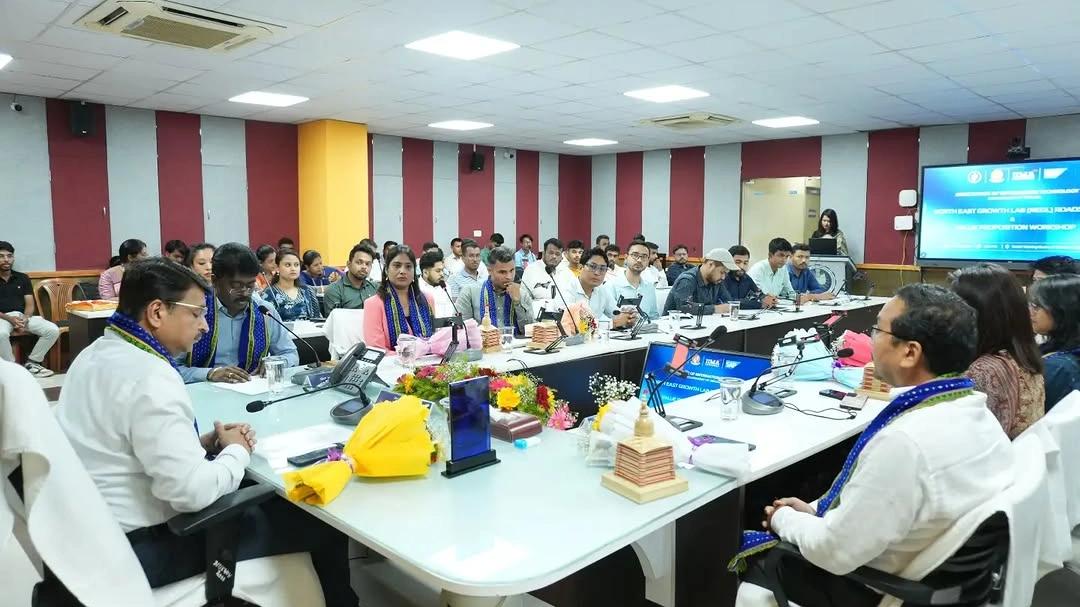
The room I sat in at IT Bhavan in Agartala on June 24 was a small room. Maybe forty, fifty people. But what was being discussed in that room was not small. It was a serious, working conversation about how to build companies that last, from a part of India that has been waiting for this conversation for a long time.
The support is finally here. The infrastructure is finally arriving. The programs are finally purpose-built for this region rather than adapted from something designed for a completely different context.
The only question left is which founders are going to step into it.
If You Are a Northeast Founder Reading This
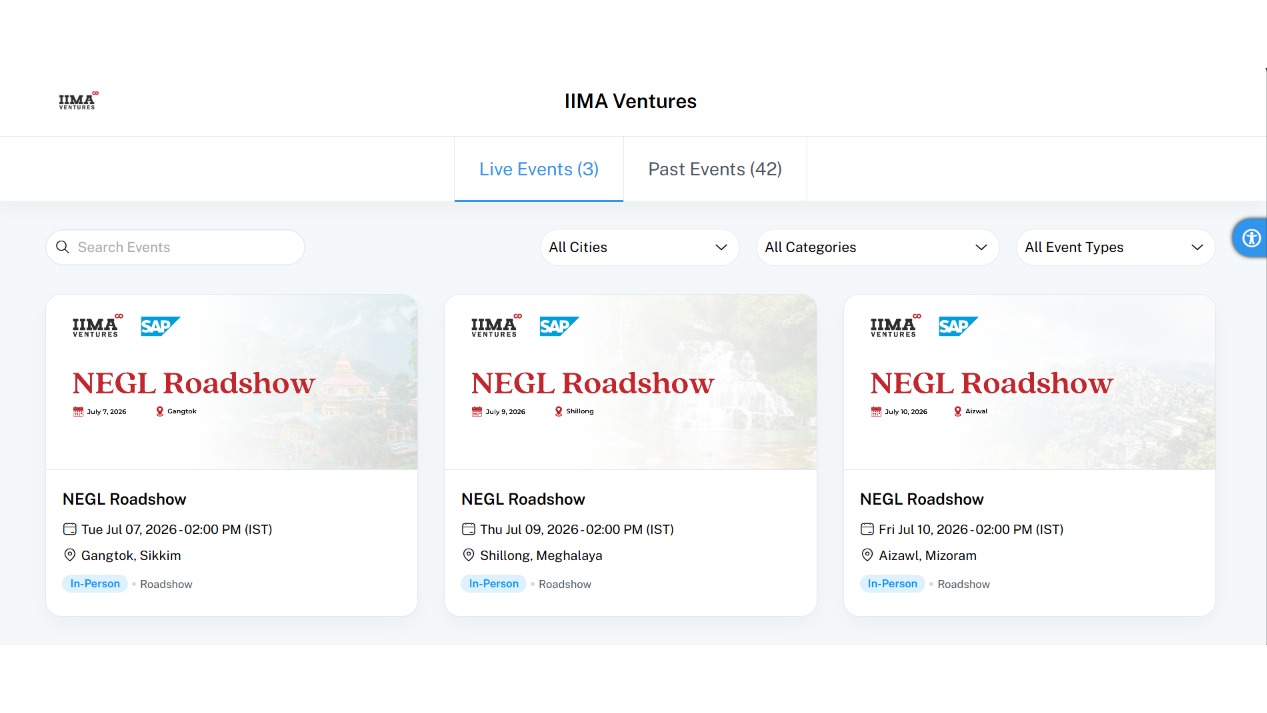
Apply to the North East Growth Lab before July 12, 2026.
Visit iimaventures.com. Email gayatrib@iima.ac.in if you have questions. Show up with your real business, your real numbers, and your real vision for what you are building.
Build your Fueler profile with your AI stack and your work setup so the companies you want to work with or the talent you want to hire can find you on the basis of what you can actually do.
And then go build something that makes that room in Agartala proud.
Frequently Asked Questions
1. What startup opportunities exist in Tripura and North East India in 2026?
The strongest startup opportunities in Northeast India right now are in sectors where the region has genuine natural and cultural advantages. These include bamboo and rubber-based manufacturing such as biochar, biomaterials, and high-grade rubber compounds, GI-tagged agricultural products, handloom and craft-based businesses using indigenous textile traditions, rural fintech and financial inclusion, health tech for underserved communities, sustainable and ethnic tourism, and agroforestry and climate tech. Programs like the Northeast Growth Lab are specifically designed to support founders building in these areas.
2. How is the startup ecosystem in Tripura different from other Indian states?
Tripura's startup ecosystem is at an earlier stage than metro-city ecosystems but growing rapidly with genuine structural advantages. The state is one of India's largest natural rubber producers and has significant bamboo forest cover, creating supply-side advantages for sustainable manufacturing. The state government, through the Directorate of IT, is actively investing in digital infrastructure and entrepreneurship support. The Northeast Growth Lab Roadshow in June 2026 marked a significant step in connecting Tripura's founders to national-level mentorship, funding, and market access through IIMA Ventures.
3. What support is available for northeast India entrepreneurs in 2026?
Northeast India entrepreneurs in 2026 have access to more structured support than at any previous point. The Northeast Growth Lab by IIMA Ventures and SAP provides grants, convertible debt, structured business training, one-on-one mentoring, and market connections to organizations like NABARD, NEDFi, and mDoNER. The Rising Northeast Investors Summit has attracted significant institutional capital interest in the region. State governments including Tripura are running active digital infrastructure and startup support programs. The NEGL application deadline for the current cohort is July 12, 2026.
4. Why is North East India becoming an important startup hub?
Northeast India is becoming a serious startup destination because of three converging factors. First, the region's natural and cultural resource base in bamboo, rubber, agriculture, textiles, and tourism creates genuine supply-side advantages for businesses in high-growth global markets. Second, improving physical and digital infrastructure is making it practically possible to run and scale a business from tier two and tier three cities in the region. Third, programs like the Northeast Growth Lab are finally providing the mentorship, capital, and market access infrastructure that early-stage founders need, purpose-built for the northeastern context rather than adapted from programs designed for metro cities.
5. How can startup founders in North East India find and hire good talent?
Finding strong talent as a northeast India founder is easier than it used to be thanks to remote work and platform-based hiring. Assignment-based hiring platforms like Fueler allow founders to evaluate candidates on the basis of actual work rather than college credentials or resume keywords, which is particularly valuable in a region where strong talent often lacks metro-city credential signals. Posting a real assignment and reviewing the output tells you in hours what an interview process takes weeks to reveal. Setting up your company profile on Fueler and adding your AI stack and work setup requirements also signals to ambitious candidates that you are building with modern tools, which attracts better applicants.

What should you do next?
You've read the article. Now turn your skills into proof of work and unlock more opportunities.
Build your proof of work portfolio
Create a clean portfolio with projects, assignments, resumes, and AI stack details that companies actually want to see.
Create your Fueler portfolio →Apply through assignments, not resumes
Stand out by solving real tasks from companies hiring on Fueler.
Explore assignments →Get discovered by companies
Make your work public and let recruiters discover your skills through actual projects instead of keywords.
Get discovered →
