Digital Marketing Career Roadmap for Students and Fresh Graduates

Riten Debnath
29 Jul, 2026
Last updated: July 2026
Most career advice for new marketers is complete garbage. Traditional guides tell you to collect shiny online certificates, spam your resume to five hundred open roles, and hope a hiring manager magically falls in love with your degree. Meanwhile, modern marketing leaders do not care about your academic qualifications; they care about whether you can actually drive targeted web traffic, run successful growth experiments, and generate real revenue.
I’m Riten, founder of Fueler, a skills-first portfolio platform building the career infrastructure for 100 million creative professionals. Fueler connects talented individuals with companies through assignments, portfolios, and projects, not just resumes or CVs. Think of it as Dribbble/Behance for work samples combined with AngelList for hiring infrastructure.
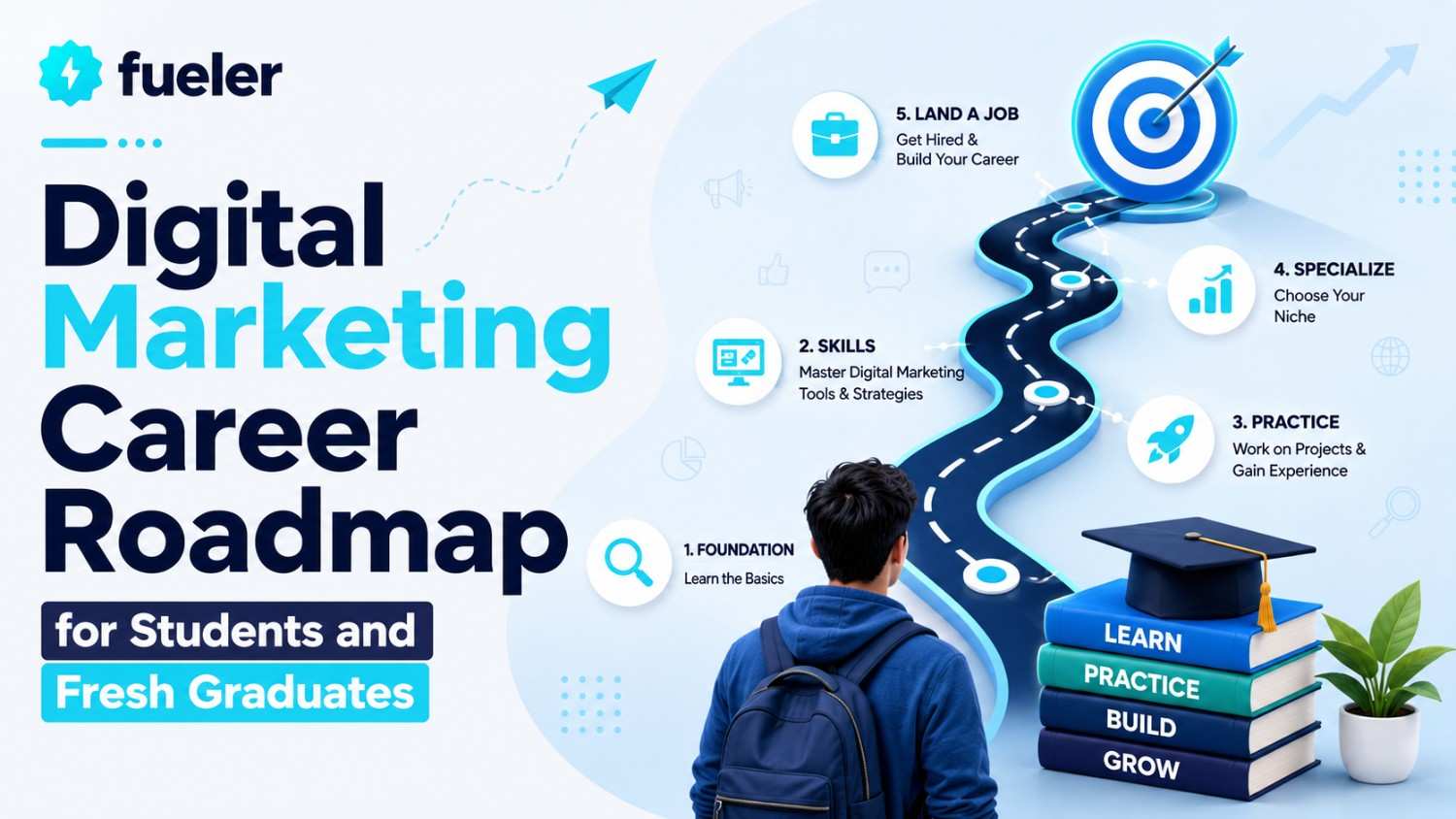
Breaking into marketing without losing your mind requires a clear, step-by-step strategic roadmap instead of blindly applying for random entry-level job posts. In this guide, we will break down the exact skills, execution frameworks, and positioning strategies you need to build an unstoppable marketing career this year.

Digital Marketing Core Skills for Beginners
Entering the marketing world without mastering the core fundamentals is like trying to build a massive skyscraper on wet sand. You do not need to know every single tool on the market, but you must understand how traffic moves across the internet and converts into actual paying customers.
Modern digital marketing is half creative art and half analytical science. The best entry-level marketers know how to write compelling ad headlines that grab human attention while using cold, hard analytics data to measure every single click, impression, and conversion event.
- Search engine dynamics: Understanding how search engines crawl, index, and rank web pages ensures you can build sustainable organic search strategies that drive predictable, long-term traffic to any brand website without relying on paid acquisition.
- Conversion optimization basics: Learning how page architecture, user psychology, copy clarity, and call-to-action placement work together helps you convert passive website visitors into active leads or paying customers across different landing pages.
- Content distribution mechanics: Creating content is completely useless if nobody sees it, making it critical to master organic social distribution, email newsletters, third-party communities, and strategic syndication channels to maximize your organic reach.
- Performance marketing fundamentals: Grasping basic ad formats, bidding strategies, audience segmentation, and budget allocation allows you to run highly cost-effective paid media campaigns across major social and search advertising platforms effortlessly.
- Web analytics interpreting: Analyzing web traffic sources, user behavior heatmaps, bounce rates, and event tracking parameters gives you the objective data needed to make smart, revenue-focused marketing decisions instead of making wild guesses.
Why It Matters
Mastering these core skills gives you an immediate competitive edge over candidates who only possess theoretical textbook knowledge. When you understand how user acquisition, distribution, and analytics interconnect, you can solve actual business problems instead of just posting random content online.
Search Engine Optimization Strategy for Freshers
Search engine optimization remains the ultimate growth engine for modern businesses because it captures intent-driven users at the exact moment they are searching for a solution. If you can master SEO, you instantly make yourself an invaluable asset to any growth team.
SEO is no longer about stuffing random keywords into a blog post and calling it a day. Modern search engines prioritize user search intent, content depth, technical site health, and topical authority above all else.
- Keyword intent research: Identifying informational, commercial, and transactional search queries helps you target specific topics that bring in ready-to-buy visitors instead of empty, low-value web traffic that never converts into paying customers.
- On-page content optimization: Structuring headings, meta descriptions, URL paths, and internal link networks ensures search engine crawlers can easily read, index, and rank your written content for competitive, high-value search terms.
- Technical SEO fundamentals: Fixing page loading speed issues, broken links, crawl errors, and mobile usability problems keeps websites performing smoothly for both human visitors and automated search engine indexing bots.
- Off-page authority building: Earning high-quality backlinks through digital public relations, guest content contributions, and original data research projects signals deep trust and high domain authority to modern search engine ranking algorithms.
- Content refresh execution: Updating outdated blog posts, fixing dead links, and expanding thin articles allows you to recover lost search rankings quickly and boost overall organic traffic without writing brand-new pieces from scratch.
Why It Matters
SEO expertise proves to employers that you know how to build sustainable, compound traffic growth without relying entirely on ad budgets. Showing you can rank content on search engines demonstrates strong research abilities, strategic thinking, and a deep understanding of customer behavior.
Content Marketing and Copywriting Execution
If search engine optimization is the engine that drives targeted traffic to a website, content marketing and copywriting are the fuel that keeps visitors reading and converting. Great copy does not sound like a boring textbook; it reads like an engaging conversation with a smart friend.
Copywriting is the art of selling through written words, while content marketing focuses on delivering massive value to build long-term trust. When you combine both skills, you become a one-person media machine capable of growing any audience.
- Audience research techniques: Studying customer forums, social media discussions, and customer reviews lets you uncover exact user pain points and write compelling copy that speaks directly to audience desires and buying triggers.
- Value-first article writing: Creating comprehensive, well-researched long-form guides that answer specific user questions positions brands as trusted authorities in their respective industry niches while driving consistent organic search traffic.
- Persuasive landing page copy: Crafting clear value propositions, benefit-driven headlines, and friction-free calls-to-action converts passive landing page visitors into active email leads, product sign-ups, or direct customers.
- Multi-format content repurposing: Transforming a single long-form blog post into short social media posts, newsletter issues, and short-form video scripts maximizes total audience reach while saving significant production time.
- Content editorial planning: Structuring balanced content calendars ensures consistent publishing schedules that align perfectly with company product launches, marketing campaigns, and seasonal sales promotion cycles throughout the calendar year.
Why It Matters
Strong writing is the foundational meta-skill behind every successful marketing campaign, email launch, and social media post. Developing exceptional copywriting skills ensures your work gets noticed, builds trust, and drives measurable revenue for the businesses you work with.
Social Media Organic Growth and Distribution
Posting random inspirational quotes with fifty generic hashtags on social media is not a distribution strategy. Modern social media marketing requires a deep understanding of platform algorithms, native content formats, and community engagement tactics.
Every major social network wants to keep users on its platform as long as possible. To win organically today, you must create platform-native content that starts real conversations and hooks people within the first two seconds.
- Short-form video storytelling: Planning, scripting, and editing short vertical videos allows you to hook viewer attention fast, explain complex topics simply, and ride algorithm trends across major video-first social networks.
- Platform-native content creation: Designing text posts, visual carousels, and engaging polls tailored specifically to individual platform algorithms boosts organic reach significantly without needing any paid advertising spend.
- Community engagement management: Replying to audience comments, starting inbox discussions, and engaging with niche creators builds a loyal community around any brand while signaling high engagement to algorithms.
- Social media analytics tracking: Monitoring engagement rates, click-through metrics, post saves, and follower growth trends helps you refine your ongoing content strategy based on clear performance data instead of assumptions.
- Social employee advocacy: Training internal team members to share company updates, personal learnings, and behind-the-scenes stories humanizes the brand and expands total organic distribution across professional social networks.
Why It Matters
Building organic social traction demonstrates that you understand modern audience attention and content psychology. Companies actively hire entry-level marketers who know how to build authentic digital communities and distribute content effectively without blowing huge marketing budgets.
Performance Marketing and Paid Ad Campaigns
While organic marketing takes time to build momentum, performance marketing allows businesses to purchase instant targeted attention and test offers quickly. Understanding how paid ad campaigns work makes you a complete, well-rounded growth marketer.
Paid acquisition is not about gambling company money on ads and praying for sales. It requires strict data tracking, creative testing, granular audience targeting, and continuous return-on-ad-spend optimization to stay profitable.
- Paid search campaign setup: Structuring target keyword groups, writing ad copy variations, and setting negative keywords ensures your search ads match user intent while avoiding wasted budget on irrelevant queries.
- Paid social ad targeting: Building custom audiences, lookalike segments, and interest-based groups helps you show compelling visual ad creative directly to your ideal prospective customers across major social channels.
- Creative ad iteration: Testing multiple video hooks, primary text variations, and visual formats reveals which ad creatives convert at the lowest possible customer acquisition cost for the business.
- Retargeting funnel creation: Serving tailored ad creative to past website visitors and cart abandoners brings dropped prospects back into your sales funnel to complete their purchases smoothly.
- Ad budget tracking: Monitoring cost-per-click, cost-per-lead, and return-on-ad-spend keeps paid marketing campaigns profitable and prevents unnecessary budget burn on underperforming ad sets.
Why It Matters
Understanding paid acquisition proves you can manage real advertising budgets responsibly and drive immediate, trackable revenue growth. Knowing both paid and organic marketing makes you dramatically more valuable to fast-growing startups and agencies alike.
Email Marketing and Marketing Automation
Social media networks can change their algorithm and kill your organic reach overnight, but your email subscriber list is a core asset you own completely. Email marketing consistently delivers one of the highest returns on investment across digital channels.
Modern email marketing is far more than sending monthly blast newsletters. It involves building automated conversion workflows, segmenting audiences based on user behavior, and personalizing messaging to drive repeat purchases over time.
- Lead magnet delivery funnels: Designing high-value resource downloads, email mini-courses, or practical templates entices website visitors to willingly share their email contact information with your business.
- Automated onboarding sequences: Crafting welcome email series educates new subscribers about your brand value, builds deep trust, and smoothly introduces them to your core products or paid services.
- Behavioral list segmentation: Grouping email subscribers by interest tags, purchase history, and engagement levels ensures everyone receives highly relevant, non-spammy content tailored to their needs.
- Email copywriting optimization: Writing curiosity-inducing subject lines, scannable body copy, and clear calls-to-action maximizes open rates, click-through rates, and campaign revenue generation across all broadcasts.
- Deliverability health maintenance: Cleaning inactive contacts, managing sender domain reputations, and avoiding spam trigger words keeps your marketing emails landing consistently in primary user inboxes instead of spam folders.
Why It Matters
Email automation turns cold web traffic into long-term customer relationships on complete autopilot. Demonstrating that you can set up automated email retention sequences shows employers you know how to build sustainable marketing engines that retain value over time.
Marketing Data Analytics and Reporting
If you cannot measure your marketing results accurately, you are essentially driving blindfolded. Modern marketing teams hate vanity metrics like simple page views and instead focus heavily on revenue metrics, customer acquisition costs, and lifetime value.
Being comfortable with marketing data allows you to prove the direct business value of your work. Instead of telling your manager a campaign was fun, you can present hard data showing exactly how many sales it generated.
- Tracking setup management: Configuring event tags, custom URL parameters, and conversion goals ensures every important user action on your website is recorded accurately in your analytics platform.
- Multi-channel attribution analysis: Evaluating user touchpoints across organic search, social media, email, and paid ads helps you determine which marketing channels truly drive final customer conversions.
- Custom report dashboards: Building clean, easy-to-read metric dashboards translates raw data points into clear visual stories for marketing directors, executives, and key business stakeholders.
- Funnel drop-off identification: Mapping user journeys through sign-up pages and checkout flows highlights specific friction points where potential customers give up and leave your website.
- Data-driven campaign optimization: Using metric insights to cut underperforming campaigns and double down on winning channels maximizes overall return on marketing investments without increasing total spend.
Why It Matters
Analytical skills separate average marketers who guess from top-tier marketers who execute with scientific precision. Being able to read, interpret, and present marketing performance data builds immediate trust with senior leadership and speeds up your career promotion timeline.
Building a Marketing Portfolio That Gets You Hired
Having a shiny resume with listed skills means virtually nothing if you cannot show actual proof of work. The fastest way for a fresh graduate to land a high-paying marketing job is to build a real public portfolio showcasing actual projects.
Instead of writing about what you claim you can do, build real campaigns, write real copywriting teardowns, run small SEO experiments, and document every step of your execution online for potential employers to see clearly.
- Live project teardowns: Analyzing existing company marketing funnels, identifying flaws, and presenting complete redesigned strategies demonstrates high-level strategic problem-solving skills to hiring managers.
- Personal brand marketing: Publishing original industry insights, execution breakdowns, and campaign learnings publicly showcases your written communication skills, consistency, and professional passion for marketing.
- Hands-on assignment showcases: Completing real-world marketing assignments, sample ad copy sets, or landing page rebuilds proves your practical day-to-day execution capabilities beyond basic resume bullet points.
- Documented metric growth: Showcasing specific results, like growing a blog from zero to one thousand monthly organic visits, provides concrete, undeniable proof of your actual marketing execution ability.
- Organized project presentation: Assembling your best execution samples into a clean, easy-to-navigate digital portfolio makes reviewing your work completely effortless for busy hiring managers and recruiters.
Why It Matters
A tangible portfolio completely eliminates hiring risk for employers because it proves you can do the job before you are even hired. Showing real assignments, teardowns, and execution projects sets you apart from hundreds of candidates relying on generic resumes.
Step-by-Step Entry-Level Career Growth Roadmap
Landing your first official marketing role is just the beginning of your professional journey. To progress quickly from an entry-level specialist to a high-earning marketing lead, you need a clear career growth plan.
Career progression in marketing relies heavily on taking ownership of key revenue metrics, expanding your skill set from tactical execution to high-level strategy, and continuously adapting to emerging industry trends.
- Specialist mastery phase: Focusing heavily on mastering one specific channel like SEO, paid social, or email marketing during your first year builds your foundational execution credibility.
- Cross-channel expansion: Broadening your skill set to understand how different marketing channels work together prepares you to take on broader growth management and strategy roles.
- Strategic metric ownership: Shifting your operational focus from completing daily tactical tasks to owning actual revenue numbers makes you completely indispensable to company leadership.
- Mentorship and team leadership: Guiding junior team members, delegating campaign tasks, and managing external agency relationships demonstrates management readiness for fast-track career promotions.
- Continuous industry learning: Testing emerging tools, platform algorithm updates, and new media formats keeps your marketing playbooks far ahead of slow-moving industry competitors.
Why It Matters
Having a clear long-term career roadmap prevents you from getting stuck in low-paying, repetitive execution roles. Purposefully developing both broad marketing knowledge and deep channel expertise guarantees steady salary growth, higher titles, and better career opportunities.
How Does This Connect to Building a Strong Career or Portfolio?
Navigating a successful marketing career comes down to execution visibility. Employers don't hire promises; they hire proof of work. Documenting your marketing systems, campaign teardowns, and growth experiments shows hiring managers that you understand actual outcomes over theory. Storing these projects on Fueler gives you a clean way to display your real-world proof of work, instantly setting you apart from candidates using generic resumes.
Final Thoughts
The future of digital marketing belongs to operators who focus on visible proof of work over passive certificates. Master the core acquisition channels, document your real-world projects publicly, and focus on driving measurable business outcomes. Keep experimenting, stay adaptable, and build a career powered by real execution.

Frequently Asked Questions
How do fresh graduates start a career in digital marketing?
Start by mastering core acquisition skills like SEO and copywriting. Build real projects, run small growth experiments, and document your proof of work in a public portfolio instead of relying solely on traditional resumes.
Which digital marketing skill pays the highest for entry-level roles?
Performance marketing, copywriting, and technical SEO command high entry-level salaries. These specialized skills directly impact business revenue, acquisition speed, and overall customer growth metrics, making practitioners extremely valuable to fast-growing teams.
Can I get a digital marketing job without a degree?
Yes. Modern marketing teams prioritize practical proof of work, real campaign results, and assignment execution over traditional degrees. A documented portfolio showcasing actual projects easily outweighs academic qualifications in competitive hiring processes.
How long does it take to learn digital marketing?
With focused daily practice, you can master foundational concepts in three to six months. Real mastery comes from continuously running live campaign experiments, analyzing real traffic data, and adapting to algorithm changes over time.
Why is a portfolio better than a resume for marketers?
A resume only lists claimed skills, while a portfolio displays tangible proof of work, campaign teardowns, and real execution samples. Portfolios eliminate hiring risk by showing employers exactly what you can build on day one.
Why 100,000+ professionals use Fueler
Fueler helps professionals showcase proof of work through projects, assignments, case studies, and achievements.
- Thousands of professionals use Fueler to create their digital portfolio
- Thousands of projects are published on Fueler. Check here
- Startups and Companies hire through proof of work on Fueler
- Used by freelancers, creators, marketers, video editors, writers, designers, and product managers
Our mission is to help the next 100 million professionals build a verified professional identity through proof of work

What should you do next?
You've read the article. Now turn your skills into proof of work and unlock more opportunities.
Build your proof of work portfolio
Create a clean portfolio with projects, assignments, resumes, and AI stack details that companies actually want to see.
Create your Fueler portfolio →Apply through assignments, not resumes
Stand out by solving real tasks from companies hiring on Fueler.
Explore assignments →Get discovered by companies
Make your work public and let recruiters discover your skills through actual projects instead of keywords.
Get discovered →
