Delaware, Wyoming or Texas? Where to Register Your Startup in 2025

Riten Debnath
22 Sep, 2025
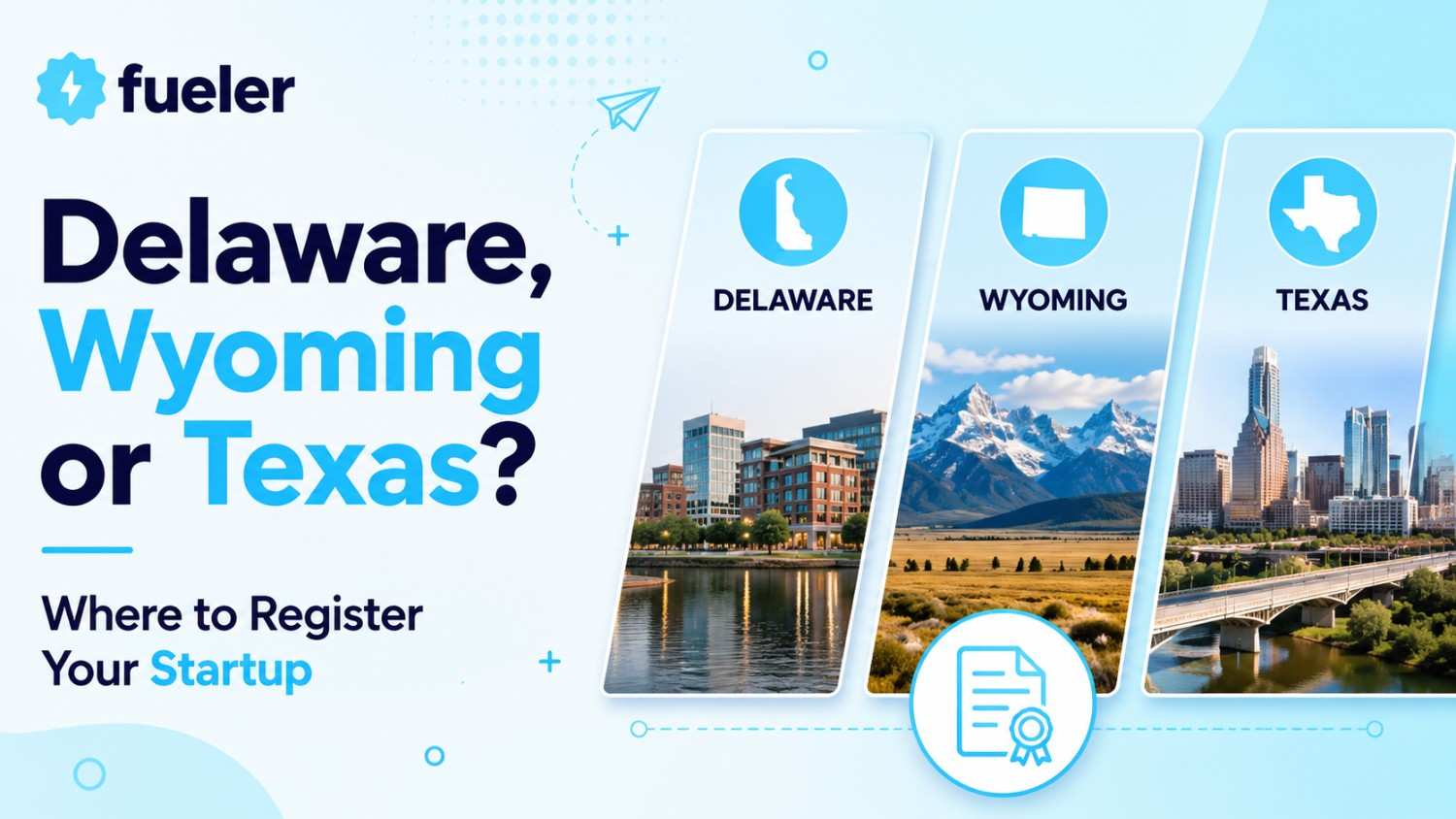
Starting a business means many important choices, but one of the biggest decisions that founders face in 2025 is where to register their startup. The state you choose affects your taxes, legal protections, costs, privacy, and ability to raise investment. Different states offer unique advantages depending on your business type, funding plans, and growth goals. Whether you want to attract venture capital, keep costs low, or access a large market, the choice of state can have a long-lasting impact.
I’m Riten, founder of Fueler, a platform that helps freelancers and professionals get hired through their work samples. In this article, I’ll guide you through the key benefits and considerations of registering your startup in Delaware, Wyoming, or Texas in 2025. You’ll learn how each state supports startups differently and how to make an informed decision that fits your business plan. And remember, showcasing your skills and progress through a strong portfolio is just as crucial for building trust and credibility.
1. Delaware: The Go-To State for Funded Startups and Complex Structures
Delaware is famous for being the preferred home for startups aiming to raise venture capital, grow rapidly, or go public eventually. It has the most developed and business-friendly legal environment in the US, especially suited for corporations.
- Delaware’s Court of Chancery specializes in business law, resolving disputes quickly and predictably without juries. This gives companies and investors legal certainty.
- There is no state corporate income tax for companies that don’t physically operate in Delaware, lowering tax burdens for remote or online businesses.
- Delaware allows complex share structures, making it easier to issue multiple stock classes or offer employee stock options, a key feature for startups raising funding.
- The state offers moderate privacy protections; while some ownership details are public, it requires less disclosure than many other states.
- Delaware has several state-sponsored startup funding programs like EDGE Grants, providing financial and networking support for innovation-driven businesses.
Why it matters: For startups seeking outside investment, scalable legal frameworks, and national credibility, Delaware remains unmatched. Investors and venture capitalists are very comfortable with Delaware corporations, reducing friction during fundraising.
2. Wyoming: Best for Privacy, Low Costs, and Bootstrapped Startups
Wyoming is growing rapidly in popularity thanks to its tax-friendly environment, strong privacy protections, and simplified business regulations. It appeals mainly to bootstrapped companies, freelancers, or businesses valuing confidentiality.
- Wyoming has no state corporate or personal income tax, nor franchise taxes on businesses, allowing owners to maximize profits.
- It provides strong asset protection through charging order protections, preventing creditors from seizing LLC member interests or forcing sales.
- The state offers high privacy; LLC members and managers are not publicly disclosed, and business details remain confidential.
- Formation fees and ongoing reporting requirements are low and simple, reducing administrative burden and costs.
- Wyoming also allows series LLCs, which help entrepreneurs manage multiple projects or business lines efficiently under one entity.
Why it matters: For founders who want to minimize overhead, maintain anonymity, and avoid heavy compliance costs, Wyoming is a top-tier choice. It’s especially suitable for start-ups that do not need immediate outside funding.
3. Texas: Large Domestic Market and Business-Friendly Growth Environment
Texas combines a booming economy with no personal income tax and moderate business taxes, making it attractive to startups focusing on regional growth and scalability.
- There is no state personal income tax, which benefits business owners directly and helps attract talent.
- Texas charges a franchise tax based on gross receipts, but many startups fall below the threshold, paying little to no tax initially.
- The state has strong liability protections and a regulatory environment that encourages innovation and reduces unnecessary red tape.
- With major metro areas like Austin, Houston, and Dallas, Texas offers access to a large, diverse customer base and skilled workforce.
- Texas runs incentive programs like the Texas Enterprise Fund (TEF) providing cash grants to startups promising job creation and capital investment.
Why it matters: If your startup depends on a large local or regional market and you want to pay lower personal income taxes while benefiting from business incentives, Texas is a smart choice. It’s becoming a favorite for tech and service companies scaling in the US.
Final Thoughts and Clear Answer
Choosing between Delaware, Wyoming, and Texas in 2025 depends entirely on your startup's goals, funding plans, and operational style:
- If you want to raise venture capital or eventually go public, Delaware is the clear winner. Its corporate laws and investor familiarity make fundraising faster and smoother.
- If you value privacy, low costs, and keeping operations lean without outside investors early on, Wyoming will give you maximum flexibility and protection.
- If you plan to grow in a large market, hire locally, and benefit from state incentives, Texas is the most strategic choice especially for service-based or tech businesses targeting US customers.
Conclusion
In 2025, Delaware is best for investor-backed growth, Wyoming for bootstrapped privacy-first startups, and Texas for market-driven expansion within the US. Pick the state that aligns with your funding strategy and long-term vision, your decision today will shape your tax obligations, investor appeal, and operational freedom for years to come.
And while state choice matters, remember that how you present your progress to investors and customers can be just as decisive. A polished portfolio on Fueler can turn your idea into tangible credibility, no matter which state you choose.
Frequently Asked Questions
1. Which state is best for startups seeking venture capital in 2025?
Delaware is the most popular and investor-friendly state for VC-backed startups due to its legal system and flexible corporate laws.
2. What are the main tax benefits of registering in Wyoming?
Wyoming has no state income tax or franchise tax and provides strong privacy and asset protection for LLC owners.
3. Is Texas a good state for startups focused on local market growth?
Yes, Texas offers no personal income tax, business-friendly regulations, and access to a large skilled workforce.
4. Can I register my business in one state but operate in another?
Yes, you can incorporate in one state and register as a foreign entity in others, but this may involve additional fees and compliance.
5. How does a strong portfolio help when registering or growing a startup?
A portfolio showcasing real work and results builds trust, attracts investors, and opens client or partner opportunities by proving your capabilities.
What is Fueler Portfolio?
Fueler is a career portfolio platform that helps companies find the best talents for their organization based on their proof of work. You can create your portfolio on Fueler, thousands of freelancers around the world use Fueler to create their professional-looking portfolios and become financially independent. Discover inspiration for your portfolio
Sign up for free on Fueler or get in touch to learn more.

What should you do next?
You've read the article. Now turn your skills into proof of work and unlock more opportunities.
Build your proof of work portfolio
Create a clean portfolio with projects, assignments, resumes, and AI stack details that companies actually want to see.
Create your Fueler portfolio →Apply through assignments, not resumes
Stand out by solving real tasks from companies hiring on Fueler.
Explore assignments →Get discovered by companies
Make your work public and let recruiters discover your skills through actual projects instead of keywords.
Get discovered →
