Can Tripura Become India's Cultural-Tech Capital? Inside the State's AVGC-XR Vision

Riten Debnath
23 May, 2026
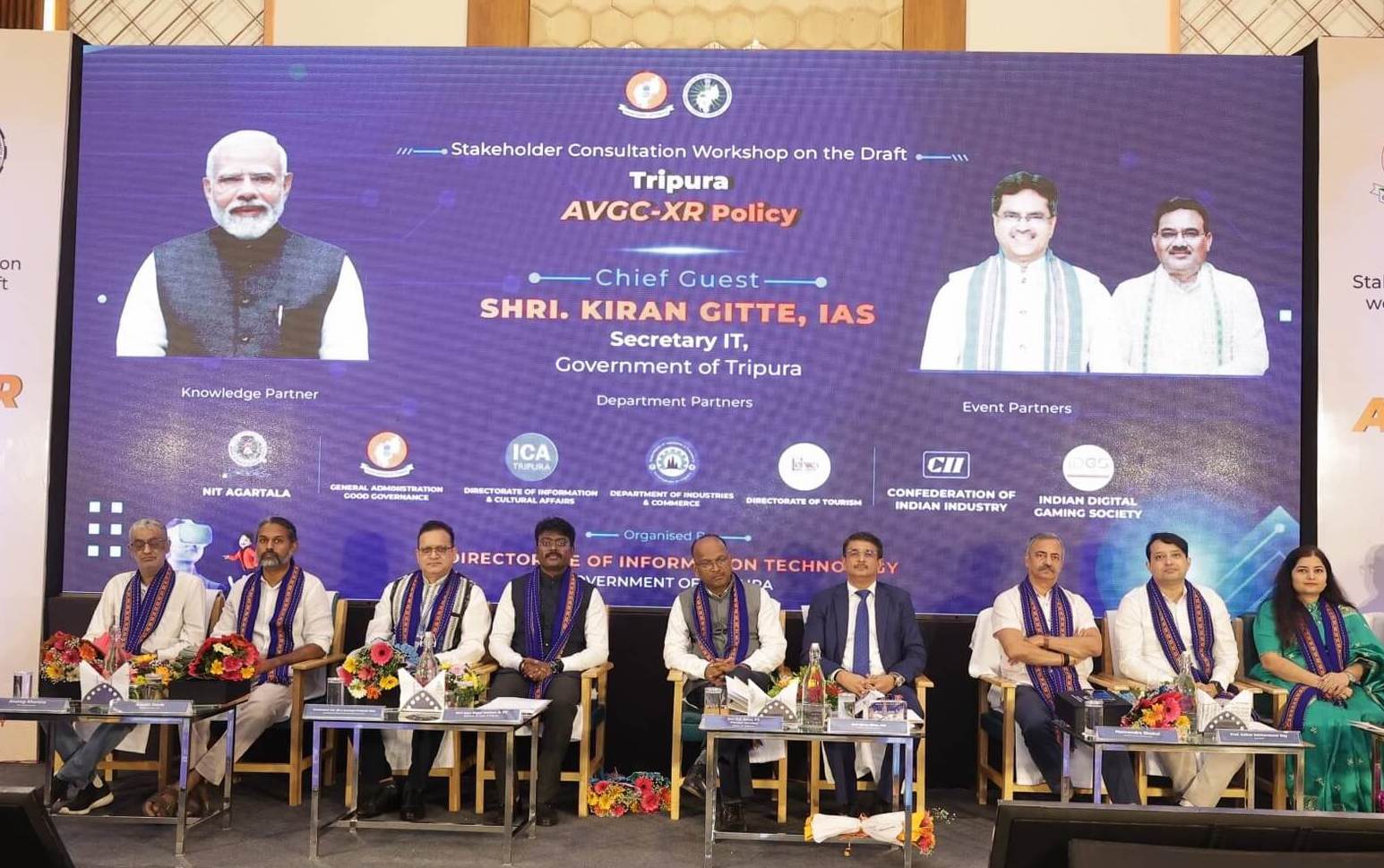
A few days ago, I was sitting inside a hall in Agartala, and a single question kept running through my mind. Can a small state in Northeast India actually become a serious player in the creative-tech world?
I am Riten, founder of Fueler, a platform that helps people get hired through their work, not just their resume. I think about creators and careers all day. So when I watched the Government of Tripura present its draft AVGC-XR Policy at a stakeholder consultation, I was not looking at it like a journalist. I was looking at it like a builder. And what I saw made me genuinely excited.
AVGC-XR stands for Animation, Visual Effects, Gaming, Comics, and Extended Reality. In plain words, it is the creative and immersive digital economy. The anime you watch, the games you play, the VFX in your favourite OTT shows, the AR filters on your phone. Tripura wants to build all of this, but with one big twist that no metro city can copy. Culture.
In this article, I will share why I believe Tripura has a real shot at becoming India's cultural-tech capital, and what it will take to get there.
Where Culture, Creativity, and Technology Meet
Most state tech policies feel like copies of each other. Build IT parks, give subsidies, and attract companies. Tripura is doing something different. It is putting culture at the centre of its technology plan.
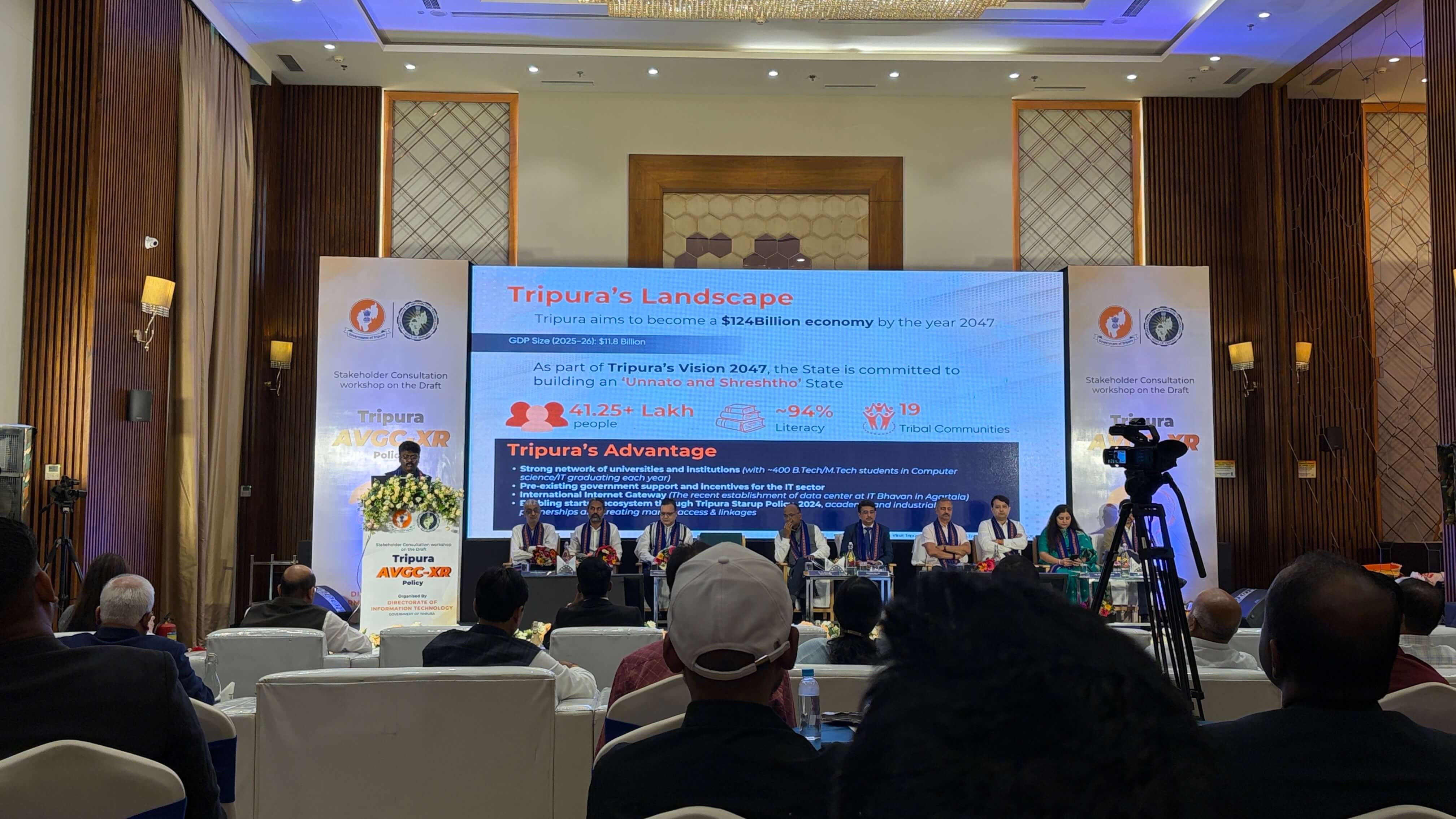
The state has 19 tribal communities. That means a deep well of folklore, myths, traditional art, music, and stories that most of India and the world have never seen. The draft policy treats this culture not as a museum piece, but as raw material for a modern creative industry.
The vision shared on stage was clear. Position Tripura as an emerging national hub for Animation, Visual Effects, Gaming, Comics, and Extended Reality, by building a creative ecosystem that uses the state's rich tribal heritage and young talent to create high-value jobs and digital entrepreneurship.
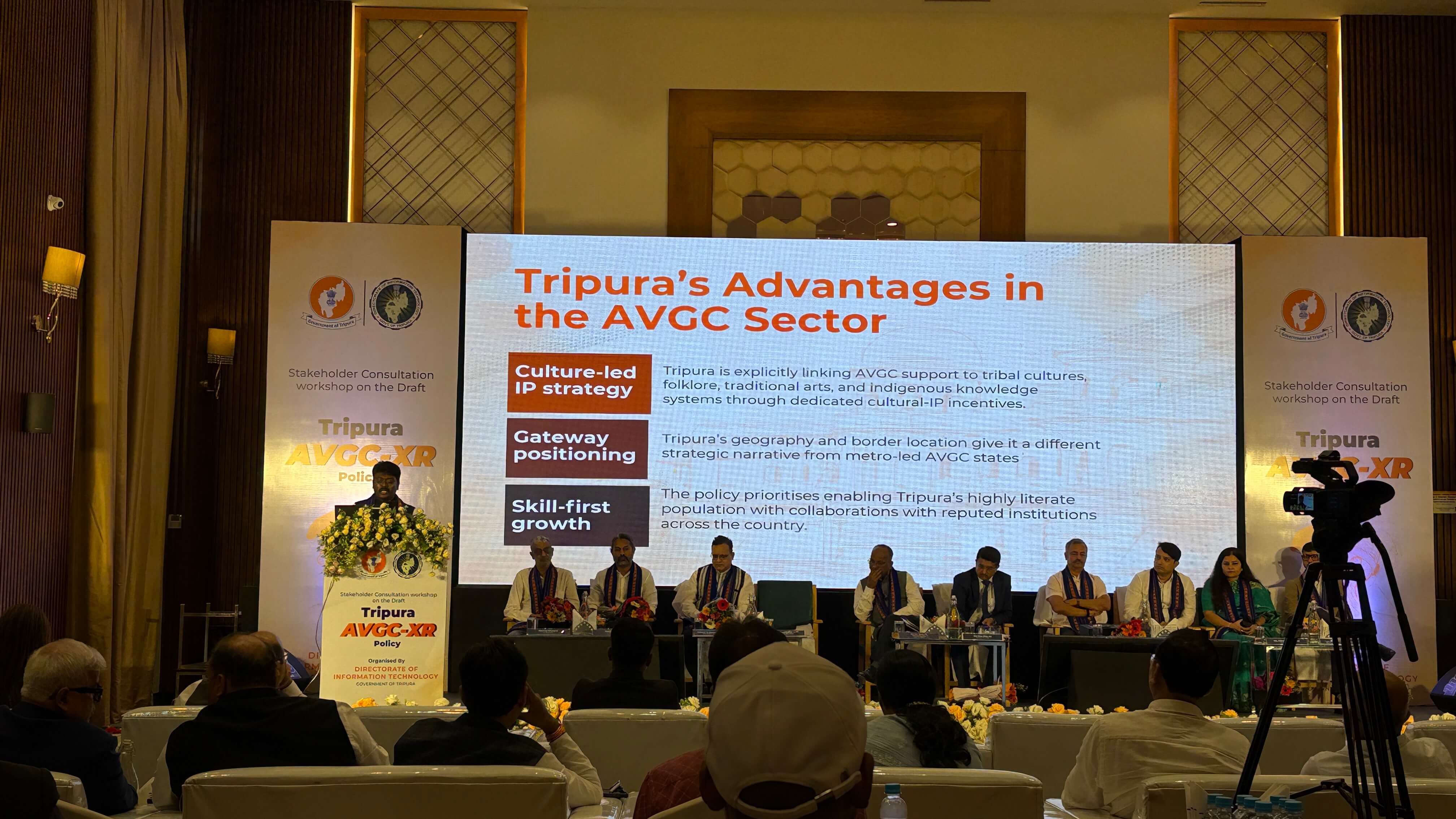
I find this powerful because technology alone is a race Tripura cannot win against Bangalore or Hyderabad. But culture plus technology is a different game. A studio in a metro can hire better engineers. It cannot borrow Tripura's stories. That is an unfair advantage, and smart strategy is built on unfair advantages.
When you combine creativity, culture, and technology, you stop competing on cost and start competing on originality. That is the only kind of competition a smaller player can actually win.
The Startup Ecosystem Ambition
Tripura is not just thinking about jobs. It is thinking about builders.
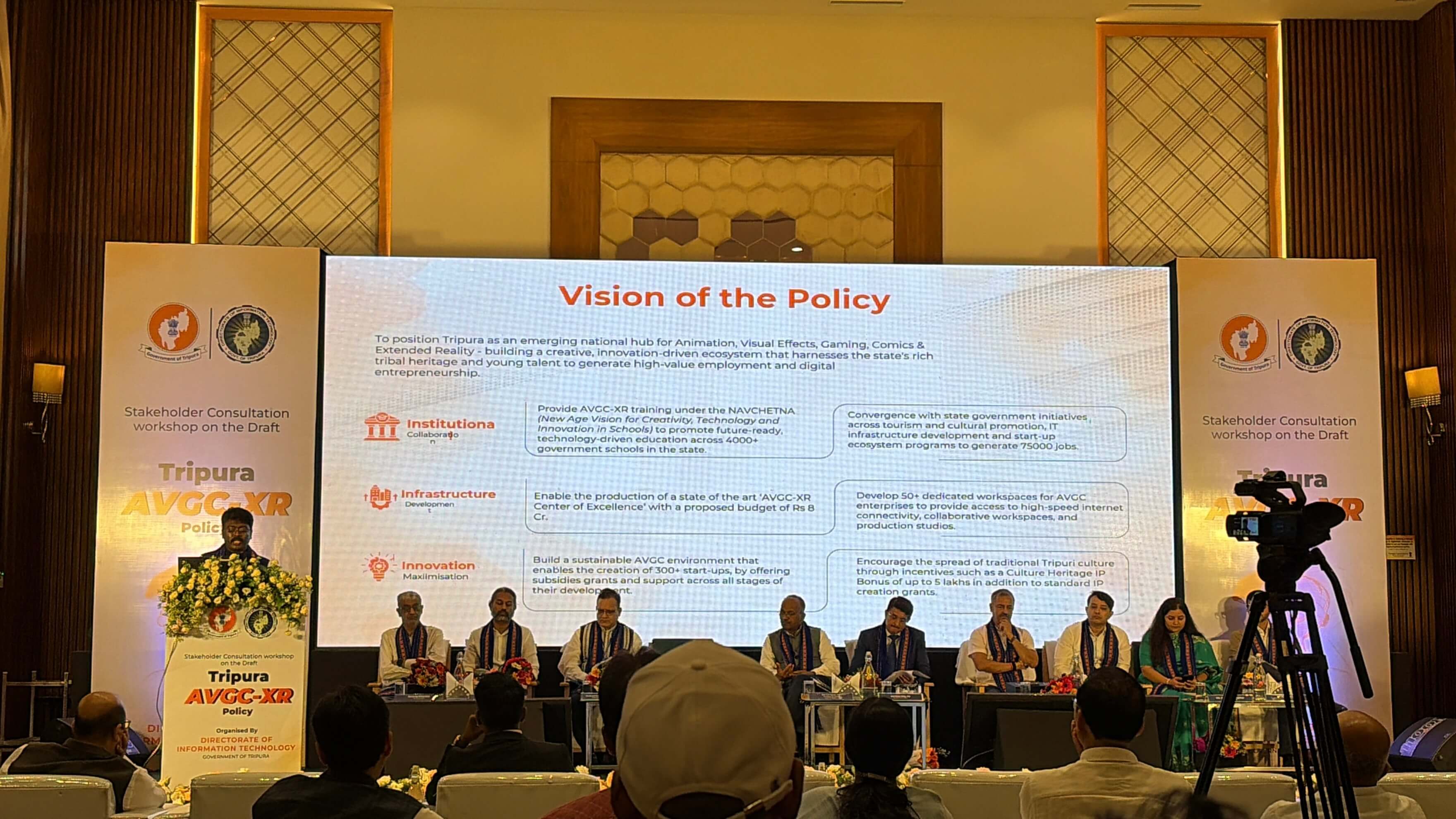
The AVGC-XR Policy sits under a bigger umbrella initiative called TRI-NITI, which stands for Tripura New Age Information Technology Initiative. TRI-NITI combines three policies: the AVGC-XR Policy, an AI Policy, and a GCC Policy. Together, they target 75,000 jobs and 300 plus startups.
For the AVGC-XR space specifically, the policy wants to enable the creation of 300 plus startups by offering support across every stage of a founder's journey. There are seed grants up to 10 lakh rupees for early-stage startups, a 30 percent capital investment subsidy, a 50 percent rent subsidy for incubated startups, and research and innovation grants.
The state also plans to build the physical backbone a startup ecosystem needs. An AVGC Centre of Excellence, shared animation and gaming production labs, motion capture and XR studios, high-performance rendering and cloud infrastructure, and co-working and incubation spaces.
As a founder, I know that grants alone do not build companies. Customers do. But early-stage support like cheaper rent and seed money does one important thing. It lowers the cost of trying. When trying is cheaper, more young people take the leap. More attempts means more chances for a few breakout winners that put Tripura on the map.
From Local Creators to Global IP Owners
Here is the part of the vision that excites me the most. The chance for local creators to become global IP owners.
For a long time, creative talent in smaller cities had only one path. Work as a service provider for someone else's project. You do the animation, but someone else owns the character. You build the game art, but someone else owns the game.
The Tripura policy is trying to flip this. It offers cultural IP grants rooted in Tripura folklore, IP registration and commercialisation assistance, and a Culture Heritage IP Bonus of up to 5 lakh rupees on top of standard IP creation grants.
This matters because real wealth in the creative economy comes from owning IP, not just doing service work. Think about what other countries have done. Japan turned its art and stories into anime, now a global multi-billion-dollar industry. Korea turned its music and shows into K-pop and K-dramas that have fans in every country. They did not invent new culture. They packaged their own culture for the world.
Northeast India has original stories the internet has never seen at scale. If even a handful of Tripura creators build modern games, animated series, or comics around their folklore, and actually own that IP, they could create something that travels far beyond the state.
But owning IP starts with creating and showing your work. This is exactly what I tell every creator. Your portfolio is your proof. In creative industries, nobody hires you or invests in you because of a certificate. They do it because they saw what you made. Proof of work comes before everything else.
Why Northeast India Could Be the Next Creative-Tech Frontier
People often see the Northeast as remote. I see it as untapped.
Tripura has around 94 percent literacy, one of the highest in India. It has a young population. It recently got a new international internet gateway and a data centre in Agartala. And it has culture that no one else has.
Creative-tech work does not need ports or factories. It needs talent, internet, and skill. Tripura already has the talent and is building the internet and skill layers through this policy. That combination is exactly what a creative-tech frontier looks like before it takes off.
The policy is also self-aware about its challenges. Talent might leave for metros. Industry partnerships need to be real, not just on paper. Infrastructure must actually get built and maintained. Internet quality must be consistent across the state, not just in the capital. These are honest problems, and naming them is the first step to solving them.
I do not think Tripura becomes a cultural-tech capital overnight. These things take a decade, not a year. But the direction is right, the culture-first positioning is genuinely smart, and the timing fits a world that increasingly rewards original creators. If the state executes even half of this plan well, Northeast India could surprise everyone.
If you are a young creator in the region, do not wait for the ecosystem to be ready. Start building and showing your work now. The internet does not care where you are from. It cares what you can make. And the creators who build their proof of work today will be the ones leading this frontier tomorrow.
Frequently Asked Questions (FAQ)
What is the Tripura AVGC-XR Policy?
The Tripura AVGC-XR Policy is a draft government framework by the Directorate of Information Technology, Government of Tripura, to build a creative economy around Animation, Visual Effects, Gaming, Comics, and Extended Reality. It uses incentives, grants, skill programs, and a strong cultural-IP focus to create jobs, support startups, and turn Tripura's heritage into digital content.
Can Tripura really become a cultural-tech hub in India?
Tripura has real strengths for this goal, including around 94 percent literacy, a young population, 19 tribal communities with rich culture, and improving internet infrastructure. Its biggest edge is a culture-first strategy that metro cities cannot copy. Success will depend on execution, talent retention, and building real industry partnerships over the next several years.
How does the Tripura AVGC-XR Policy support startups?
The policy offers seed grants up to 10 lakh rupees for early-stage startups, a 30 percent capital investment subsidy, a 50 percent rent subsidy for incubated startups, research and innovation grants, and shared infrastructure like production labs and incubation spaces, aiming to enable 300 plus startups.
What is cultural IP and why does it matter for creators?
Cultural IP means intellectual property like characters, stories, and designs rooted in local culture and folklore. It matters because owning IP creates long-term wealth, unlike one-time service work. Tripura offers cultural IP grants and a Culture Heritage IP Bonus to help local creators build and own original content inspired by their heritage.
Why is Northeast India seen as a creative-tech frontier?
Northeast India has high literacy, young talent, untapped cultural stories, and improving digital infrastructure. Creative-tech work needs talent and internet rather than factories, which suits the region well. With supportive policies like Tripura's AVGC-XR Policy, the Northeast has a real chance to grow into a new creative-tech destination.
What is Fueler Portfolio?
Fueler is a career portfolio platform that helps companies find the best talent for their organization based on their proof of work. You can create your portfolio on Fueler. Thousands of freelancers around the world use Fueler to create their professional-looking portfolios and become financially independent. Discover inspiration for your portfolio
Sign up for free on Fueler or get in touch to learn more.

What should you do next?
You've read the article. Now turn your skills into proof of work and unlock more opportunities.
Build your proof of work portfolio
Create a clean portfolio with projects, assignments, resumes, and AI stack details that companies actually want to see.
Create your Fueler portfolio →Apply through assignments, not resumes
Stand out by solving real tasks from companies hiring on Fueler.
Explore assignments →Get discovered by companies
Make your work public and let recruiters discover your skills through actual projects instead of keywords.
Get discovered →
