Best Technology Platforms Used in US Logistics in 2026

Riten Debnath
19 Jan, 2026
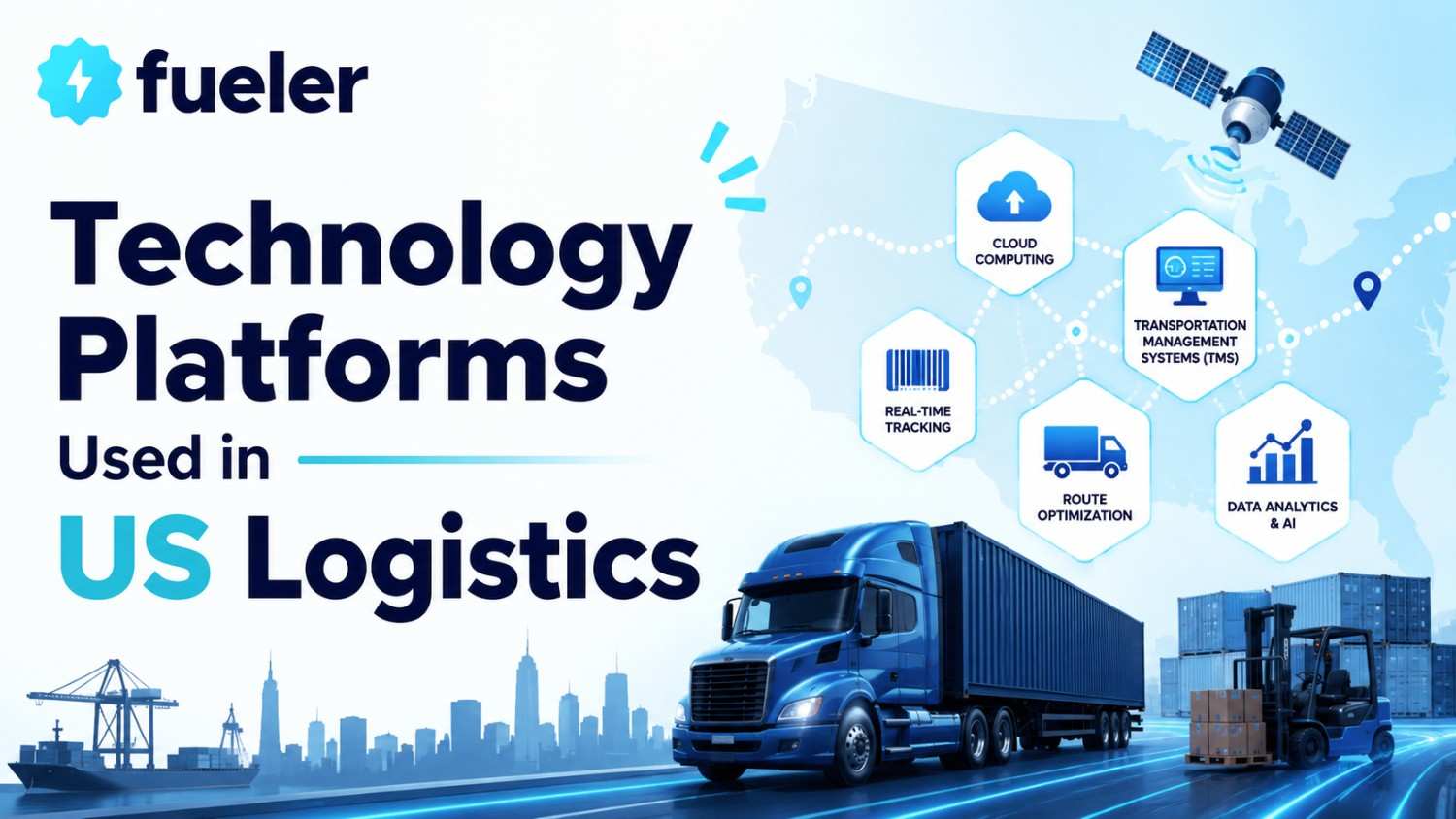
The American logistics industry is the backbone of the global economy, but it is currently undergoing a massive digital transformation. Moving goods from a warehouse in California to a retail store in New York is no longer just about trucks and drivers, it is about data, real-time tracking, and automated efficiency. If you want to stay ahead in this fast-paced world, understanding the tech stack that powers these movements is essential for every professional and business owner.
I’m Riten, founder of Fueler, a skills-first portfolio platform that connects talented individuals with companies through assignments, portfolios, and projects, not just resumes/CVs. Think Dribbble/Behance for work samples + AngelList for hiring infrastructure.
1. Real-Time Visibility with Project44
Project44 has established itself as the leading high-velocity supply chain visibility platform in the United States. It connects shippers, carriers, and logistics service providers through a massive global network to provide high-fidelity data on every shipment. By moving away from legacy systems like manual tracking calls, Project44 allows companies to see exactly where their inventory is at any given second across road, rail, ocean, and air. This platform is essential for businesses that need to manage customer expectations and reduce the costly "where is my order" inquiries that plague customer support teams.
- Advanced Multimodal Tracking: The platform offers a unified view of shipments across all modes of transportation, ensuring that whether a package is on a cargo ship or a delivery van, the location data remains consistent and accurate.
- AI-Powered Predictive ETAs: Using machine learning, Project44 analyzes historical data, weather patterns, and port congestion to provide highly accurate estimated arrival times that help warehouses plan labor more effectively.
- Automated Exception Management: Instead of manually checking for delays, users receive instant alerts if a shipment goes off-route or gets stuck at a border, allowing logistics managers to solve problems before they escalate.
- Sustainability Insights: Project44 includes tools to measure and report on the carbon footprint of every shipment, helping US companies meet their growing environmental compliance requirements and ESG goals.
- Seamless API Integrations: The platform is built to talk to other systems, meaning it can feed real-time tracking data directly into a company’s existing ERP or Warehouse Management System without any manual data entry.
Pricing: * Starter Plans: Often begin around $500 per user per month through third-party integrations.
- Enterprise Plans: Larger implementations typically start at $6,250 per month, depending on shipment volume and required features.
Why it matters:
In a world where Amazon has set the standard for "instant" updates, US logistics companies cannot afford to be blind to their own supply chains. Project44 provides the transparency needed to reduce detention fees, optimize dock scheduling, and build trust with end consumers.
2. Fleet Management and Safety with Samsara
Samsara is a dominant force in the US telematics market, providing an integrated "Connected Operations Cloud" that goes far beyond simple GPS tracking. It combines hardware sensors with powerful software to give fleet managers a 360-degree view of their vehicles, drivers, and equipment. For US trucking companies, Samsara is the go-to tool for staying compliant with Department of Transportation (DOT) regulations while simultaneously improving driver safety and fuel efficiency. It turns a physical fleet into a digital data set that can be optimized for maximum profit.
- Real-Time GPS and Telematics: Managers can see the exact location and health of every vehicle in their fleet with per-second GPS refresh rates, ensuring that dispatchers can make the most informed routing decisions.
- AI Dash Cams and Safety Coaching: The platform uses intelligent cameras to detect distracted driving or harsh braking, automatically flagging events for review and providing drivers with real-time in-cab alerts to prevent accidents.
- ELD and Compliance Automation: Samsara simplifies the complex world of Electronic Logging Device (ELD) and Hours of Service (HOS) compliance, making it easy for drivers to pass roadside inspections with just a few taps on a tablet.
- Preventative Maintenance Alerts: By pulling engine diagnostics directly from the vehicle, the system can predict when a truck needs an oil change or a part replacement, preventing expensive roadside breakdowns and towing fees.
- Fuel and Sustainability Monitoring: The software tracks idling time and fuel consumption patterns across the entire fleet, helping companies identify which routes or drivers are costing them the most in wasted energy.
Pricing:
- Hardware Costs: Ranges between $99 and $148 per vehicle for initial sensor and camera setup.
- Monthly Subscription: Typically costs between $27 and $33 per vehicle, per month depending on the contract length and feature set.
Why it matters:
Safety and compliance are the two biggest risks for any US-based logistics company. Samsara mitigates these risks by providing the data needed to keep drivers safe on the road and ensuring that every mile driven is accounted for under federal law.
3. Supply Chain Orchestration with FourKites
FourKites is an industry-leading platform that focuses on "End-to-End" visibility, meaning it doesn't just track trucks; it tracks the entire journey of a product from the supplier to the store shelf. It is particularly popular among large US manufacturers and retailers who have complex, multi-layered supply chains. FourKites uses a patented AI system to orchestrate operations, meaning it can suggest solutions to disruptions before a human even notices there is a problem. It creates a "Digital Twin" of a company's supply chain to run simulations and find better ways to move freight.
- Dynamic Yard Management: The platform provides real-time visibility into warehouse yards, helping staff manage gate check-ins and trailer spotting more efficiently to reduce the time trucks spend idling at the dock.
- Carrier Performance Benchmarking: FourKites allows shippers to compare their carriers against industry standards, showing which partners are consistently on time and which ones are underperforming on specific lanes.
- Collaborative Customer Portals: Companies can give their customers a branded tracking page, reducing the number of phone calls to customer service and providing a modern, digital experience for B2B buyers.
- Predictive Weather and Traffic Overlays: The system integrates live weather and traffic data onto its maps, allowing logistics planners to reroute shipments around hurricanes, snowstorms, or major accidents in real-time.
- AI-Driven "Polly" Assistant: FourKites features a digital worker named Polly that can automatically respond to "Where is my truck" inquiries, freeing up human logistics coordinators for more strategic work.
Pricing:
- Custom Enterprise Pricing: FourKites typically operates on a custom quote basis tailored to the number of shipments and depth of integration required.
Why it matters:
Large-scale logistics in the US is often chaotic due to its sheer size. FourKites acts as the "brain" of the operation, ensuring that every department—from the warehouse to the retail floor—is looking at the same real-time data to make decisions.
4. Modern Fulfillment and Global Freight with Flexport
Flexport has revolutionized the traditional freight forwarding model by building a technology-first platform for global trade. Unlike old-school brokers who rely on fax machines and spreadsheets, Flexport provides a sleek dashboard where US businesses can book, track, and manage their international shipments. They act as both a technology provider and a licensed freight forwarder, giving small and medium-sized businesses access to the same high-level logistics infrastructure used by the world's biggest brands.
- Centralized Communication Hub: All documents, chat logs, and invoices related to a shipment are stored in one place, eliminating the need for long email chains and lost physical paperwork during the shipping process.
- Real-Time SKU-Level Tracking: Most trackers tell you where the truck is, but Flexport tells you exactly which products (SKUs) are inside the container, giving inventory managers better control over their stock levels.
- Automated Customs Clearance: The platform uses smart technology to handle complex US Customs documentation, reducing the risk of "holds" or fines that can delay a shipment for weeks at a time.
- Inventory and Order Management: Flexport provides tools to manage stock across multiple warehouses, helping e-commerce brands fulfill orders faster by keeping products closer to their customers.
- Carbon Offset Programs: For companies looking to go green, Flexport offers integrated carbon auditing and the ability to purchase offsets directly through the shipping platform with a single click.
Pricing:
- Monthly Minimum: Starting in 2026, Flexport has a $5,000 monthly minimum fee for fulfillment services to prioritize high-volume partners.
- Shipping Rates: Variable based on lane, weight, and current market demand for ocean and air freight.
Why it matters:
For US companies importing goods from overseas, the "black box" of international shipping can be terrifying. Flexport shines a light on that process, making global trade feel as easy as tracking a local pizza delivery.
5. Warehouse Management Excellence with Oracle NetSuite
Oracle NetSuite is one of the most widely used Cloud ERP (Enterprise Resource Planning) solutions in the US logistics and distribution sector. It provides a comprehensive Warehouse Management System (WMS) that helps businesses optimize their internal operations. From the moment a shipment arrives at the loading dock to the second it is picked and packed for a customer, NetSuite tracks every movement. It is the gold standard for companies that have outgrown basic accounting software and need a professional tool to manage their physical inventory.
- Bin-Level Inventory Tracking: The system allows warehouse managers to see exactly which shelf an item is on, reducing the time pickers spend searching for products and increasing overall order accuracy.
- Mobile Scanner Integration: Warehouse staff can use handheld devices to scan barcodes for receiving and picking, which automatically updates the central database in real-time to prevent overselling.
- Automated Replenishment: NetSuite can be set up to automatically trigger a purchase order or a stock transfer when inventory levels drop below a certain point, ensuring the business never runs out of popular items.
- Cycle Counting Workflows: Instead of shutting down the warehouse for a yearly inventory count, the software schedules small, regular "cycle counts" to maintain high data accuracy without stopping operations.
- Integrated Financials and CRM: Because the WMS is part of a larger ERP, every shipment is automatically tied to a sales order and an invoice, making the accounting process incredibly fast and error-free.
Pricing:
- Base Platform: Usually starts around $999 per month.
- User Fees: Additional costs apply per user, and WMS modules are typically quoted on a case-by-case basis.
Why it matters:
A warehouse is only as efficient as its data. Oracle NetSuite ensures that US distributors can fulfill thousands of orders a day with zero errors, which is the only way to scale a logistics business in today’s competitive market.
6. Digital Freight Brokerage with Uber Freight
Uber Freight has taken the technology that revolutionized ridesharing and applied it to the world of heavy trucking. It is a digital marketplace that connects shippers directly with thousands of vetted carriers across North America. This platform is perfect for businesses that need to move goods quickly without the hassle of negotiating rates over the phone. With a focus on "instant" capacity, Uber Freight provides a level of speed and transparency that traditional brokerages struggle to match.
- Instant Quote Generation: Shippers can enter their load details and get a guaranteed price in seconds, allowing them to budget accurately without waiting for a broker to call them back.
- Real-Time Carrier Tracking: Once a load is picked up, the shipper can track the truck's progress on a live map, getting automatic notifications when the driver arrives at the pickup or delivery location.
- Smart Load Matching: The platform's algorithm matches loads with the best available drivers based on their equipment type, location, and past performance ratings within the Uber Freight network.
- Facility Ratings and Insights: Drivers can leave reviews for warehouses, helping shippers understand if their facilities are causing delays or providing a poor experience for the people moving their goods.
- Digital Documentation (eBOL): Uber Freight supports electronic Bills of Lading, which means drivers and warehouse staff can sign for shipments on their phones, reducing physical contact and paperwork clutter.
Pricing:
- Pay-per-load: No monthly subscription fee for basic users; costs are based on the market rate of the freight move plus a transaction fee.
Why it matters:
For companies that experience sudden surges in demand, having access to an "on-demand" fleet is a lifesaver. Uber Freight provides the flexibility to move goods at a moment's notice without the overhead of maintaining a private fleet.
7. Global Logistics Operations with CargoWise
WiseTech Global’s CargoWise is an incredibly deep and powerful platform designed for complex, international logistics service providers. It is used by almost every major freight forwarder in the US to manage the movement of goods across borders. CargoWise is unique because it handles everything from customs entries and ocean bookings to warehouse management and deep financial accounting within a single database. It is a "highly integrated" system, meaning data entered in one part of the world is immediately available to a team member in another.
- Global Customs Compliance: CargoWise has deep integrations with US Customs (CBP) and other international agencies, making it one of the most reliable tools for filing "Automated Broker Interface" (ABI) entries.
- AI Workflow Automation: The platform features an AI engine that can automatically classify goods for trade and manage repetitive data entry tasks, significantly reducing the amount of manual labor required per shipment.
- Multimodal Shipment Management: Whether a shipment is moving by sea, land, or air, CargoWise provides a single file structure to manage the entire journey, including complex transshipments and split deliveries.
- CargoWise Neo Client Portal: This tool gives the forwarder's customers a self-service portal where they can track their own shipments, view invoices, and download documents without needing to call for updates.
- Integrated Trust Accounting: The system includes a full financial suite designed specifically for the logistics industry, handling complex multi-currency transactions and profit sharing between global offices.
Pricing:
- Value Packs: Recently launched "Value Packs" replace old seat fees with a per-transaction model, allowing companies to pay only for the shipments they actually process.
Why it matters:
Global logistics is a minefield of regulations and paperwork. CargoWise provides the high-level infrastructure that US-based international forwarders need to stay organized, compliant, and profitable while moving goods around the globe.
8. E-commerce Shipping Optimization with ShipStation
ShipStation is the most popular choice for US-based e-commerce brands that need to manage high volumes of parcel shipments. It connects to over 100 different selling channels—like Shopify, Amazon, and eBay—and pulls all orders into one easy-to-manage dashboard. For a logistics professional, ShipStation is the tool that bridges the gap between a digital "buy" button and a physical shipping label. It is designed to save time by automating the most boring parts of the shipping process, like comparing rates and printing labels.
- Multi-Carrier Rate Comparison: Users can view live rates from USPS, UPS, FedEx, and DHL all on one screen, ensuring they always choose the cheapest or fastest option for every individual package.
- Sophisticated Automation Rules: You can set the software to automatically choose "priority mail" for orders over a certain weight or "overnight shipping" for high-value customers without any manual input.
- Branded Tracking and Returns: ShipStation allows you to send customized tracking emails and create a self-service returns portal, making the post-purchase experience feel professional and high-end.
- Batch Label Printing: Instead of printing labels one by one, you can select hundreds of orders at once and print all the labels and packing slips with a single click of a button.
- Inventory Management Sync: The platform can track your stock levels across different warehouses and selling channels, alerting you when you are running low on a specific item so you can restock in time.
Pricing:
- Free Plan: Available for very low volume (up to 10 labels per month).
- Subscription Plans: Range from $14.99 per month for small shops up to $29.99+ per month if you require API access and higher label limits.
Why it matters:
Small and medium-sized US businesses often struggle with the "last mile" of logistics. ShipStation levels the playing field, giving even the smallest garage-based business the same shipping efficiency as a major retail corporation.
9. Strategic Logistics Planning with Descartes
Descartes Systems Group provides a massive suite of cloud-based logistics solutions that focus on routing, mobile telematics, and global trade intelligence. In the US, they are famous for their "Global Logistics Network," which is one of the world’s largest communities of shippers, carriers, and customs brokers. Descartes is the platform of choice for companies that need to solve complex "math problems" in logistics, such as how to route a fleet of 50 trucks to 500 different locations in the most fuel-efficient way possible.
- Advanced Route Optimization: The software uses complex algorithms to plan delivery routes that minimize mileage, reduce fuel costs, and ensure that drivers meet their strict "time-window" promises to customers.
- Denied Party Screening: For international shipping, Descartes automatically checks every customer and supplier against global "watchlists" to ensure the company isn't accidentally doing business with prohibited entities.
- Global Trade Data Intelligence: Descartes provides access to "Datamyne," a massive database of US import and export records that helps businesses find new suppliers and analyze their competitors’ shipping patterns.
- Mobile Proof of Delivery (POD): Drivers can use a mobile app to capture digital signatures and photos of delivered goods, which are instantly uploaded to the central system for billing and customer confirmation.
- Foreign Trade Zone (FTZ) Management: The platform helps US manufacturers manage "Foreign Trade Zones," allowing them to defer or reduce customs duties on imported components used in their assembly processes.
Pricing:
- Custom Quotes: Pricing is highly modular; however, industry data suggests a median buyer pays around $8,283 for specialized modules, though smaller tools are available for less.
Why it matters:
Efficiency in US logistics is often a game of inches. Descartes provides the high-level intelligence and routing precision that allows companies to squeeze more profit out of every mile and ensure they stay on the right side of international trade law.
Showcase Your Logistics Expertise with Fueler
If you are a logistics professional, a supply chain analyst, or a warehouse manager, knowing these tools is only half the battle. You need to show potential employers or clients that you can actually use them to drive results. This is where Fueler comes in. Instead of just listing "Samsara" or "NetSuite" on a boring resume, you can use Fueler to build a professional portfolio of your work. You can showcase a project where you optimized a fleet's fuel consumption by 15% using telematics data or a case study of how you implemented a new WMS to reduce picking errors. By focusing on your "Proof of Work," Fueler helps you stand out in a crowded job market and proves your value through real-world assignments and results.
Final Thoughts
The US logistics landscape in 2026 is defined by the move from "guessing" to "knowing." Whether it is tracking a container across the ocean with Project44 or managing a local delivery fleet with Samsara, technology has made the industry more transparent and efficient than ever before. For businesses, adopting these platforms is no longer optional; it is a requirement for survival. For professionals, mastering these tools and documenting your success is the fastest way to advance your career in this high-demand field.
Frequently Asked Questions (FAQs)
1. What are the best logistics platforms for small businesses in the US in 2026?
For small businesses, ShipStation and Shippo are the top choices for parcel shipping, while Uber Freight is excellent for booking occasional truckload shipments without a contract. These tools offer "pay-as-you-go" or low-cost subscription models that fit a smaller budget.
2. How much does a Warehouse Management System (WMS) cost for a mid-sized company?
A professional WMS like Oracle NetSuite typically starts around $1,000 per month for the base platform, with total implementation and user costs often ranging from $15,000 to $50,000 per year depending on the complexity and number of warehouse staff.
3. Is AI actually being used in US logistics today?
Yes, AI is currently used for "Predictive ETAs" in platforms like Project44, for "Driver Safety Coaching" in Samsara, and for "Automated Load Matching" in Uber Freight. It helps companies prevent delays and accidents before they happen.
4. What is the difference between a TMS and a WMS?
A TMS (Transportation Management System) manages the movement of goods outside the building (trucks, ships, routes), while a WMS (Warehouse Management System) manages the movement of goods inside the building (picking, packing, inventory).
5. How can I get a job in logistics technology?
The best way is to learn the major platforms mentioned above and build a "proof of work" portfolio on a site like Fueler. Showing that you have successfully managed projects or solved logistics problems with data is much more valuable than a traditional CV.
What is Fueler Portfolio?
Fueler is a career portfolio platform that helps companies find the best talent for their organization based on their proof of work. You can create your portfolio on Fueler. Thousands of freelancers around the world use Fueler to create their professional-looking portfolios and become financially independent. Discover inspiration for your portfolio
Sign up for free on Fueler or get in touch to learn more.

What should you do next?
You've read the article. Now turn your skills into proof of work and unlock more opportunities.
Build your proof of work portfolio
Create a clean portfolio with projects, assignments, resumes, and AI stack details that companies actually want to see.
Create your Fueler portfolio →Apply through assignments, not resumes
Stand out by solving real tasks from companies hiring on Fueler.
Explore assignments →Get discovered by companies
Make your work public and let recruiters discover your skills through actual projects instead of keywords.
Get discovered →
