Best Retargeting Strategies for 2026

Riten Debnath
03 Sep, 2025
Last Updated: June 2026
Most people who click your ads still do not buy on their first visit. In fact, modern buying journeys often involve multiple sessions across search, social media, email, marketplaces, and mobile devices before a conversion happens. That is why retargeting remains one of the highest-ROI digital marketing strategies in 2026.
But retargeting has changed significantly over the last few years. Privacy updates, cookie restrictions, iOS tracking limitations, consent requirements, and AI-driven ad platforms have reshaped how brands reconnect with potential customers. Generic “follow-the-user-everywhere” ads no longer work the way they once did.
I’m Riten, founder of Fueler, a platform that helps freelancers and professionals get hired through their work samples. In this article, I’ll guide you through the best retargeting strategies for 2026.
Today’s best-performing retargeting campaigns focus on first-party data, personalized messaging, conversion intent, and privacy-safe targeting. The brands winning in 2026 are the ones creating relevant experiences instead of repetitive ads.
What Is Retargeting in 2026?
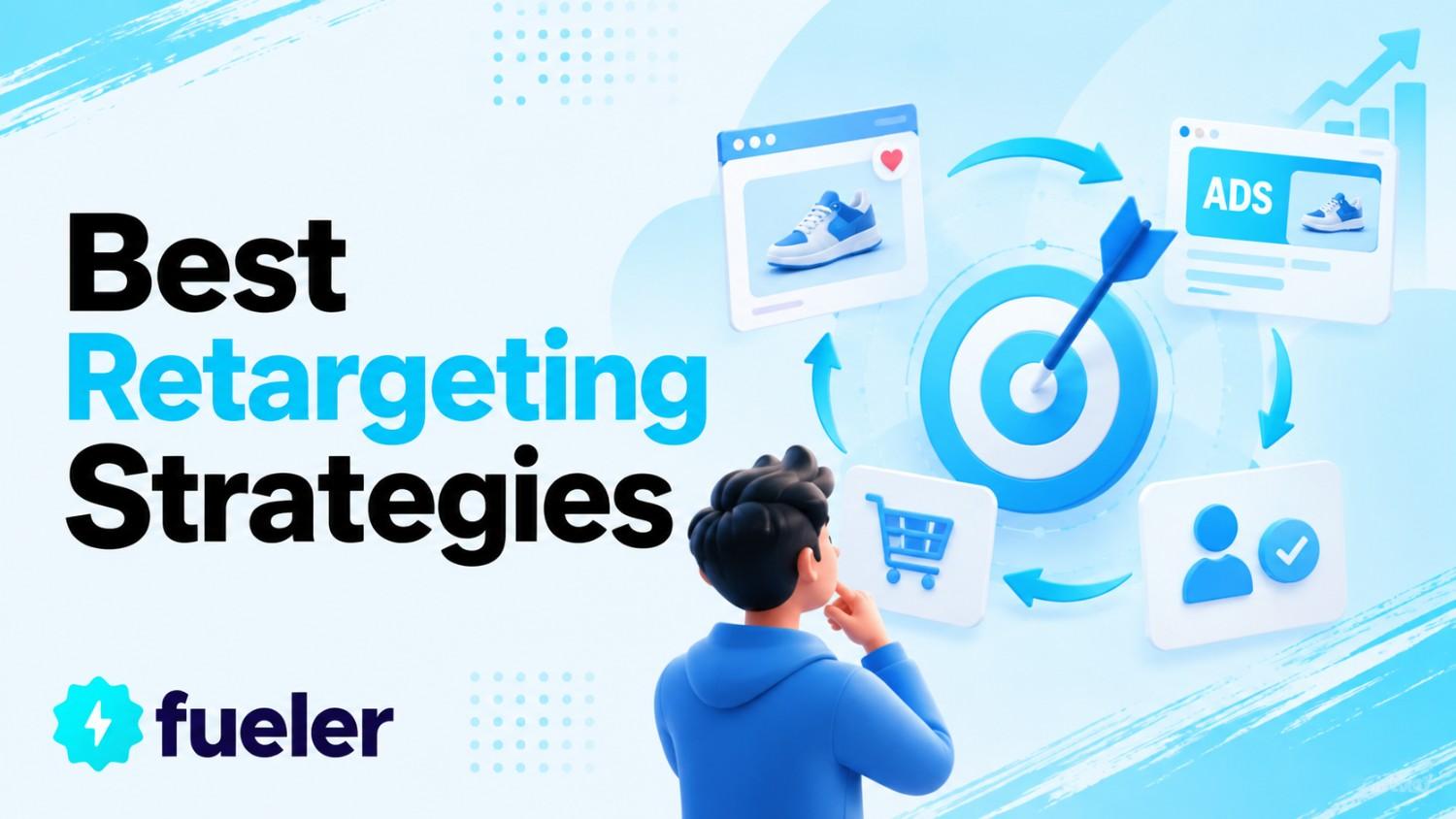
Retargeting is a digital advertising strategy that helps businesses reconnect with users who previously interacted with their website, product pages, app, videos, or social content but did not convert.
Modern retargeting now includes:
- Website visitor retargeting
- Cart abandonment campaigns
- Video view retargeting
- Social media engagement retargeting
- CRM and email list retargeting
- Cross-device retargeting
- Dynamic product retargeting
- First-party audience targeting
Platforms like Google Ads, Meta Ads, YouTube, LinkedIn, TikTok, and programmatic networks all offer advanced retargeting capabilities in 2026.
Why Retargeting Still Works in 2026
Retargeting remains effective because it targets warm audiences instead of cold traffic. These users already know your brand, visited your site, watched your content, or explored your products.
Recent industry studies show:
- Personalized advertising experiences continue to improve conversion likelihood compared to generic targeting
- First-party data strategies are replacing dependence on third-party cookies
- Businesses are increasingly using server-side tracking and CRM integrations for more accurate attribution
- Behavioral targeting still improves click-through rates and reduces ad waste when done correctly
Privacy regulations have reduced audience sizes, but audience quality has improved because targeting is becoming more intent-driven and consent-based.
1. Segment Your Audience for Personalized Retargeting
One of the biggest mistakes businesses still make is showing the same ad to every visitor. Someone who visited your pricing page behaves differently from someone who watched a product demo or abandoned a cart. Audience segmentation allows you to match messaging with intent.
High-performing retargeting audience segments in 2026
- Product page viewers
- Pricing page visitors
- Cart abandoners
- Repeat website visitors
- Past customers
- Free trial users
- Video viewers
- Email subscribers
- High-intent blog readers
- Users inactive for 30–90 days
Best practices
- Create separate campaigns for each behavior group
- Customize creatives based on user actions
- Send users to dedicated landing pages
- Adjust bids based on conversion intent
- Exclude low-quality traffic sources
Why This Matters
Segmentation improves ad relevance, lowers wasted spend, and increases conversions because users receive messaging connected to their actual behavior.
2. Build First-Party Data Retargeting Systems
First-party data has become the foundation of successful retargeting campaigns in 2026.
With increasing privacy restrictions and browser limitations, businesses now rely more heavily on:
- Email subscribers
- CRM data
- Customer purchase history
- Website engagement data
- Consent-based tracking
- Server-side tracking
Google’s Privacy Sandbox initiatives and consent-focused advertising changes have pushed marketers toward privacy-safe targeting strategies instead of relying heavily on third-party cookies.
How to strengthen first-party retargeting
- Build email lists aggressively
- Use lead magnets and newsletter signups
- Connect CRM systems with ad platforms
- Implement server-side tracking
- Use enhanced conversions in Google Ads
- Upload customer lists securely for audience matching
Why This Matters
First-party data creates more reliable audience targeting, improves attribution accuracy, and protects campaigns from future privacy-related disruptions.
3. Use Dynamic Product Retargeting
Dynamic retargeting remains one of the most effective ecommerce advertising strategies in 2026. Instead of showing generic ads, dynamic campaigns automatically display products users previously viewed, added to carts, or interacted with. With AdTribes, your product feed automatically updates so each ad reflects the latest items and stock in real time.
Dynamic retargeting works especially well for
- Ecommerce stores
- Fashion brands
- Electronics stores
- SaaS product demos
- Marketplace platforms
- Subscription businesses
Best practices for dynamic retargeting
- Connect live product catalogs
- Update inventory automatically
- Include pricing and availability
- Add urgency carefully without misleading users
- Showcase related products for upselling
- Use short videos alongside product images
Why This Matters
Dynamic ads increase relevance because users see products they already showed interest in, making conversions more likely.
4. Run Cross-Platform Retargeting Campaigns
Customers no longer stay on one platform. A user may discover your brand on Instagram, search your product on Google, watch reviews on YouTube, and convert later through email or desktop search. Modern retargeting strategies must work across multiple touchpoints.
Recommended retargeting channels in 2026
- Google Display Network
- YouTube
- Meta Ads
- Instagram Reels
- TikTok Ads
- LinkedIn Ads
- Connected TV advertising
- Programmatic advertising platforms like rtb.com
Cross-platform strategy tips
- Maintain consistent messaging
- Adapt creatives for each platform format
- Use shorter videos for mobile-first audiences
- Track assisted conversions, not just last-click conversions
- Create unified customer journeys
Why This Matters
Cross-platform retargeting keeps your brand visible throughout the buying journey instead of depending on a single platform. Today, the easiest way to launch these campaigns is by using a self-serve retargeting platform like rtb.com, which allows you to easily automate the process and bring lost visitors back.
5. Use Sequential Retargeting Campaigns
Showing the same ad repeatedly leads to ad fatigue. Sequential retargeting solves this by showing different messages based on where users are in the buying journey.
Example sequence
Stage 1: Awareness
- Educational content
- Product benefits
- Problem-focused messaging
Stage 2: Consideration
- Testimonials
- Case studies
- Comparisons
- Product demos
Stage 3: Conversion
- Free trials
- Limited-time offers
- Consultation bookings
- Discounts
Stage 4: Retention
- Upsells
- Referral programs
- Loyalty campaigns
- Product education
Why This Matters
Sequential campaigns feel more natural and improve trust because users receive information progressively instead of repetitive sales messages.
6. Optimize Frequency Caps and Exclusion Lists
One reason retargeting fails is overexposure. Seeing the same ad too many times damages brand perception and reduces campaign efficiency.
Frequency cap recommendations
- High-intent audiences: 4–8 impressions weekly
- Mid-funnel audiences: 2–5 impressions weekly
- Low-intent audiences: 1–3 impressions weekly
Important exclusion audiences
- Existing customers
- Recent converters
- Unqualified leads
- Internal traffic
- Job seekers
- Support page visitors
Why This Matters
Smart exclusions reduce wasted ad spend and improve overall campaign profitability.]
7. Improve Retargeting Creatives for 2026 Attention Spans
Creative quality now matters more than targeting alone. Modern audiences scroll quickly, especially on short-form video platforms.
High-performing retargeting creative formats
- Short-form vertical videos
- Customer testimonials
- Product walkthroughs
- Before-and-after visuals
- User-generated content
- Founder-led videos
- Interactive carousel ads
Creative optimization tips
- Focus on one message per ad
- Use strong opening hooks
- Keep videos under 30 seconds when possible
- Add captions for silent viewing
- Refresh creatives every few weeks
Why This Matters
Better creatives improve engagement rates and reduce ad fatigue, especially on platforms like Instagram, TikTok, and YouTube Shorts.
8. Prioritize Privacy and Consent Compliance
Privacy compliance is now a core part of retargeting strategy. Regulations like GDPR, CCPA, and expanding state-level privacy laws require businesses to handle data more transparently.
Privacy-safe retargeting practices
- Use consent banners correctly
- Offer clear opt-out options
- Avoid misleading tracking methods
- Store customer data securely
- Be transparent about data collection
- Use consent mode configurations properly
Why This Matters
Privacy-focused marketing builds customer trust and protects businesses from compliance risks.
9. Measure the Right Retargeting Metrics
Many businesses measure retargeting incorrectly by focusing only on clicks. In 2026, marketers track full-funnel performance.
Important retargeting KPIs
- Return on ad spend (ROAS)
- Cost per acquisition (CPA)
- Assisted conversions
- Customer lifetime value (LTV)
- View-through conversions
- Frequency-to-conversion ratio
- Incremental lift
- Repeat purchase rate
Why This Matters
Better measurement helps businesses understand the true impact of retargeting beyond last-click attribution.
10. Hire Proven Retargeting Experts Through Fueler
Retargeting campaigns involve audience setup, tracking infrastructure, creatives, analytics, and optimization. Small mistakes can waste significant ad budgets. Fueler helps businesses hire marketers based on real proof of work instead of resumes or generic claims.
With Fueler, you can
- Discover marketers through verified work samples
- Review real PPC and retargeting campaign results
- Hire specialists for ecommerce, SaaS, or lead generation
- Find freelancers experienced with Google Ads, Meta Ads, and performance marketing
- Build reliable long-term marketing partnerships
Why This Matters
Hiring experienced retargeting professionals reduces costly trial-and-error and improves campaign performance faster.
Best Retargeting Platforms in 2026
Common Retargeting Mistakes to Avoid
- Showing the same ad repeatedly
- Ignoring first-party data collection
- Running campaigns without exclusions
- Sending traffic to poor landing pages
- Tracking only last-click conversions
- Using outdated creatives for months
- Targeting everyone equally
- Ignoring mobile user experience
- Violating privacy compliance rules
Final Thoughts
Retargeting in 2026 is no longer about chasing users across the internet with repetitive ads.
The best retargeting strategies today focus on relevance, first-party data, personalization, creative quality, and privacy-safe targeting. Businesses that understand customer intent and create useful experiences consistently outperform brands running outdated retargeting campaigns.
As advertising platforms continue evolving, the companies that combine strong audience segmentation, modern tracking infrastructure, and high-quality creatives will continue generating better conversions and stronger long-term customer relationships.
If you want to scale your campaigns with experienced marketers, Fueler helps you hire professionals based on actual work samples and proven results.
FAQs
FAQs
1. What are the best retargeting platforms in 2026?
Google Ads, Meta Ads, YouTube, LinkedIn, TikTok, and programmatic advertising platforms remain the top retargeting platforms in 2026. Google offers strong search and display retargeting, while Meta performs well for ecommerce and social campaigns. LinkedIn is highly effective for B2B retargeting, and TikTok continues to grow for short-form video engagement.
2. Is retargeting still effective after third-party cookie restrictions?
Yes, retargeting is still highly effective in 2026. Businesses now rely more on first-party data, CRM integrations, server-side tracking, and consent-based targeting instead of depending entirely on third-party cookies. Modern retargeting focuses more on user intent and personalization.
3. What is dynamic retargeting and why is it important?
Dynamic retargeting automatically shows users the exact products or services they previously viewed on your website or app. This makes ads more relevant and improves conversion rates because users see content connected to their interests and browsing behavior.
4. How do I avoid annoying users with retargeting ads?
Use frequency caps, rotate ad creatives regularly, exclude recent buyers, and personalize messaging based on user behavior. Repetitive ads can hurt brand perception, so modern retargeting strategies focus on relevance instead of constant exposure.
5. Why is first-party data important for retargeting in 2026?
First-party data helps businesses build reliable audiences using information collected directly from their website, CRM, email subscribers, and customers. As privacy regulations and browser restrictions continue evolving, first-party data has become essential for accurate targeting, better attribution, and long-term campaign stability.
What is Fueler Portfolio?
Fueler is a career portfolio platform that helps companies find the best talents for their organization based on their proof of work.
You can create your portfolio on Fueler, thousands of freelancers around the world use Fueler to create their professional-looking portfolios and become financially independent. Discover inspiration for your portfolio
Sign up for free on Fueler or get in touch to learn more.

What should you do next?
You've read the article. Now turn your skills into proof of work and unlock more opportunities.
Build your proof of work portfolio
Create a clean portfolio with projects, assignments, resumes, and AI stack details that companies actually want to see.
Create your Fueler portfolio →Apply through assignments, not resumes
Stand out by solving real tasks from companies hiring on Fueler.
Explore assignments →Get discovered by companies
Make your work public and let recruiters discover your skills through actual projects instead of keywords.
Get discovered →
