Best Job-Ready Skills for College Students to Learn in 2026

Riten Debnath
06 Aug, 2026
Last updated: August 2026
Your degree is officially no longer a golden ticket. In fact, relying solely on a framed piece of paper in 2026 is a fast track to sending 300 job applications into an automated black hole. Companies do not care about your syllabus; they care whether you can solve actual business problems without needing six months of hand-holding.
The corporate hiring game has shifted permanently. Automated resume screeners digest standard resumes for breakfast and spit out rejection emails before your morning coffee cools. If you want to get hired before your student loans kick in, you need tactical, execution-ready skills and a way to prove you actually have them.
I’m Riten, founder of Fueler, a skills-first portfolio platform building the career infrastructure for 100 million creative professionals. Fueler connects talented individuals with companies through assignments, portfolios, and projects, not just resumes or CVs. Think of it as Dribbble/Behance for work samples combined with AngelList for hiring infrastructure.
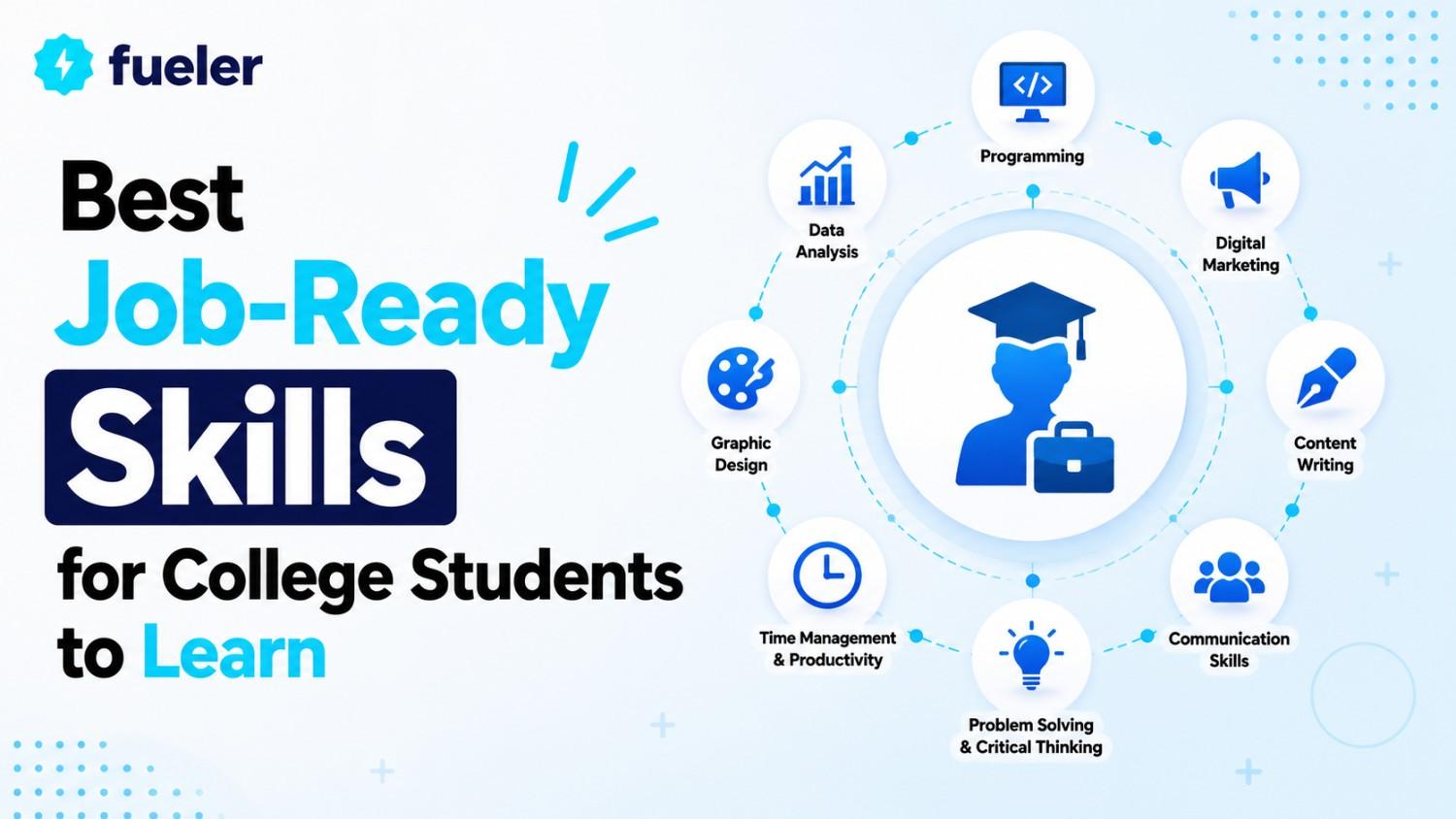
In this guide, you will discover 8 high-demand, job-ready skills college students must master to bypass traditional gatekeepers in 2026. You will learn practical applications for each skill and how to document your progress so employers seek you out directly.
AI Workflow Automation and Prompt Architecture
Showing up to a job interview and stating you "know how to use ChatGPT" is the modern equivalent of boasting that you know how to use Google. Employers expect college grads to engineer multi-step AI workflows, build custom automation triggers, and integrate AI agents into existing operational stacks.
Understanding prompt architecture allows you to translate vague business requests into precise machine instructions. When you combine natural language prompts with automation tools, you eliminate hours of repetitive manual data entry and operational bloat.
- Multi-Step Prompt Engineering: Crafting structured, system-level prompts with strict constraints, context parameters, and clear output schemas. Mastering prompt architecture ensures generative tools produce reliable business deliverables rather than generic, hallucinated text.
- No-Code Automation Integration: Building automated workflows that trigger actions across software applications when new data arrives. Connecting webhooks and database triggers replaces manual copy-pasting across sales, marketing, and support channels.
- Custom AI Agent Configuration: Setting up task-specific AI agents equipped with custom knowledge bases and precise operating rules. Implementing internal knowledge assistants streamlines company research and speeds up customer onboarding.
- AI Output Auditing and Quality Assurance: Reviewing, fact-checking, and refining machine-generated content to ensure factual accuracy and brand compliance. Establishing QA protocols prevents hallucinated data from reaching client presentations or public reports.
- Workflow Bottleneck Optimization: Analyzing existing business operations to identify manual tasks ripe for automated AI assistance. Mapping operational friction allows you to deploy targeted AI solutions that directly reduce team execution hours.
Why It Matters
Companies are actively restructuring teams around AI-assisted productivity. Proving you can design automated workflows signals to founders that hiring you immediately boosts team capacity without adding unnecessary management overhead.
Data Analytics and SQL Querying
Raw data is useless until someone translates it into clear business decisions. Modern marketing, sales, and product teams do not rely on instincts; they look at funnel analytics, conversion drop-offs, and user cohort tables.
Learning how to query relational databases with SQL and build clean visual dashboards turns you into an immediate operational asset. You do not need a computer science degree to pull dataset insights and present actionable solutions to leadership.
- Relational Database SQL Querying: Writing clean SQL queries to join database tables, aggregate user activity metrics, and filter raw records. Pulling your own analytics data prevents you from bothering engineering teams every time you need performance numbers.
- Business Metric Dashboard Creation: Building clear, interactive visual dashboards using modern data visualization tools. Presenting key performance indicators visually keeps leadership aligned on weekly growth metrics and operational health.
- User Cohort and Retention Analysis: Tracking user behavior across custom signup cohorts to measure long-term engagement and churn rates. Identifying churn patterns helps product and marketing teams implement targeted retention fixes.
- Data Cleaning and Transformation: Normalizing messy, unstructured data files into standardized formats ready for business analysis. Cleaning raw CSV files ensures your growth reports remain accurate and trustworthy.
- Funnel Conversion Optimization: Analyzing user drop-off points within checkout or sign-up funnels to locate product friction. Recommending targeted UX tweaks based on conversion data directly improves business revenue.
Why It Matters
Data fluency removes subjectivity from business meetings. Showing an employer you can query database tables, build clear dashboards, and extract revenue-generating insights sets you apart from candidates who rely purely on gut feelings.
Product Requirements Documentation (PRD) Writing
The gap between a brilliant idea and a shipped feature is clear written documentation. Software engineers do not code from vague motivational speeches; they build from explicit Product Requirements Documents (PRDs) that detail user flows, edge cases, and acceptance criteria.
Mastering written product scoping demonstrates high-level clarity and structured execution. Writing crisp specs proves you can coordinate cross-functional teams without letting edge cases derail product release schedules.
- User Story Scoping and Acceptance Criteria: Defining user interactions using structured formats that outline given prerequisites, actions, and expected outcomes. Writing tight user stories gives developers exact parameters for code execution.
- Edge Case Identification: Mapping out potential user errors, network dropouts, and invalid input scenarios before development begins. Anticipating edge cases reduces software bugs and prevents costly late-stage engineering rewrites.
- Functional Feature Prioritization: Categorizing feature requests into mandatory release requirements versus non-essential backlog items. Applying structured prioritization frameworks keeps engineering sprints focused on shipping core customer value.
- Technical Constraint Mapping: Documenting API limitations, database dependencies, and security boundaries alongside design specs. Acknowledging technical realities early prevents shipping impossible designs to engineering teams.
- Interactive Wireframe Scoping: Creating low-fidelity visual wireframes to accompany written requirements. Attaching clean UI sketches to product specs ensures visual designers and backend developers share identical feature expectations.
Why It Matters
Clear documentation is the core currency of asynchronous remote work. Proving you can write structured PRDs, define clear acceptance criteria, and map out product workflows signals to hiring managers that you can run software projects smoothly.
Technical SEO and Growth Content Strategy
Creating online content without search engine optimization is like whispering a secret in a stadium; nobody hears you. Modern search optimization goes beyond keyword stuffing; it requires understanding search intent, semantic keywords, structured data, and AI search retrieval.
Companies invest heavily in organic distribution channels to acquire customers without burning cash on paid ads. Mastering growth content strategy allows you to build sustainable traffic engines that bring consistent business leads.
- Search Intent and Keyword Research: Analyzing user search queries to identify high-converting primary, secondary, and long-tail keywords. Mapping target content to exact user intent ensures your articles rank high on search engines.
- On-Page and Semantic Optimization: Structuring blog articles with clean heading hierarchies, schema markup, and entity-based keyword variations. Optimizing content structure helps search engine crawlers index your pages accurately.
- AI Overview and Citation Optimization: Formatting answers directly, cleanly, and authoritatively to earn citations in AI-generated search overviews. Structuring short definition blocks increases your brand visibility across search engines.
- Organic Content Distribution: Repurposing core long-form articles into platform-native posts across professional networks. Distributing key takeaways expands content reach and drives organic inbound traffic.
- Content Performance Analytics Tracking: Monitoring organic traffic growth, conversion rates, and bounce metrics using web analytics platforms. Tracking performance metrics helps you refine underperforming content and double down on proven traffic drivers.
Why It Matters
Organic customer acquisition is a top priority for startups and scaled businesses alike. Demonstrating that you can conduct keyword research, write SEO-optimized content, and drive organic traffic makes you an immediate growth asset.
No-Code Visual Web Development
Waiting on a developer to deploy a simple landing page, event site, or marketing test kills execution speed. Modern visual development platforms allow non-technical professionals to build fast, responsive, and database-driven web applications without touching source code.
Visual development blends design thinking with logical database relationships. Mastering these tools enables you to turn business ideas into live, interactive web portals in a matter of hours.
- Visual Page Design and Layout Structure: Building responsive web layouts using flexbox containers, grid alignments, and clean visual hierarchies. Designing structured pages ensures your web assets look great across mobile and desktop devices.
- CMS Database Structuring: Setting up custom content collections, dynamic dynamic template pages, and relational data fields. Organizing database collections allows non-technical teams to update site content seamlessly.
- Form Integration and Lead Capture: Connecting web forms to external databases, customer relationship platforms, and notification channels. Automating lead capture ensures immediate sales follow-up whenever a user submits an inquiry.
- Custom Domain and Technical DNS Setup: Managing domain records, SSL certificates, and web hosting configurations independently. Handling technical site launches ensures marketing projects launch on time without waiting for IT help.
- Core Web Vitals Optimization: Compressing visual assets, cleaning layout shifts, and streamlining page load speeds. Optimizing site performance improves search engine rankings and keeps visitor bounce rates low.
Why It Matters
Speed of execution wins in fast-paced markets. Proving you can independently build, launch, and manage live web pages without blocking engineering sprints makes you extremely valuable to fast-moving marketing and growth teams.
B2B Copywriting and Cold Email Outreach
The most brilliant software application dies in darkness if nobody knows how to pitch it. B2B copywriting is not about writing flowery poetry; it is about writing clear, persuasive, direct communication that prompts action.
Learning to craft cold outreach emails, high-converting landing page copy, and sales follow-ups bridges the gap between product development and revenue generation. Clear copy addresses customer pain points directly, presents an immediate solution, and offers a frictionless call to action.
- Customer Pain Point Hook Creation: Opening sales copy with specific operational challenges that capture immediate decision-maker attention. Crafting sharp hooks prevents your outreach emails from being marked as spam.
- Value Proposition Messaging: Translating complex software feature lists into clear business outcome statements. Articulating clear value propositions demonstrates how your offer saves time or generates revenue.
- Cold Email Sequence Personalization: Writing customized outreach sequences that incorporate prospect research and relevant industry context. Personalizing cold emails significantly increases positive reply rates from target executives.
- Call to Action Friction Reduction: Structuring simple, low-friction closing requests that invite conversation rather than demanding heavy commitments. Reducing call-to-action friction makes it easy for busy prospects to respond.
- Objection Handling Copywriting: Anticipating buyer hesitation regarding implementation speed, pricing, and integrations directly within your messaging. Addressing common objections upfront builds buyer trust and speeds up sales cycles.
Why It Matters
Every business needs pipeline growth and revenue. Demonstrating that you can write high-converting sales messaging, structure cold outreach campaigns, and communicate business value makes you an instant revenue generator for any team.
Video Editing and Short-Form Content Production
Video is no longer just for entertainment; it is the primary format for modern software product demos, personal branding, customer tutorials, and organic marketing. Companies need team members who can take raw screen recordings, polish them, and turn them into engaging video assets.
You do not need to be a Hollywood director to produce effective business video content. Learning fast, practical editing tools allows you to cut fluff, add dynamic captions, highlight interface elements, and keep viewer retention high.
- Pacing and Fluff Removal: Trimming dead pauses, filler words, and awkward transitions to keep visual pacing fast and engaging. Maintaining crisp editing pacing prevents viewers from dropping off during product walkthroughs.
- Visual On-Screen Typography and Captions: Adding dynamic, highly readable text overlays and captions to reinforce key audio points. Designing clean visual captions ensures your videos communicate effectively even when muted on social feeds.
- Screen Recording Product Demos: Capturing clean software interface walkthroughs that clearly highlight specific feature workflows. Producing polished screen demos helps sales and support teams onboard clients faster.
- Audio Enhancement and Noise Suppression: Cleaning up room reverb, balancing voiceover levels, and removing background noise. Clear audio quality gives your video content an immediate professional feel.
- Platform-Specific Aspect Ratio Formatting: Exporting final video assets in optimized dimensions for vertical feeds, wide desktop monitors, and social platforms. Formatting videos correctly ensures maximum visual impact across distribution channels.
Why It Matters
Video production is an essential modern communication skill. Proving you can record, edit, and publish crisp product walk-throughs or marketing videos helps companies showcase their products and attract customers organically.
Asynchronous Communication and Project Operations
Remote and hybrid work execution relies entirely on transparent, organized project operations. Modern teams do not want to sit in two-hour status update meetings that could have been a three-paragraph written update.
Mastering project management boards, structuring clear task cards, and communicating asynchronously ensures work moves forward smoothly across time zones. Organized operations prevent task drop-offs and keep team projects delivered on schedule.
- Structured Task Board Management: Organizing project workflows into clear status columns with explicit assignees, due dates, and deliverables. Maintaining organized task boards provides team-wide visibility into sprint progress.
- Asynchronous Status Update Writing: Writing concise, bulleted progress summaries that highlight completed tasks, active blockers, and upcoming milestones. Delivering clear asynchronous updates eliminates unnecessary daily status meetings.
- Centralized Knowledge Base Documentation: Organizing company processes, operational checklists, and project guidelines inside searchable team wikis. Documenting standard operating procedures speeds up new team member onboarding.
- Cross-Functional Stakeholder Alignment: Keeping design, engineering, and marketing leads informed on dependency timelines and project scope changes. Proactive operational communication prevents late-stage launch surprises.
- Issue and Blocker Resolution: Identifying workflow bottlenecks early and taking direct action to clear team roadblocks. Resolving project operational delays ensures deliverables hit target release dates consistently.
Why It Matters
Operational efficiency keeps companies running smoothly. Showing an employer that you communicate asynchronously, organize task backlogs, and manage project deliverables systematically proves you are ready to operate in modern remote environments.
How Does This Connect to Building a Strong Career or Portfolio?
Learning these job-ready skills is only half the battle; the real challenge is proving you actually have them. In 2026, telling a hiring manager that you are "hardworking, passionate, and fast-learning" on a PDF resume is a guaranteed way to get ignored.
You need a living, verifiable history of execution. Documenting your side projects, teardowns, SQL queries, PRDs, and automation builds on a proof-of-work platform like Fueler gives employers direct, undeniable proof of your capabilities. Showing real deliverables cuts through hiring noise and lets your practical work speak for itself.
Final Thoughts
The era of landing a great job based solely on college prestige is officially over. Modern employers hire candidates who can jump straight into workflows, solve real problems, and show concrete proof of execution.
Pick two or three complementary skills from this list, build practical side projects around them, and document every step of your journey. Stop sending generic resumes into automated black holes, build your proof of work, and let your actual results earn you the job.
Frequently Asked Questions
What are the best job-ready skills for college students in 2026?
The best job-ready skills include AI workflow automation, data analytics, technical SEO, no-code web development, and product documentation. Employers prioritize candidates who can immediately contribute to operational execution.
How do college students prove job skills without prior work experience?
Build real side projects, complete product teardowns, and publish detailed case studies. Documenting your practical proof of work on platforms like Fueler demonstrates real-world execution capability to potential employers.
Are traditional resumes still useful for college graduates in 2026?
Standard resumes are increasingly screened out by automated hiring systems. Modern hiring managers value interactive portfolios, live project links, and documented proof of work far more than text-based CV lists.
Can non-technical students learn high-demand tech skills?
Yes, non-technical students can easily learn high-demand skills like no-code visual web development, prompt architecture, product documentation, and basic SQL. These practical tools rely heavily on logic, clear writing, and problem-solving.
How long does it take to learn a job-ready skill?
Focusing on one practical skill through hands-on project building yields foundational job readiness within 4 to 8 weeks. Creating practical deliverables accelerates your learning speed compared to passive classroom lectures.
Why 100,000+ professionals use Fueler
Fueler helps professionals showcase proof of work through projects, assignments, case studies, and achievements.
- Thousands of professionals use Fueler to create their digital portfolio
- Thousands of projects are published on Fueler. Check here
- Startups and Companies hire through proof of work on Fueler
- Used by freelancers, creators, marketers, video editors, writers, designers, and product managers
Our mission is to help the next 100 million professionals build a verified professional identity through proof of work

What should you do next?
You've read the article. Now turn your skills into proof of work and unlock more opportunities.
Build your proof of work portfolio
Create a clean portfolio with projects, assignments, resumes, and AI stack details that companies actually want to see.
Create your Fueler portfolio →Apply through assignments, not resumes
Stand out by solving real tasks from companies hiring on Fueler.
Explore assignments →Get discovered by companies
Make your work public and let recruiters discover your skills through actual projects instead of keywords.
Get discovered →
