25 Best Countries to Work Remotely From in 2026

Riten Debnath
24 Jun, 2025
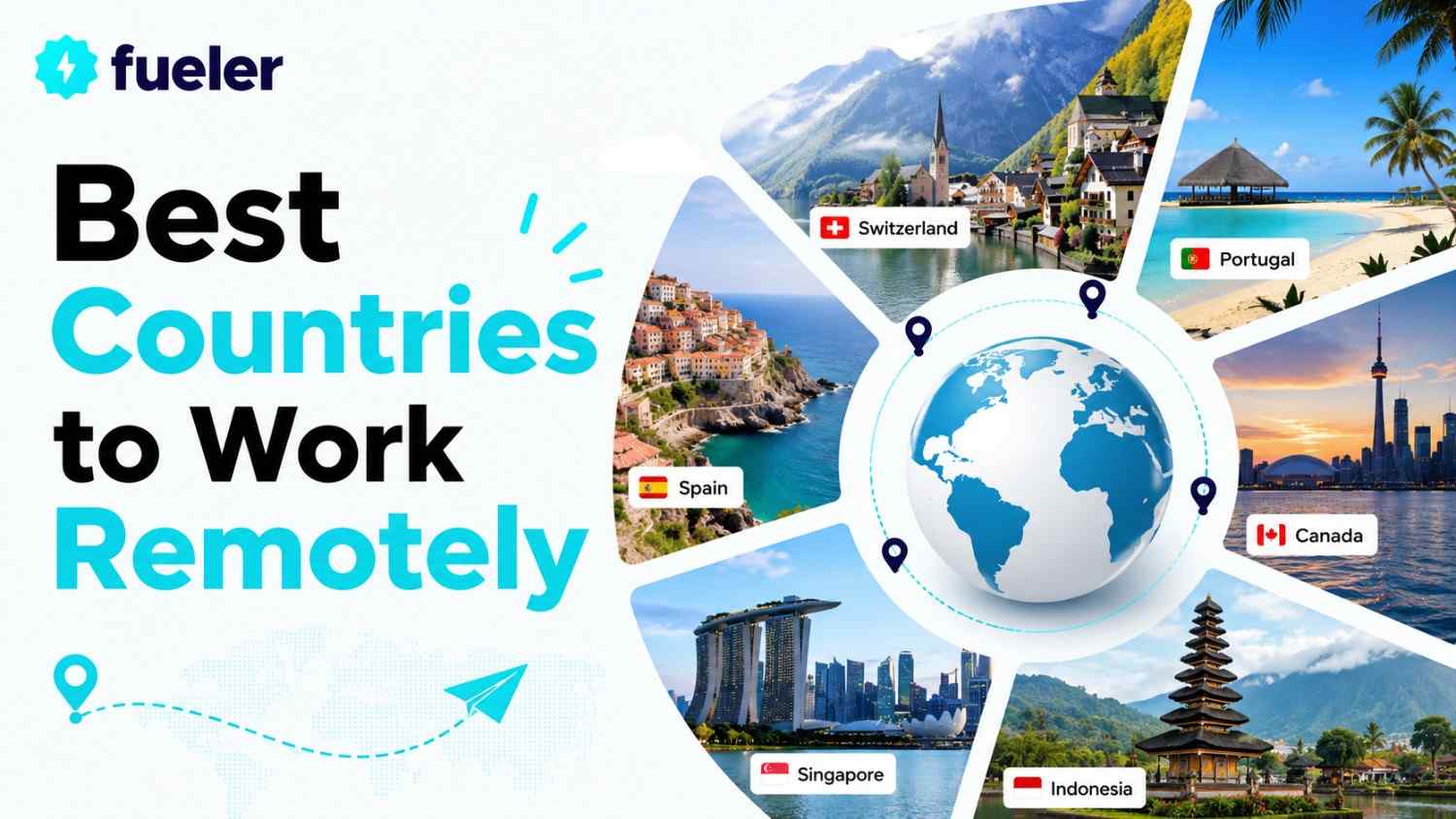
Remote work in 2026 is no longer just about escaping the office. It’s about building a lifestyle that gives you better freedom, lower living costs, stronger work-life balance, global networking opportunities, and access to thriving digital nomad communities.
Today, remote professionals are choosing countries based on:
- Digital nomad visa availability
- Internet speed and infrastructure
- Cost of living
- Safety and healthcare
- Tax friendliness
- Time zone flexibility
- Coworking ecosystems
- Long-term residency options
More than 40 countries now offer digital nomad or remote work visa programs globally, with Europe leading the shift toward remote-worker-friendly immigration policies.
I’m Riten, founder of Fueler—a platform that helps freelancers and professionals get hired through their work samples. In this guide, I’ll break down the 25 best countries to work remotely from in 2026, including digital nomad visas, affordability, infrastructure, and quality of life. Your portfolio is more than a collection of projects—it’s your proof of skill, credibility, and trust when applying for global remote opportunities.
What Makes a Country One of the Best Places for Remote Work in 2026?
The best remote work destinations are not always the cheapest.
In 2026, remote professionals prioritise countries that combine affordability with stability, infrastructure, legal visa pathways, and strong digital ecosystems.
The best countries for digital nomads and remote workers usually offer:
- Reliable high-speed internet
- Remote work or digital nomad visas
- Affordable rent and daily expenses
- Safe cities and healthcare access
- Coworking spaces and startup ecosystems
- International airports and easy travel
- Strong expat and remote-work communities
Remote workers are also increasingly choosing “slow travel” lifestyles, staying longer in one country instead of moving constantly between destinations.
Best Countries With Digital Nomad Visas and Remote Work Opportunities in 2026
1. Spain
Spain remains one of the most attractive countries for remote workers in 2026 because of its digital nomad visa, warm climate, strong infrastructure, and high quality of life.
Cities like Barcelona, Valencia, Madrid, and Málaga have become major digital nomad hubs.
Spain’s digital nomad visa allows non-EU remote workers to legally stay and work while earning income from foreign employers or clients. The visa can be renewed for longer-term residency.
Why remote workers choose Spain:
- Excellent public transport
- Strong healthcare system
- Vibrant coworking culture
- Access to the Schengen Zone
- Large international remote-work community
2. Portugal
Portugal continues to rank among the best digital nomad destinations in Europe.
Lisbon, Porto, and Madeira remain highly popular because of:
- Fast internet
- Strong safety ratings
- Mild climate
- Growing startup ecosystem
- D8 digital nomad visa pathway
Portugal’s visa options also provide potential long-term residency routes, making it attractive for remote professionals planning to stay in Europe longer.
3. Thailand
Thailand remains one of the world’s biggest digital nomad hubs in 2026.
Bangkok and Chiang Mai continue attracting remote workers because of:
- Low living costs
- Reliable internet
- Excellent food
- Modern coworking spaces
- Strong nomad communities
Thailand’s Destination Thailand Visa (DTV), introduced in 2024, made long-term remote work stays easier for global professionals.
Chiang Mai especially remains popular among freelancers, creators, developers, and startup founders.
4. Mexico
Mexico remains a top destination for North American remote workers because of affordability, proximity to the US, and large expat communities.
Popular cities include:
- Mexico City
- Playa del Carmen
- Oaxaca
- Puerto Vallarta
- Tulum
Mexico offers flexible temporary residency options and strong digital nomad communities.
5. Croatia
Croatia continues to attract remote workers with its coastal lifestyle, relatively affordable living, and digital nomad residency programs.
Split and Dubrovnik remain major hotspots for European remote professionals.
Why Croatia works well for digital nomads:
- Mediterranean lifestyle
- Good internet infrastructure
- Schengen access
- Lower costs than Western Europe
6. Estonia
Estonia remains one of the most digitally advanced countries in the world.
The country pioneered official digital nomad visas and remains highly attractive for tech professionals, developers, and startup founders.
Major advantages include:
- Digital-first government systems
- Fast online bureaucracy
- Startup-friendly environment
- Excellent internet infrastructure
7. United Arab Emirates (UAE)
Dubai has become one of the biggest remote work and creator-economy hubs globally.
The UAE attracts remote workers because of:
- No personal income tax
- Excellent infrastructure
- Luxury lifestyle
- Global connectivity
- Strong international business ecosystem
Dubai’s remote work visa program remains highly attractive for high-income freelancers and entrepreneurs.
8. Colombia
Colombia continues to grow as a remote-work hotspot, especially Medellín.
The city offers:
- Spring-like weather year-round
- Affordable cost of living
- Strong coworking culture
- Growing startup ecosystem
Colombia’s digital nomad visa has also increased its popularity among global remote workers.
9. Vietnam
Vietnam remains one of the most affordable countries for digital nomads.
Ho Chi Minh City and Hanoi offer:
- Fast internet
- Extremely affordable food and rent
- Strong café culture
- Growing startup communities
Vietnam is especially popular among freelancers, creators, and bootstrapped founders.
10. Greece
Greece combines Mediterranean living with remote-worker-friendly residency pathways.
Athens and Greek islands are increasingly attracting remote professionals looking for:
- Slower lifestyle
- Coastal living
- European infrastructure
- Affordable long-term stays
11. Germany
Germany remains ideal for freelancers and highly skilled remote professionals.
Berlin continues to attract:
- Designers
- Developers
- Startup founders
- Consultants
- Creative professionals
Germany’s freelancer visa remains one of the strongest long-term pathways for independent professionals.
12. Italy
Italy’s digital nomad pathways and lifestyle appeal continue attracting remote workers in 2026.
Popular cities include:
- Milan
- Florence
- Rome
- Bologna
Italy appeals to remote workers looking for culture, food, and slower living combined with strong European infrastructure.
13. Malaysia
Malaysia offers one of the best balances between affordability and modern infrastructure in Asia.
Kuala Lumpur remains highly attractive because of:
- English-speaking population
- Excellent internet
- Affordable luxury living
- Easy travel across Southeast Asia
14. Georgia
Georgia remains one of the easiest countries for long-term stays and affordable living.
Tbilisi is especially popular because of:
- Low taxes
- Cheap rent
- Flexible visa policies
- Growing expat scene
15. Czech Republic
Prague continues to rank among Europe’s best cities for remote workers.
The city offers:
- Beautiful architecture
- Strong public transport
- Growing coworking ecosystem
- Good safety ratings
16. Costa Rica
Costa Rica remains one of the best remote work destinations for nature-focused lifestyles.
Remote workers choose Costa Rica for:
- Eco-friendly living
- Beach towns
- Wildlife and outdoor activities
- Stable political environment
The country also offers digital nomad residency programs.
17. Poland
Poland’s modern infrastructure and growing tech ecosystem continue attracting remote workers.
Warsaw and Kraków offer:
- Fast internet
- Affordable European living
- Strong tech talent ecosystem
- Growing startup culture
18. Hungary
Budapest remains highly popular among freelancers and remote workers because of affordability and nightlife.
The city offers:
- Affordable rent
- Strong café culture
- Historic architecture
- Central European connectivity
19. South Africa
Cape Town remains one of the world’s most visually stunning remote-work cities.
Remote professionals are drawn by:
- Coastal lifestyle
- Affordable living
- English-speaking environment
- Growing startup ecosystem
20. Brazil
Brazil continues attracting digital nomads because of its culture, beaches, and major cities.
São Paulo, Rio de Janeiro, and Florianópolis are especially popular for remote work lifestyles.
21. Canada
Canada remains attractive for remote professionals seeking safety, infrastructure, and long-term migration opportunities.
Toronto, Vancouver, and Montréal offer:
- Strong public services
- Multicultural communities
- Excellent healthcare
- High quality of life
22. Singapore
Singapore remains one of the world’s strongest business and tech hubs.
Although expensive, it offers:
- Exceptional internet
- Safety
- Strong startup ecosystem
- Excellent airport connectivity
Singapore works best for high-income remote professionals and founders.
23. Turkey
Turkey continues to attract remote workers because of affordability and cultural diversity.
Istanbul and Antalya remain major remote-work hubs connecting Europe and Asia.
24. Philippines
The Philippines remains attractive because of:
- English-speaking population
- Affordable living
- Strong remote-work culture
- Beautiful island destinations
It also remains a major outsourcing and freelancing hub globally.
25. India
India continues growing as a remote-work destination because of:
- Affordable cost of living
- Massive tech ecosystem
- Diverse cities and climates
- Strong coworking culture
Cities like Bengaluru, Pune, Hyderabad, and Goa remain popular among freelancers, founders, and creators.
How to Choose the Best Country for Remote Work and Digital Nomad Living
Choosing the right country depends on your career, budget, and lifestyle goals.
Before moving abroad, compare:
- Visa requirements
- Internet reliability
- Monthly expenses
- Healthcare systems
- Tax obligations
- Time zones
- Safety
- Community support
Many remote professionals now prioritize countries that allow longer stays and legal remote work instead of relying on tourist visas.
Digital Nomad Visas in 2026: What Remote Workers Need to Know
Digital nomad visas allow remote professionals to legally live in another country while working for foreign employers or clients.
Most countries require:
- Proof of remote income
- Health insurance
- Clean criminal record
- Minimum monthly income thresholds
- Remote employment documentation
Countries are also becoming stricter about enforcing remote-work visa rules instead of allowing people to work on tourist visas.
More than 45 countries now offer digital nomad or remote-work-specific visa programs globally.
Best Cities for Digital Nomads and Remote Workers in 2026
Some cities consistently rank highly because of infrastructure, affordability, and community support.
Top remote-work cities include:
- Bangkok
- Chiang Mai
- Lisbon
- Medellín
- Barcelona
- Bali
- Mexico City
- Dubai
- Prague
- Tbilisi
These cities typically offer:
- Coworking spaces
- International communities
- Reliable internet
- Remote-worker events
- Affordable short-term housing
How to Stay Productive While Working Remotely Abroad
Working remotely from another country sounds exciting, but productivity matters.
Remote workers who succeed long-term usually focus on:
- Structured routines
- Stable internet
- Time zone management
- Consistent sleep schedules
- Coworking memberships
- Communication tools
Balancing travel with deep work becomes increasingly important for long-term sustainability.
How Fueler Helps Freelancers and Remote Professionals Build Global Careers
Getting remote work opportunities is easier when you can prove your skills publicly.
Fueler helps freelancers, creators, consultants, and professionals build portfolios that showcase:
- Real projects
- Client work
- Case studies
- Results
- Writing samples
- Marketing campaigns
- Design systems
- Technical work
A strong proof-of-work portfolio helps remote professionals attract global clients and companies without relying only on resumes.
Final Thoughts on the Best Countries for Remote Work in 2026
Remote work in 2026 is becoming more structured, global, and competitive.
The best countries for remote workers are no longer defined only by cheap living costs.
Remote professionals now prioritize:
- Legal residency pathways
- Stability
- Internet infrastructure
- Healthcare access
- Community
- Long-term sustainability
Countries like Spain, Portugal, Thailand, Mexico, and Estonia continue leading because they combine infrastructure, lifestyle, and remote-work-friendly policies.
The best place for you ultimately depends on your income, work style, goals, and preferred lifestyle.
FAQs About the Best Countries for Remote Work and Digital Nomad Visas
Which country is best for digital nomads in 2026?
Spain, Portugal, Thailand, and Mexico remain among the best countries for digital nomads because of their visa programs, affordability, infrastructure, and strong international remote-work communities. Thailand especially continues attracting long-term remote workers because of its affordability and new Destination Thailand Visa program.
What is a digital nomad visa and how does it work?
A digital nomad visa allows remote workers to legally live in another country while earning income from employers or clients outside that country. These visas usually require proof of income, remote employment, and health insurance. Many countries now offer renewable remote-work visas ranging from six months to five years.
Which countries offer the easiest digital nomad visas in 2026?
Portugal, Spain, Croatia, Estonia, Thailand, and Georgia are frequently considered among the easiest and most popular digital nomad visa destinations because of clear application processes, established remote-worker ecosystems, and long-term stay options.
How much money do remote workers need to live comfortably abroad?
The amount depends heavily on the country and lifestyle. Many Southeast Asian and Latin American destinations allow comfortable living between $1,500 and $3,000 per month, while cities like Dubai, Singapore, and parts of Western Europe require significantly larger budgets. Rent, healthcare, visa costs, and taxes should all be considered.
How can freelancers and remote professionals find global remote jobs?
Building a strong proof-of-work portfolio is one of the most effective ways to attract remote opportunities. Platforms like Fueler help professionals showcase real work samples, case studies, campaigns, and project outcomes, helping companies evaluate skills beyond resumes.
What is Fueler Portfolio?
Fueler is a career portfolio platform that helps companies find the best talents for their organization based on their proof of work.
You can create your portfolio on Fueler, thousands of freelancers around the world use Fueler to create their professional-looking portfolios and become financially independent. Discover inspiration for your portfolio
Sign up for free on Fueler or get in touch to learn more.

What should you do next?
You've read the article. Now turn your skills into proof of work and unlock more opportunities.
Build your proof of work portfolio
Create a clean portfolio with projects, assignments, resumes, and AI stack details that companies actually want to see.
Create your Fueler portfolio →Apply through assignments, not resumes
Stand out by solving real tasks from companies hiring on Fueler.
Explore assignments →Get discovered by companies
Make your work public and let recruiters discover your skills through actual projects instead of keywords.
Get discovered →
