Best Career Paths After Learning Digital Marketing

Riten Debnath
29 Jul, 2026
Last updated: July 2026
Learning digital marketing is easy, but deciding what to do next usually feels like standing in front of a giant restaurant menu with zero pictures. Most beginners finish a course, update their LinkedIn profile, and instantly start sending out dozens of generic job applications. Then, silence happens. Companies in 2026 do not hire generic marketers who simply know definitions. They hire focused specialists who can run real experiments, fix leaky acquisition systems, and bring in predictable business revenue.
I’m Riten, founder of Fueler, a skills-first portfolio platform building the career infrastructure for 100 million creative professionals. Fueler connects talented individuals with companies through assignments, portfolios, and projects, not just resumes or CVs. Think of it as Dribbble/Behance for work samples combined with AngelList for hiring infrastructure.
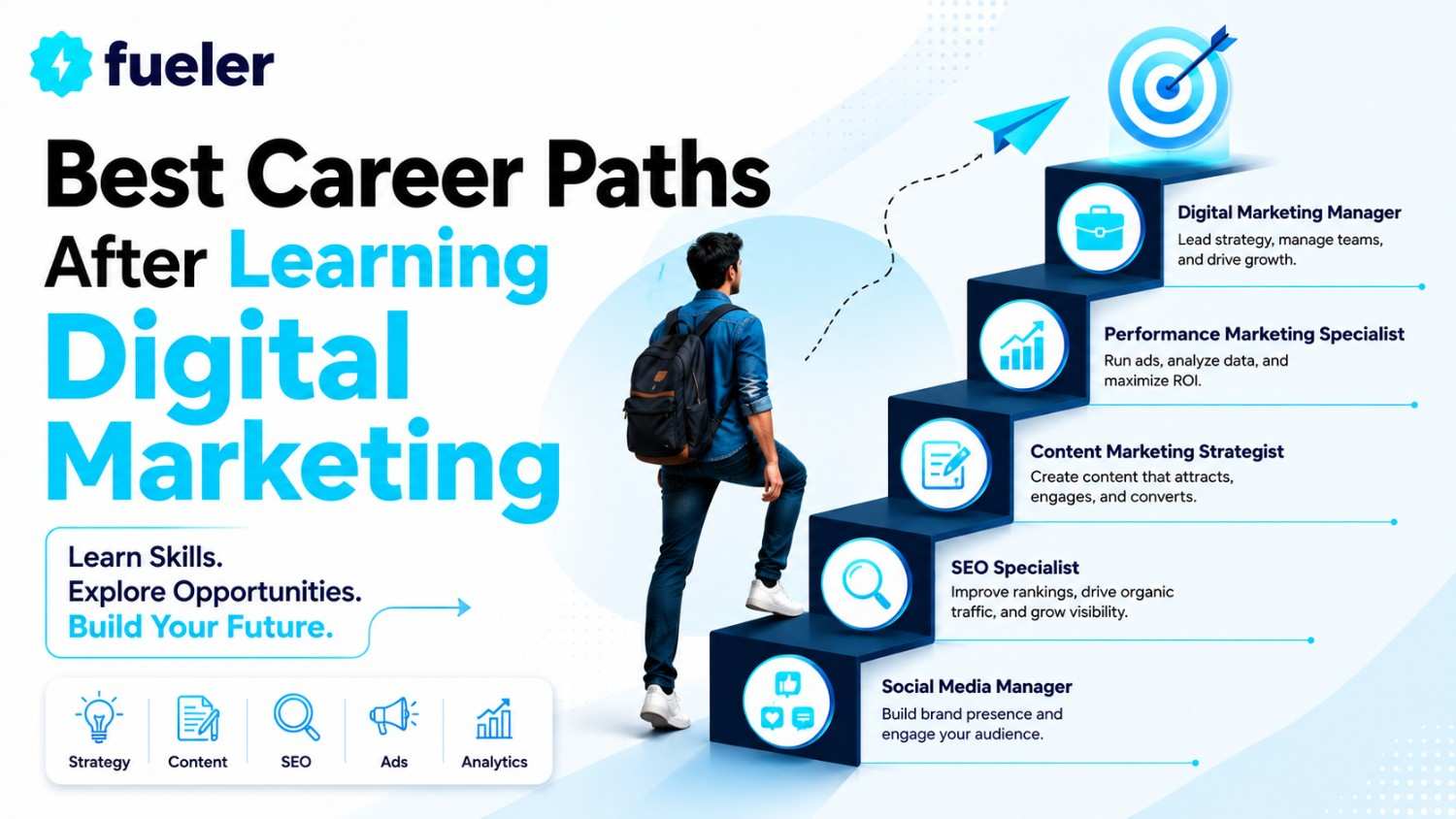
In this breakdown, you will discover the 8 most practical digital marketing career paths available right now. We will look at what each role actually involves every day, the exact work outcomes companies expect, and how to choose a direction that fits your natural working style without getting lost in endless internet noise.

SEO Specialist and Search Traffic Manager
Search engine optimization specialists help websites appear at the top of organic search results when potential customers look for answers online. Instead of paying for every click, you build content systems, fix technical site errors, and earn trustworthy links to drive steady web traffic over time.
This role combines analytical thinking with creative problem-solving. If you like investigating how search engines organize information and enjoying the quiet victory of watching website traffic graphs move upward over several months, search optimization offers a deeply satisfying career track.
- Technical Search Audits: You inspect website code, fix broken links, speed up page loading times, and make sure search engine spiders can read every page properly. This technical cleanup ensures websites earn higher rankings without technical glitches holding them back.
- Keyword Research and Search Intent: You discover the exact questions and phrases potential customers type into search engines daily. By matching content structure directly to user intent, you help businesses attract highly qualified visitors who are ready to make purchasing decisions.
- On-Page Content Structure: You optimize headline tags, image descriptions, page layouts, and internal links across main landing pages. This clear organizational layout helps search algorithms digest page topics quickly while keeping human readers engaged on the page longer.
- Authority Building and Link Acquisition: You connect with trusted industry publications and relevant blogs to secure authentic contextual references back to your site. These organic endorsements signal strong market authority to search engines, boosting overall domain visibility over competitors.
- Search Performance Tracking: You analyze organic visitor traffic using tracking dashboards to monitor keyword positions, user navigation paths, and online lead generation. These regular performance reviews reveal which published pages produce measurable business sales and where optimizations are needed.
Why It Matters
Search engine optimization is the foundation of long-term digital business growth because organic visitors arrive with clear purchasing intent. Companies hire search specialists to build permanent web visibility that generates consistent leads without relying constantly on paid ad spending.
Performance Marketing Specialist and Paid Media Buyer
Performance marketing specialists spend advertising dollars to purchase direct customer acquisition and sales across search engines and social platforms. Rather than relying on guesswork, you test ad images, written headlines, and target audiences to discover the exact combinations that produce profitable customer sales.
This fast-paced role is ideal for people who love immediate feedback, numbers, and psychological triggers. You get to manage real advertising budgets and watch live sales dashboards react within hours of launching new advertising campaigns.
- Ad Budget Allocation: You manage daily advertising spends across social networks and search engines to capture high-converting target groups. Careful budget distribution prevents wasted ad dollars on unresponsive audiences and ensures campaigns maintain profitable returns on investment consistently.
- Audience Segmentation Testing: You divide potential customer groups based on online interests, buying habits, and previous website visits. Reaching specific consumer groups with tailored ad messaging drastically lowers customer acquisition costs while boosting overall checkout conversion rates.
- Ad Copy and Visual Testing: You collaborate on direct response ad copy, eye-catching images, and short video hooks to grab user attention. Running systematic split tests reveals which messaging variations motivate scrolling users to stop, click, and buy immediately.
- Conversion Page Optimization: You review the exact web pages visitors see right after clicking an advertisement. By testing simpler headlines, clearer buying buttons, and faster page load speeds, you help turn incoming ad traffic into paying customers smoothly.
- ROAS and Acquisition Tracking: You calculate return on ad spend and track daily customer acquisition costs across all advertising accounts. Providing leadership with transparent performance data ensures advertising decisions remain grounded in direct mathematical profitability instead of subjective opinions.
Why It Matters
Performance marketing connects ad spending directly to measurable business sales, making it one of the highest-paid roles in modern marketing. Businesses gladly pay top rates to buyers who can predictably trade one dollar of ad spend for two dollars in revenue.
Content Marketing Strategist and Digital Storyteller
Content marketing strategists build trust with prospective customers by publishing helpful articles, newsletters, downloadable guides, and video breakdowns. Instead of pushing hard sales messages, you create informative content that solves customer problems and positions your company as the obvious industry leader.
This career track suits natural writers, clear thinkers, and research enthusiasts. You translate complex product features into simple, engaging stories that educate readers and gradually guide them down the buying journey.
- Editorial Calendar Planning: You design structured publishing schedules aligned with seasonal business goals, product updates, and customer interest cycles. Organized publishing cadences keep production teams focused and ensure target audiences receive consistent, high-value educational content every week.
- Deep Topic Research: You interview industry practitioners, study forum discussions, and analyze customer support tickets to uncover real pain points. Original insights make your published content far more compelling and authoritative than generic articles found across the web.
- Multi-Format Content Production: You write long-form guides, draft engaging email newsletters, script video summaries, and build downloadable checklists. Repurposing core ideas into diverse content formats maximizes reader reach across different preferred learning channels and platform habits.
- Lead Magnet Development: You design practical resources like worksheets, template decks, and downloadable research reports that readers trade their email addresses to access. These educational assets systematically convert passive content consumers into warm prospective business leads.
- Content Engagement Analytics: You monitor reading habits, average time spent on web pages, email open rates, and resource downloads. Tracking these engagement signals helps refine future content choices toward topics that readers genuinely care about and share.
Why It Matters
High-quality content builds long-term brand authority and earns customer trust far better than repetitive banner ads. Organizations hire content strategists to educate prospective buyers, reduce sales friction, and create loyal communities that stay attached to the business.
Social Media Strategist and Community Manager
Social media strategists build active, loyal communities around brands on platforms like LinkedIn, Instagram, X, and YouTube. You create platform-native posts, start conversations, host live events, and turn casual followers into enthusiastic brand advocates who champion your products.
This path is perfect for charismatic communicators who stay on top of online culture, meme formats, and social trends. You act as the official voice of the company while listening closely to what customers say back in return.
- Platform Native Content Strategy: You tailor visual posts, text threads, and short videos to fit the specific culture and algorithms of individual social networks. Customizing formatting ensures your brand messaging feels organic and engaging rather than copied and pasted everywhere.
- Active Community Management: You reply promptly to user comments, manage direct messages, resolve customer issues, and spark friendly discussions daily. Direct personal interactions build authentic emotional connections that transform casual profile followers into loyal brand supporters over time.
- Social Listening and Sentiment Analysis: You monitor online brand mentions, industry hashtag discussions, and competitor feedback across social channels. Tracking broader sentiment trends helps product and marketing teams catch reputation risks early while spotting emerging audience preferences.
- Influencer Collaboration Programs: You identify, vet, and partner with relevant digital creators to co-create authentic brand promotional content. Strategic creator partnerships expand brand reach into engaged niche communities that traditional company advertising cannot easily access or influence.
- Social Commerce Optimization: You integrate direct product links, shop tags, and interactive calls to action into daily social posts and stories. Streamlining the path from social post viewing to online checkout drives measurable product sales right from profile pages.
Why It Matters
Social media profiles serve as the modern storefront where customers check brand legitimacy before buying. Companies hire skilled social media strategists to humanize their brand identity, handle public customer interactions gracefully, and generate active organic buyer engagement.
Email Marketing and Lifecycle Specialist
Email marketing specialists manage communication workflows sent directly to a company’s subscriber list. You design welcome sequences, product announcement newsletters, automated cart recovery messages, and special promotional campaigns that convert casual readers into repeat buyers.
If you enjoy customer psychology, writing direct personal messages, and organizing clear customer journeys, email marketing is a fantastic career choice. It offers unmatched job stability because email lists are owned business assets independent of changing social media algorithms.
- Audience List Segmentation: You organize subscriber databases into distinct groups based on purchase history, past link clicks, and engagement levels. Tailoring messages to specific subscriber interests increases reading interest while keeping unsubscribes and spam complaints extremely low.
- Automated Customer Journeys: You build behavioral trigger emails that automatically send when users sign up, abandon shopping carts, or make purchases. Timely automated sequences nurture leads around the clock without requiring manual intervention for every subscriber.
- Email Copywriting and Design: You write compelling subject lines, clear email body copy, and straightforward action buttons that look clean on mobile screens. Clear, focused messaging encourages readers to take the next step without feeling overwhelmed by cluttered designs.
- Deliverability and Sender Health: You clean inactive contacts, maintain proper technical domain authentication, and monitor inbox placement rates regularly. Maintaining strong sender reputation metrics ensures your campaign emails land directly in primary inboxes rather than spam folders.
- A/B Testing and Campaign Analytics: You run continuous split tests on subject line phrasing, sending times, layout formats, and button colors. Analyzing open rates, click-through rates, and revenue per email reveals precise tweaks that increase subscriber purchasing rates.
Why It Matters
Email marketing delivers higher conversion rates and return on investment than almost any other digital sales channel. Businesses rely heavily on lifecycle specialists to retain existing customers, boost customer lifetime value, and turn one-time buyers into repeat spenders.
Marketing Automation Specialist and Workflow Architect
Marketing automation specialists build the behind-the-scenes technical connections that pass customer data smoothly between software tools. You connect website contact forms, customer management databases, ad platforms, and analytics software to automate repetitive marketing operations.
This role sits right at the intersection of marketing strategy and light technical engineering. If you love building organized systems, drawing clean flowcharts, and eliminating manual copy-pasting work, marketing automation offers a lucrative and highly respected career path.
- Marketing System Integrations: You connect disparate software platforms using webhooks, native software integrations, and workflow bridges to keep database information updated. Seamless data movement prevents lost sales leads and ensures team dashboards display identical customer activity records.
- Lead Scoring and Routing: You set up automated rules that score incoming prospective buyers based on page visits, content downloads, and company size. High-scoring leads automatically get assigned to sales reps immediately for rapid personal contact.
- Behavioral Event Tracking: You configure tracking triggers that record user actions within web apps, software tools, and online store checkouts. Detailed behavior tracking helps marketing teams send timely, hyper-relevant follow-up communications based on actual user activity.
- Database Hygiene and Management: You establish automated rules to merge duplicate contact files, correct formatting errors, and clean outdated subscriber entries. Maintaining clean database architecture protects system reporting accuracy and prevents costly software tier overages.
- Custom Workflow Architecture: You map out complete customer communication flows across multiple channels including email, mobile text alerts, and internal team notifications. Well-structured workflow logic ensures customer interactions happen automatically and flawlessly at scale.
Why It Matters
As companies adopt more digital marketing software tools, keeping data synced manually becomes impossible. Businesses hire automation specialists to build scalable technical pipelines that eliminate human errors, speed up sales responses, and save hundreds of manual work hours.
Digital Marketing Data Analyst and Measurement Specialist
Digital marketing data analysts turn complex web traffic numbers, campaign costs, and user actions into clear business decisions. You set up tracking dashboards, verify data accuracy, and explain precisely which marketing efforts make money and which ones waste money.
If you enjoy working with spreadsheets, finding hidden patterns in numbers, and answering tough strategic questions with hard evidence, this role is an excellent fit. You become the analytical source of truth that guides executive team spending.
- Tracking Setup and Verification: You install measurement codes, event tags, and goal conversions across websites using centralized tag management tools. Proper technical setup ensures every click, form submission, and video play gets accurately recorded without double-counting metrics.
- Custom Reporting Dashboards: You build clean, easy-to-understand visual dashboards that display key business metrics like acquisition costs and customer value. Accessible performance visuals give team leaders clear real-time visibility into overall marketing performance without drowning in raw spreadsheet rows.
- Cross-Channel Attribution Modeling: You evaluate how different marketing touchpoints contribute to final customer sales across long research journeys. Fair attribution modeling prevents companies from over-funding flashy channels while under-funding essential early-stage customer discovery channels.
- Funnel Drop-Off Analysis: You map every step of the customer purchasing journey to spot where prospective buyers get stuck or abandon pages. Identifying drop-off friction points gives conversion teams clear targets for page redesigns and user experience fixes.
- Data-Driven Strategy Recommendations: You analyze past marketing campaign performance to spot emerging trends, seasonal buying patterns, and audience shifts. Translating raw numbers into practical strategic recommendations helps executive teams assign future budgets with high confidence.
Why It Matters
Without accurate tracking, companies waste substantial budgets on marketing campaigns that fail to drive real bottom-line profit. Marketing analysts give businesses the clarity needed to cut ineffective projects, double down on winning channels, and make smart growth investments.
E-commerce Marketing Specialist and Store Growth Manager
E-commerce marketing specialists focus specifically on growing online retail stores and digital marketplaces. You optimize product listing pages, run promotional sales campaigns, coordinate marketplace advertising, and design post-purchase retention offers to increase overall store revenue.
This specialization is ideal for professionals who love retail, consumer physical products, and shopping trends. You manage every touchpoint of the online shopping experience, from initial product discovery down to unboxing and customer reviews.
- Product Listing Page Optimization: You write persuasive product descriptions, optimize image galleries, and format key product feature bullet points for high readability. Clear product listings resolve buyer hesitation quickly, increasing mobile visitor checkout rates significantly.
- Marketplace Advertising Management: You launch sponsored product ad campaigns within major e-commerce platforms and search marketplaces. Targeted marketplace ads capture shoppers who are actively searching with credit cards in hand, yielding high sales conversion rates.
- Promotion and Discount Strategy: You plan seasonal holiday sales, flash discounts, bundle offers, and VIP buyer promotions that drive revenue spikes. Strategic pricing promotions boost store sales volume while preserving healthy profit margins for the business.
- Average Order Value Optimization: You design product upsell recommendations, cross-sell bundles, and free shipping threshold incentives during the checkout process. Motivating shoppers to add one more item to their cart increases revenue per visitor without increasing ad costs.
- Post-Purchase Retention Systems: You set up automated order tracking emails, product usage guides, and loyalty reward programs for existing buyers. Delightful post-purchase experiences encourage shoppers to leave positive reviews and make repeat store purchases.
Why It Matters
Online shopping continues to expand globally, creating massive demand for specialists who know how to manage digital retail stores. E-commerce marketers directly impact store revenue by turning casual window shoppers into high-value repeat buyers.
How Does This Connect to Building a Strong Career or Portfolio?
Knowing these career paths is helpful, but submitting traditional text resumes rarely proves you can actually execute the work. Modern hiring managers care very little about certificates or bulleted skill lists; they want to see actual evidence of your execution, like real campaign structures, content teardowns, or sample optimization plans. Building proof of work through tangible assignments showcases your problem-solving skills clearly. Using platforms like Fueler lets you organize your digital marketing projects into a clean public portfolio that wins client trust and lands interviews faster.
Final Thoughts
Digital marketing is no longer a single job title; it is a collection of distinct specialized disciplines that reward clear execution. Instead of trying to master every single channel at once, pick one core path that matches your natural strengths and build three solid sample projects around it. The industry rewards operators who can show proven results over generalists who know a little bit of everything. Focus on building real proof of work, and your career progression will take care of itself.

Frequently Asked Questions About Digital Marketing Careers
Which digital marketing career path is best for complete beginners?
SEO and content marketing are great starting points because they build foundational knowledge of online search behavior and messaging without requiring large advertising budgets or complex technical coding.
How long does it take to build a digital marketing portfolio?
You can build a strong three-project portfolio in four to six weeks by completing practical assignments, analyzing existing brand campaigns, and publishing clear teardowns that prove your execution skills.
Can I work fully remote in digital marketing roles?
Yes, most digital marketing specializations like SEO, paid ads, email marketing, and content strategy can be executed completely remotely as long as you have reliable internet and clear communication habits.
Do I need coding skills to work in digital marketing?
No, basic digital marketing roles do not require software coding skills. Understanding basic website HTML and simple database logic helps in technical roles, but standard software interfaces handle most daily operational tasks.
What is the fastest way to get hired in digital marketing?
The fastest path to getting hired is building tangible proof of work. Creating sample campaign strategy decks, content audits, or mock ad setups demonstrates your value to employers far better than traditional resumes.
Why 100,000+ professionals use Fueler
Fueler helps professionals showcase proof of work through projects, assignments, case studies, and achievements.
- Thousands of professionals use Fueler to create their digital portfolio
- Thousands of projects are published on Fueler. Check here
- Startups and Companies hire through proof of work on Fueler
- Used by freelancers, creators, marketers, video editors, writers, designers, and product managers
Our mission is to help the next 100 million professionals build a verified professional identity through proof of work

What should you do next?
You've read the article. Now turn your skills into proof of work and unlock more opportunities.
Build your proof of work portfolio
Create a clean portfolio with projects, assignments, resumes, and AI stack details that companies actually want to see.
Create your Fueler portfolio →Apply through assignments, not resumes
Stand out by solving real tasks from companies hiring on Fueler.
Explore assignments →Get discovered by companies
Make your work public and let recruiters discover your skills through actual projects instead of keywords.
Get discovered →
